
T: +86-757-2339-5985
E: tp@topcod.com.cn
E: tp@topcod.com.cn
No.6, Pai Sha Industrial Road, Pai Sha Community, Longjiang Town, Shunde District, Foshan City, Guangdong Province, China.
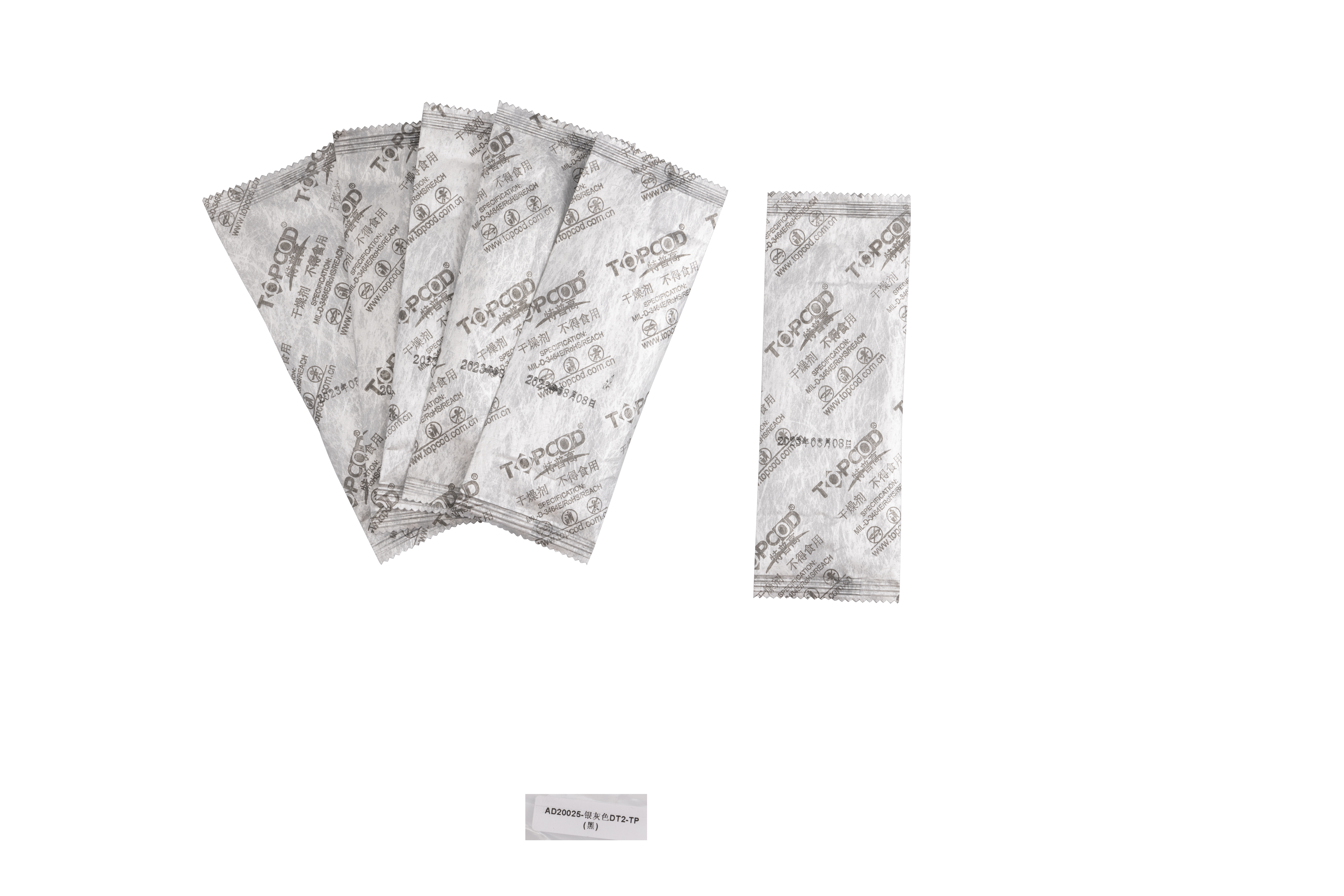 |
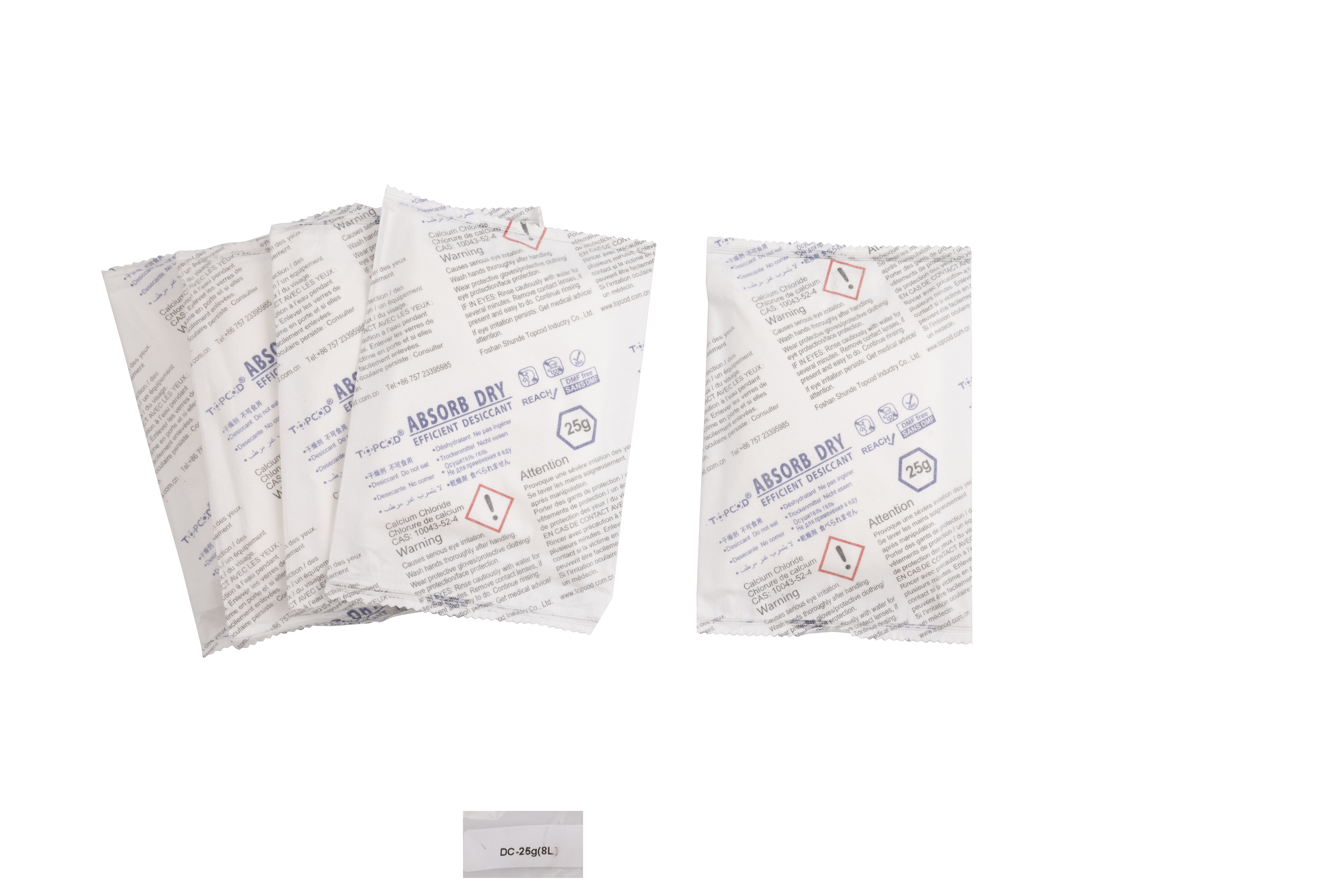
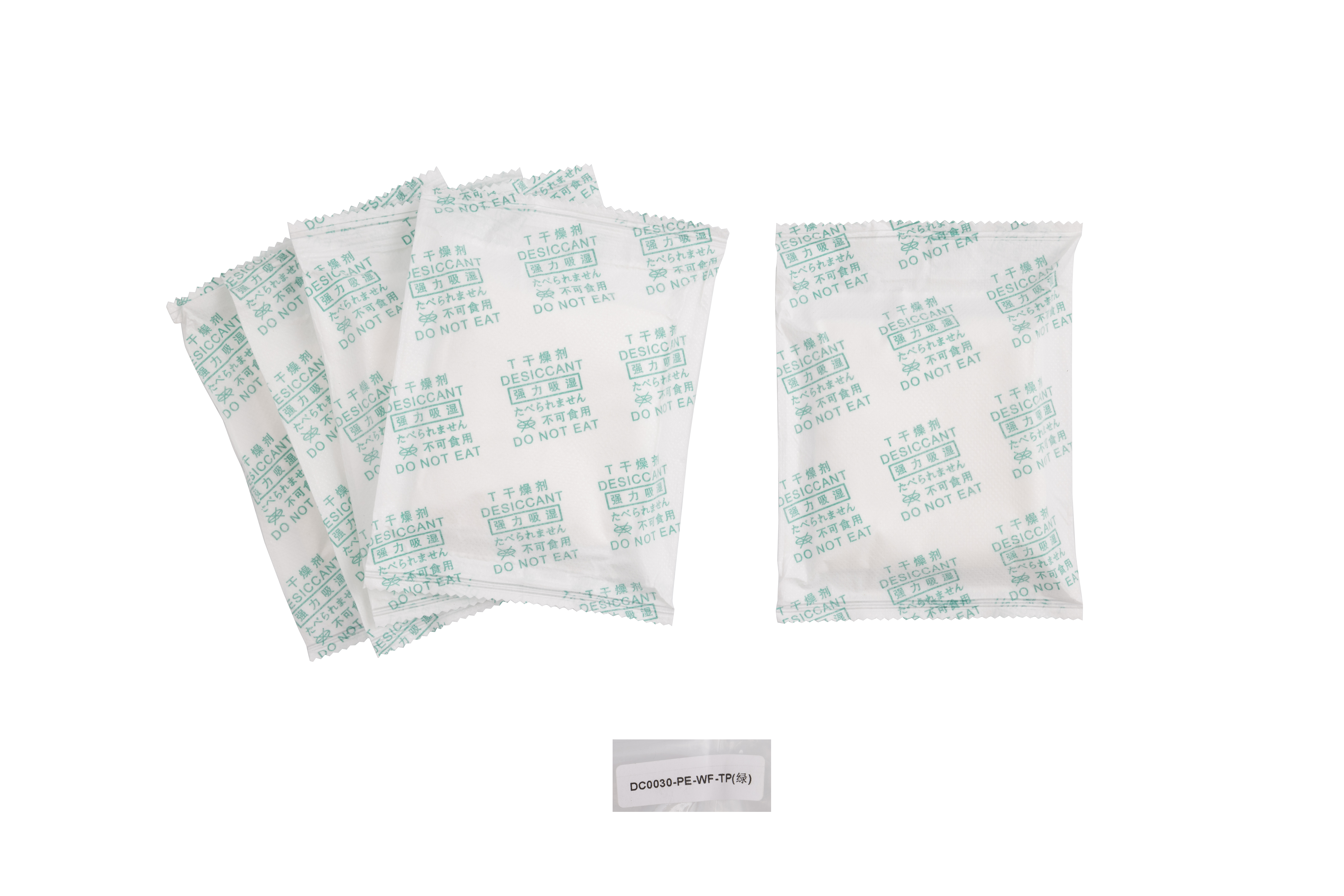


5g
TOPCOD
| Quantity: | |
|---|---|
TOPCOD calcium chloride desiccant bags are designed to control excess moisture inside shoe boxes, polybags, cartons and other enclosed packaging. By absorbing water vapor during storage and transportation, the sachets help reduce the risk of mildew, unpleasant odors, material deterioration and moisture-related damage to footwear, leather goods, textiles and accessories.
Available in multiple sachet weights, this shoe packaging desiccant can be matched to different package sizes and logistics conditions. Standard TOPCOD printing and customized packaging are available for brands, distributors, footwear manufacturers and export packaging suppliers.

Calcium chloride is a hygroscopic material that attracts moisture from the surrounding air. When the desiccant bag is placed inside sealed footwear packaging, it helps maintain a drier internal environment throughout warehousing, inland transport and export shipment. This passive moisture-control solution does not require electricity or additional equipment.
The sachet structure combines moisture-permeable wrapping materials with protective outer layers. Packaging format, dosage and sachet weight should be selected according to the internal packaging volume, barrier performance, expected humidity, transportation duration and sensitivity of the packed product.
| Product Name | 200% Super Dry Calcium Chloride Desiccant Mold Prevention for Shoes 2g–100g |
|---|---|
| Material | Powder Calcium Chloride |
| Weight | 2g–200g |
| Moisture Adsorption | 200% |
| OEM & Samples | Accepted |
| Packing Material | Tyvek paper + plastic film + non-woven fabric |
| Package Printing | TOPCOD standard printing or customized printing |
| Features | High moisture absorption, non-toxic, eco-friendly and cost-saving |
| Applications | Agricultural, wooden, electronic, leather, metal and textile products |
Effective moisture control: Helps limit moisture accumulation inside enclosed shoe packaging and cartons.
Protection for footwear materials: Suitable for shoes made with leather, textiles, synthetic materials and mixed components.
Multiple sachet weights: Options from 2g to 100g are listed in the standard specification table, with a wider stated weight range up to 200g.
Packaging flexibility: Available with TOPCOD standard printing or customized branding and package information.
Easy integration: The compact desiccant bag can be placed inside shoe boxes, polybags, master cartons or other sealed packages.
B2B supply support: Suitable for footwear factories, packaging suppliers, wholesalers, distributors and export-oriented brands.
Although primarily positioned as a moisture absorber for shoe packaging, the calcium chloride desiccant bag can also be used for other moisture-sensitive goods when the sachet specification and dosage are properly selected.
Shoes, boots, sandals and sports footwear
Leather bags, belts, wallets and accessories
Garments, fabrics and other textile products
Wooden products, furniture parts and handicrafts
Electronic components and packaged devices
Metal parts, tools and moisture-sensitive hardware
Agricultural products and general export packaging
| Model | Net Weight (g) | Inner Packing Size / Sachet (cm) | Outer Packing Size (cm) | Pcs / Carton | Gross Weight (kg) |
|---|---|---|---|---|---|
| AD30002 | 2 | 7 × 7 | 10 × 8 | 2000 | 9.3 |
| AD30005 | 5 | 10 × 7 | 13 × 8 | 1000 | 8.8 |
| AD30010 | 10 | 11.5 × 7 | 14 × 8 | 500 | 7.5 |
| AD30025 | 25 | 12 × 12 | 15 × 13 | 400 | 13 |
| AD30050 | 50 | 15 × 12 | 18 × 13 | 200 | 12.2 |
| AD30100 | 100 | 17 × 15 | 20 × 16 | 100 | 11.7 |
Select the sachet weight according to the package size, barrier material, shipping duration and expected humidity.
Open the outer protective package only when the desiccant is ready to be used.
Place the calcium chloride desiccant bag inside the shoe box, polybag or carton without blocking or damaging the product.
Seal the package promptly to reduce exposure to ambient air.
Confirm dosage and packaging compatibility through testing before large-volume production.
Keep unused desiccant bags sealed in their original moisture-resistant packaging.
Store in a cool, dry and ventilated area away from direct sunlight and water.
Avoid puncturing, crushing or damaging the sachet during packing and transportation.
Do not use damaged or prematurely exposed sachets.
Keep out of reach of children and do not allow the contents to contact food unless the product has been confirmed for the intended application.
TOPCOD supports OEM requirements for B2B orders. Available options may include sachet weight, package dimensions, wrapping material, standard or customized printing, carton configuration and private-label presentation. Final specifications should be confirmed according to the intended footwear package and destination market.
Product selection support for shoe boxes, polybags and export cartons
Standard products and customized OEM packaging
Sample support for packaging and dosage evaluation
Bulk-order coordination and production scheduling
Export documentation and shipment communication
TOPCOD focuses on desiccants, humidity indicator cards, moisture barrier bags and related dry packaging solutions. By combining product manufacturing with moisture-control packaging support, we help footwear manufacturers, distributors and export businesses select practical desiccant formats for their packaging processes.
Contact TOPCOD with your shoe-box dimensions, packaging material, destination, shipment duration and estimated order quantity so that an appropriate sachet specification can be evaluated.
The original product information states 5–7 days after payment confirmation. Large-volume orders should be negotiated according to production requirements.
Yes. Free samples are available according to the original product information, with freight collected.
The stated MOQ is one carton.
Yes. TOPCOD standard printing or customized package printing is available, subject to order requirements.
Selection depends on the internal package volume, packaging barrier, humidity, storage period and transportation conditions. Testing is recommended before mass production.

