
T: +86-757-2339-5985
E: tp@topcod.com.cn
No.6, Pai Sha Industrial Road, Pai Sha Community, Longjiang Town, Shunde District, Foshan City, Guangdong Province, China.
Views: 0 Author: Site Editor Publish Time: 2026-11-20 Origin: Site


Humidity can damage export goods long before delivery. Poorly sealed packaging increases this risk. Silica gel desiccant bags help control moisture during shipping. However, proper sealing protects their performance. This guide covers material selection, sealing methods, quality checks, and export packaging tips.
Silica gel removes water vapor through adsorption. Its porous structure captures moisture from the surrounding air. This makes it useful for protecting products inside closed packages, cartons, and shipping containers.
However, silica gel can absorb moisture before it enters the final package. This may happen during production, warehouse storage, or transportation to the packing facility. Once the desiccant absorbs moisture, its remaining capacity becomes lower.
Exporters should therefore control exposure throughout the packaging process. Store unused desiccant bags in suitable sealed containers. Keep them away from wet floors, open windows, and humid production areas.
The outer packaging also plays an important role. A suitable moisture barrier helps limit moisture entering the package during transportation. The inner desiccant bag must still allow water vapor to reach the silica gel.
Poorly sealed desiccant bags can release silica gel beads or dust. This creates avoidable problems during international shipping. Loose particles may enter product packaging or affect nearby components.
This risk matters when packing electronics, precision instruments, pharmaceuticals, and food products. Buyers expect clean packaging and consistent product protection. A damaged sachet can create quality complaints even when the main product remains undamaged.
A reliable seal keeps the filling material inside the bag. It also helps the sachet withstand normal handling and movement. Manufacturers should check the entire sealing edge rather than inspecting only the center.
The sealing method must match the bag material and its intended function. A strong seal prevents leakage, but it should not block the moisture exchange needed for adsorption.
Silica gel sachets generally use permeable packaging materials. Water vapor passes through the material and reaches the desiccant. The bag retains the solid particles while supporting moisture absorption.
A damaged or unsuitable bag may reduce protection reliability. For example, pinholes can cause particle leakage. An overly restrictive material may slow moisture transfer. Exporters should evaluate both seal integrity and moisture permeability.
Note: The inner sachet does not always need to be airtight. Its material should retain silica gel while allowing suitable moisture vapor transmission.
Material selection is the first step in reliable sachet production. Different materials offer different levels of strength, permeability, and sealing compatibility. The correct choice depends on the product and shipping conditions.
Tyvek is often considered for applications requiring good particle retention and material strength. Non-woven fabric offers flexibility and supports moisture exchange. Cotton paper provides another option for conventional sachet packaging.
Composite paper and OPP also serve different packaging needs. However, buyers should check their exact material construction. Some versions require a special heat-sealable layer. Others may need different closure methods.
Before ordering, ask suppliers for material samples and technical specifications. Test the selected material using the intended filling and sealing equipment. This reduces compatibility problems during mass production.
The filling weight affects the moisture protection available inside each package. A small sachet may suit an individual product box. Larger bags may serve industrial packaging or bulk storage applications.
Common options include 0.5g, 1g, 2g, 5g, 10g, 50g, and 100g. Some suppliers also provide customized sizes up to 1kg or more. These options should not be treated as universal recommendations.
Buyers should consider package volume, initial humidity, expected storage time, and moisture entering through the packaging. The number of sachets also matters. A larger package may require several smaller sachets for better distribution.
Production teams should maintain consistent filling weights. Calibrated weighing equipment helps control variation between bags. It also makes batch inspection easier.
Tip: Request a filling-weight tolerance from the supplier before approving mass production.
A clean sealing area is essential for reliable closure. Silica gel beads trapped between sealing surfaces can create small gaps. These gaps may weaken the finished edge and allow particles to escape.
Operators should check the bag opening before filling. Remove loose particles from the sealing zone. Keep the bag flat and properly aligned during the filling process.
The filling quantity should leave enough space for a clean closure. Overfilled bags may develop wrinkles around the opening. This makes it difficult for the sealing equipment to create uniform contact.
Production teams should also maintain clean working surfaces. Dust and foreign particles can affect packaging quality. Regular equipment cleaning helps reduce these risks.
Heat sealing is widely used for packaging materials designed to respond to heat. The process applies controlled temperature and pressure to join compatible layers. It can produce consistent closures in automated production lines.
Ultrasonic sealing uses high-frequency mechanical vibration to create a bond. It may suit certain synthetic non-woven materials. However, the material structure and machine settings must support this process.
Other materials may require different closure arrangements. Paper-based sachets, for example, can have different sealing requirements from laminated films. Buyers should not assume one machine can seal every material effectively.
Before selecting equipment, confirm the material specification with the supplier. Ask for recommended sealing methods and sample results. This helps prevent production delays and unnecessary equipment changes.
Three factors affect heat-sealing quality: temperature, pressure, and dwell time. These settings work together. Changing one parameter may affect the final seal.
Insufficient temperature may produce weak bonding. Excessive temperature can damage the packaging material. Uneven pressure may leave parts of the sealing edge incomplete.
There is no universal setting for every silica gel bag. A laminated OPP structure may behave differently from a coated paper material. Even materials with similar names can have different sealing specifications.
Run trial tests before starting large production orders. Record the material batch and equipment settings. Inspect the finished samples after cooling. Approve the settings only when they produce consistent results.
Tip: Build a material-specific sealing record. It helps operators repeat approved production settings.
After sealing, inspect the complete closure area. Look for open edges, wrinkles, pinholes, burn marks, and uneven bonding. These defects may affect bag strength or allow filling material to escape.
Allow the sealed area to cool before handling. Moving or stretching the bag too early may disturb an unstable seal. Follow the equipment and material supplier's recommended cooling process.
Separate defective products from accepted batches. Do not mix rejected sachets with finished export goods. Record recurring defects and identify their production causes.
A consistent inspection routine improves batch reliability. It also gives buyers better evidence when reviewing supplier quality. Keep inspection records for traceability and future process improvements.
Tyvek is a strong material option for selected desiccant applications. Its structure helps retain particles while allowing moisture vapor to pass through. This makes it useful when packaging integrity matters.
Buyers should evaluate the grade and construction before choosing it. Not every Tyvek product has identical sealing properties. The intended closure method must match the specific material.
For pharmaceutical and sensitive industrial packaging, material selection also requires regulatory review. Check applicable product documentation and test results. Do not rely on general material descriptions alone.
Non-woven fabric is commonly used in silica gel sachets. It offers flexibility and can support moisture exchange. Its performance depends on fiber structure, thickness, and manufacturing quality.
Cotton paper provides another practical option. It can suit conventional moisture-control packaging. However, its strength and resistance to handling should be checked against the shipping environment.
Both materials require suitable particle retention. Their sealing performance also varies. Buyers should test the complete sachet rather than judging material quality by appearance alone.
For food and medicine applications, review the supplier's product documentation. Check whether the selected grade meets the destination market's requirements. Material suitability and product compliance are separate considerations.
Composite paper combines multiple material layers. Its construction can provide additional strength or barrier properties. The exact performance depends on the layers and their arrangement.
OPP is a polypropylene-based packaging film. It may provide a smooth surface and useful mechanical properties. However, standard OPP should not automatically be considered heat-sealable.
Buyers should confirm whether the material includes a compatible sealing layer. They should also check moisture vapor transmission. A material that blocks too much moisture may reduce the sachet's adsorption efficiency.
The following table summarizes the main selection factors.
Material | Main characteristics | Key consideration |
|---|---|---|
Tyvek | Strength and particle retention | Grade and sealing compatibility |
Non-woven fabric | Flexible and breathable | Fiber structure and seal strength |
Cotton paper | Suitable for conventional sachets | Tear resistance and closure method |
Composite paper | Multiple functional layers | Layer construction |
OPP | Smooth film surface | Heat-sealable grade and permeability |
Note: Select materials based on the complete packaging system. Do not evaluate sealing strength and moisture permeability separately.
For applications involving food packaging, buyers can also review silica gel desiccant packets for food packaging to understand typical sachet applications.
Visual inspection is the first quality control step. Check every side of the sachet. Look for open corners, uneven edges, holes, and visible contamination.
A consistent sealing line usually indicates stable equipment operation. However, appearance alone cannot prove seal strength. A bag may look acceptable but still open under pressure.
Use defined inspection criteria for each production batch. Record the number of defective bags and the type of defect. This information helps identify recurring machine or material problems.
Export packaging experiences repeated handling. Bags may move inside cartons during loading and unloading. They may also face compression from stacked products.
Testing should reflect the actual shipping environment. Suitable methods may include controlled drop tests, compression checks, and handling simulations. Select procedures according to product risk and packaging design.
Pay particular attention to the sealed edges. Check whether they remain intact after normal handling. Also confirm that the bag material does not tear easily around the closure.
Do not use one test result as proof of every transport condition. Sea freight, air freight, and road transport create different handling risks. Establish acceptance criteria for the intended logistics route.
Seal integrity is only one part of quality control. The silica gel must also provide the required moisture adsorption performance. This should be evaluated through appropriate laboratory testing.
The actual absorption rate depends on temperature, relative humidity, and testing conditions. One reference product lists an absorption rate of 30–35%. This figure should not be treated as a universal value for all silica gel grades.
Buyers should request test reports for the specific product. Confirm the test conditions and measurement method. This makes supplier comparisons more meaningful.
The sachet material also affects moisture transfer. A suitable material allows water vapor to reach the silica gel. The finished product should balance particle retention, bag strength, and adsorption performance.
For industrial applications, industrial-grade white silica gel beads provide a useful reference for evaluating the desiccant filling material.
One common mistake is choosing packaging material before checking equipment compatibility. Different materials respond differently to heat and pressure. A sealing machine may work well with one material but fail with another.
This can produce weak bonds or damaged edges. Operators may then increase the temperature to solve the problem. However, excessive heat may create additional defects.
The better approach is to confirm specifications before purchasing materials. Request sample rolls or empty bags for testing. Approve the material and sealing process together.
Overfilling is another frequent production issue. Excessive silica gel reduces the available space near the opening. This makes it harder to achieve consistent closure.
Loose beads may also become trapped between sealing layers. The resulting seal can contain small gaps. These gaps may lead to leakage during transportation.
Use controlled filling equipment and suitable bag dimensions. Keep the sealing area clean. Check filling weight regularly to reduce production variation.
A properly sealed sachet can still absorb moisture during storage. Its packaging material usually allows water vapor to pass through. Therefore, storage conditions remain important.
Keep finished desiccant bags in suitable protective packaging. Close outer bags after each production batch. Avoid leaving unused sachets exposed in humid environments.
Secondary packaging adds another layer of protection. Moisture-barrier bags can help reduce exposure before final use. Protective cartons also reduce physical damage during warehouse handling.
Tip: Establish a clear storage and opening procedure. Record when protective outer packaging is opened and resealed.
The correct sachet size depends on the protected product. Small sachets often fit inside individual retail boxes. Larger bags may suit machinery, industrial components, and bulk packaging.
Common options range from 0.5g to 5g for small packages. Larger requirements may involve 10g, 50g, 100g, or customized bags. Some suppliers offer products up to 1kg or more.
However, buyers should not select bag sizes by product weight alone. Package volume, moisture exposure, storage duration, and packaging permeability also matter. These factors determine the required desiccant capacity.
A practical selection process should include the following steps:
Measure the internal package volume.
Identify the expected humidity conditions.
Estimate the storage and shipping duration.
Check the moisture barrier of the outer package.
Confirm the required desiccant capacity.
Validate the final quantity through testing.
Finished sachets need suitable protection before shipment. Keep them inside their designated outer packaging. Avoid unnecessary exposure to humid warehouse air.
Place sachets according to the product packaging design. They should not obstruct sensitive components or damage finished surfaces. For bulk shipments, distribute larger desiccant bags according to the moisture-control plan.
Cartons should also provide adequate mechanical protection. Avoid excessive compression during stacking. Check the carton condition before loading to reduce exposure to rain and water.
Container loading requires additional attention. Condensation may occur when temperatures change during long-distance transportation. A suitable moisture-control plan should consider the cargo, container, packaging, and expected route conditions.
Different industries have different packaging requirements. Food exporters may need suitable material specifications and food-contact documentation. Pharmaceutical buyers may require additional quality and regulatory controls.
Industrial exporters often prioritize moisture protection and physical durability. Electronics manufacturers may focus on corrosion prevention. Metal product suppliers may require larger desiccant capacities for enclosed packaging.
Customization can cover several product features:
Customization factor | Buyer requirement |
|---|---|
Filling weight | Match package volume and moisture load |
Bag material | Meet permeability and strength requirements |
Bag dimensions | Fit available packaging space |
Printing | Display product information and handling warnings |
Desiccant grade | Match the required moisture-control performance |
Documentation | Support applicable market and industry requirements |
Suppliers may also offer customized printing, dimensions, and filling weights. However, buyers should verify every claimed certification against the actual product and intended application.
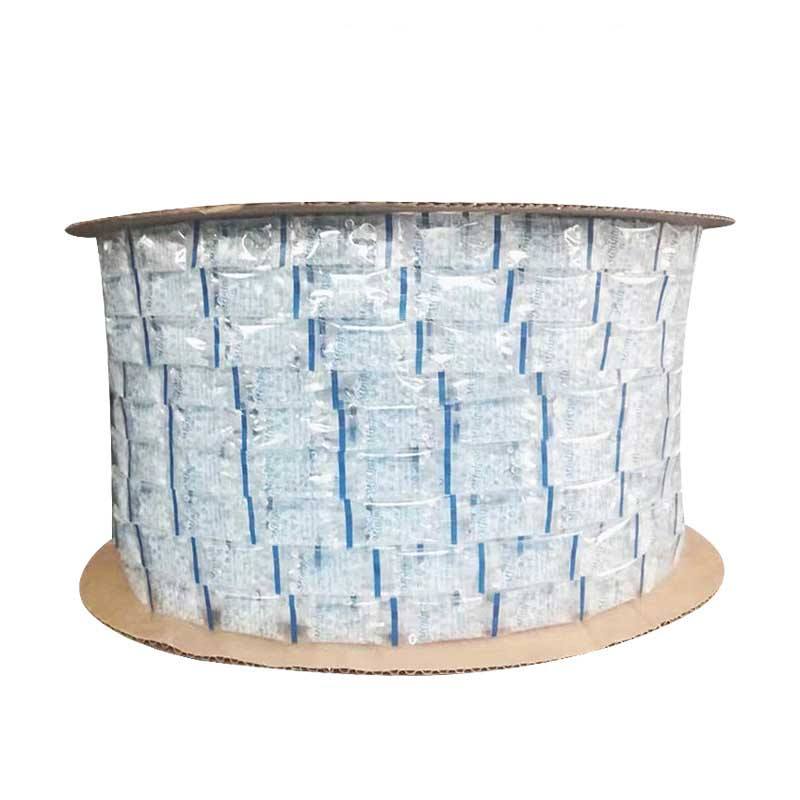
For example, roll silica gel desiccant for food and medicine can help buyers explore alternative packaging formats for specific production requirements.
Note: Food-contact and pharmaceutical compliance must be verified separately. A general material certificate does not establish approval for every application.
Proper sealing helps silica gel desiccant bags protect export goods from moisture. Material selection, filling control, and seal inspections support reliable performance during shipping. Foshan Shunde Topcod Industry Co., Ltd. offers silica gel desiccant products for food, medicine, and industrial packaging, helping buyers manage moisture and protect product quality.
A: They absorb moisture and help protect goods during international shipping.
A: Match the bag material with suitable heat-sealing or ultrasonic equipment.
A: Tyvek, non-woven fabric, cotton paper, and composite materials are common options.
A: Yes. Weak seals may cause leakage and reduce packaging reliability.
A: Costs depend on material, bag size, equipment, and production volume.


