
T: +86-757-2339-5985
E: tp@topcod.com.cn
E: tp@topcod.com.cn
No.6, Pai Sha Industrial Road, Pai Sha Community, Longjiang Town, Shunde District, Foshan City, Guangdong Province, China.
Views: 0 Author: Site Editor Publish Time: 2026-11-18 Origin: Site


Standard moisture control protocols often fail in high-stakes logistics and sensitive manufacturing. This failure rarely happens because of inadequate absorption capacity. Instead, it stems from packaging material failure, dust contamination, or regulatory friction. Supply chain managers and packaging engineers face a constant challenge. They must balance the risk of moisture damage against the costs of over-engineering their packaging. Single-layer desiccants remain highly vulnerable to mechanical stress, dusting, and cross-contamination. These vulnerabilities trigger catastrophic batch rejections in regulated industries. They also cause severe equipment failure in sensitive environments. You need to determine exactly when operational realities demand an upgrade. Extreme transit conditions, strict food and pharmaceutical compliance, sensitive electronics storage, or extended durations often necessitate a transition. This guide explores when you should move from standard single-layer packets to double-bagged moisture control systems to protect your high-value assets.
Moisture control fails the moment a desiccant compromises the product it was designed to protect. You must define success criteria far beyond simple humidity reduction. A burst packet spilling silica beads into a crate of machined engine components constitutes a catastrophic failure. Microscopic dust escaping a porous paper packet and settling onto optical lenses represents an equally severe failure. Premature saturation due to improper barrier selection leads directly to flash rust on carbon steel.
Advanced packaging demands strict baseline success criteria. You need zero physical contamination. The system must sustain absorption over the entire shipping cycle. The physical durability of the packet must withstand drop impacts and vibration. Finally, the packaging must communicate end-user safety clearly, especially in consumer-facing applications. If your current setup fails any of these criteria, you have a packaging engineering problem.
Standard substrates like Kraft paper or basic non-woven fabrics offer excellent breathability. However, they lack high tensile strength and puncture resistance. When you introduce heavy metal parts or sharp edges, these single-layer materials tear easily. Double-layered configurations change the physical dynamics entirely. A common high-performance setup uses a Tyvek inner layer for tear resistance, surrounded by a perforated polyethylene outer layer for abrasion protection.
| Performance Metric | Single-Layer (Kraft / Non-Woven) | Double-Layer (Tyvek + Poly Film) |
|---|---|---|
| Puncture Resistance | Low to Moderate (Tears under direct load) | Exceptionally High (Deflects sharp edges) |
| Dust Containment | Prone to micro-dusting over time | Zero dust transmission |
| Moisture Adsorption Speed | Rapid (High MVTR) | Controlled / Gradual (Lower MVTR) |
| Chemical Isolation | Direct contact possible if torn | Complete physical barrier maintained |
| Labeling Clarity | Ink can fade or rub off onto product | Ink trapped between layers or on outer film |
Adding a secondary bag fundamentally alters the permeability rate. The Moisture Vapor Transmission Rate (MVTR) dictates how fast water vapor passes through the packaging material to reach the silica gel. A single layer allows rapid diffusion. A double layer creates a micro-climate between the inner and outer bags. This secondary barrier forces moisture to navigate two distinct material structures.
You face a direct trade-off here. You gain massive physical protection, but you reduce the speed of moisture adsorption. Engineers must recalculate the saturation timelines using Fick's laws of diffusion. If you ship bare metal castings through high-humidity equatorial zones, the desiccant must act fast enough to prevent condensation during temperature drops. If the outer bag restricts airflow too heavily, the ambient humidity inside the crate will condense on the metal before the silica gel can absorb it. You must select an outer bag with precise micro-perforations to balance durability with vapor transmission.
Regulatory bodies like the FDA and the EU impose strict guidelines on indirect food additives and packaging materials under regulations like CFR Title 21. You cannot risk active desiccant compounds touching consumable goods. Standard single-layer packets run the risk of seam failure during transit. Double bagging prevents dusting entirely. It ensures that even if the inner seam bursts under pressure, the outer bag securely contains the chemical compounds.
Labeling requirements further complicate food and pharmaceutical packaging. Mandatory warning labels, such as "DO NOT EAT," must remain highly visible to the end consumer. Packaging teams often struggle with food-safe inks rubbing off single-layer packets. Double bagging solves this. You can print the warning directly on the secondary outer bag using compliant methods, or print it on the inner bag and use a transparent outer layer. This guarantees the safety message remains intact without contaminating the primary product.
Global shipping subjects cargo to brutal mechanical stresses. Maritime freight endures constant low-frequency vibration, typically between 3 and 5 Hz. Air freight experiences rapid pressure changes. Pallet stacking and forklift handling introduce severe drop impacts. When you pack heavy industrial components, these forces cause the contents to shift violently inside the crate.
Sharp or heavy metal parts act like blades against standard packaging. If a steel gear slides against a basic paper packet, it will slice it open. The resulting spill scatters hard silica beads throughout the crate. These beads can lodge into threaded holes or precision-machined grooves, requiring hours of costly manual cleaning. Double-bagged silica gel desiccant bags provide the necessary abrasion resistance to survive high-friction environments without rupturing.
Moisture destroys 3D printing filaments. Materials like Nylon, PETG, and Polycarbonate absorb ambient humidity rapidly, leading to poor layer adhesion and print failures. Operators use desiccants inside Automatic Material Systems (AMS) to keep filament dry during printing. However, standard single-layer bags shed microscopic silica dust.
This dust proves fatal to precision equipment. In 3D printers, silica dust clogs extruders and fouls optical sensors. In semiconductor shipping, microscopic particulates short-circuit microchips and ruin cleanroom environments. A dust-proof secondary barrier becomes absolutely mandatory. Double bagging traps all particulate matter while still allowing vapor transmission, keeping the AMS units and electronic enclosures perfectly clean.
Products often sit in non-climate-controlled warehouses for 12 months or longer. Temperature fluctuations drive humidity cycles, constantly testing the packaging. Single-layer packets often reach maximum saturation too quickly in these environments, leaving the product unprotected for the remainder of its storage life.
Double bagging allows for staged desiccant activation. You can utilize an impermeable outer bag during the initial staging and transport phases. Warehouse personnel then execute a specific deployment procedure:
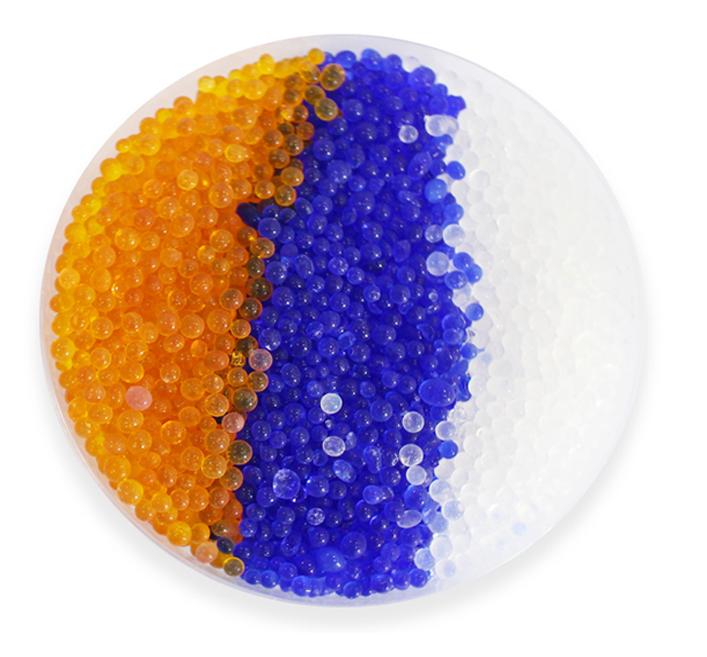
The core material dictates the overall success of the moisture control system. You need a desiccant that remains completely inert. A Chemical Stable Silica Gel Desiccant serves as the ideal core material for layered packaging. Its non-corrosive nature ensures it will not react with the inner bag substrate or the surrounding product environment.
Thermal stability matters immensely during global transit. Shipping containers baking in the sun reach extreme temperatures. Chemically stable silica gel will not break down, off-gas, or liquefy under high heat. Even when double-bagged, the core beads maintain their structural integrity, ensuring reliable moisture adsorption without introducing secondary chemical risks to the cargo.
Maintenance audits require visual confirmation of desiccant saturation. Inspecting double-bagged desiccants presents a unique challenge. You cannot break the primary packaging seal just to check the beads. Incorporating indicating transparent Silica Gel solves this, but it requires specific secondary bag engineering.
The outer secondary bag must feature a clear viewing window. This allows technicians to see the color change of the transparent beads without compromising the physical barrier. We recommend pairing these visual inspections with internal digital hygrometers. The hygrometer provides data-driven alerts, while the transparent window offers immediate physical confirmation that the desiccant has reached maximum saturation and requires replacement.
You must evaluate material pairings carefully. The inner and outer bags must work together without restricting airflow entirely. A highly effective combination uses Tyvek for the internal layer. Tyvek offers exceptional breathability and prevents liquid water from escaping if the beads become over-saturated.
You pair this Tyvek inner layer with a specialized perforated film externally. The external film provides the abrasion resistance needed for industrial transit. The perforations allow water vapor to pass through to the Tyvek layer. This specific substrate compatibility ensures maximum physical protection while maintaining an acceptable MVTR.
| Inner Layer Material | Outer Layer Material | Primary Application | MVTR Impact |
|---|---|---|---|
| Tyvek (Medical Grade) | Perforated Polyethylene | Heavy Industrial / Sharp Parts | Moderate Reduction |
| Non-Woven Fabric | Clear PET Film (Windowed) | Electronics / Visual Monitoring | High Reduction |
| Kraft Paper | Micro-perforated Tyvek | Food & Pharma Compliance | Low Reduction |
Procurement teams often resist double bagging due to unit cost increases. You must calculate the Return on Investment (ROI) based on risk mitigation, not just raw material expenditure. Double bagging adds a fractional cent increase per unit. You must compare this minor upfront cost against the financial devastation of a rejected shipment.
Consider a crate of aerospace components. A single torn packet causes silica dust contamination, resulting in a rejected delivery worth tens of thousands of dollars. The labor required to clean contaminated parts far exceeds the cost of upgraded packaging. When you frame the expenditure as an insurance policy against moisture and dust contamination, the ROI of double bagging becomes undeniable for high-liability shipments.
Upgrading your moisture control system impacts the factory floor. Double-bagged packets are thicker and possess a different surface texture than standard single-layer packets. This change directly affects automated dispensing machines.
You must analyze your packaging line efficiency before making the switch. Automated hoppers calibrated for thin paper packets may jam when feeding thicker, double-layered Desiccant bags. Your engineering team must execute a specific re-tooling procedure:
Selecting the wrong outer bag material introduces severe risks. If the secondary layer lacks adequate permeability, it acts as a vapor barrier rather than a breathable shield. This traps ambient moisture against your product. Instead of allowing water vapor to pass through to the Silica Gel Desiccant, the outer bag causes condensation to pool on the surface of the packet, accelerating localized corrosion.
You mitigate this risk through rigorous environmental chamber testing. Before full-scale rollout, subject the double-bagged prototypes to extreme temperature and humidity cycling. Monitor the micro-climate inside the test packaging to verify that the MVTR remains high enough to prevent condensation trapping during rapid temperature drops.
The secondary barrier is only as strong as its weakest seam. Inconsistent seam sealing in the outer bag negates the entire purpose of double bagging. If the outer seal fails under pressure, you lose your dust protection and abrasion resistance immediately.
Establish strict Quality Assurance (QA) checklists for all suppliers. Demand ISO 9001 certifications specifically related to packaging manufacturing. You must require batch-level burst strength testing data before accepting any shipment. Do not rely on visual inspections alone; physical compression testing data is mandatory to verify seam integrity.
Desiccants remain vulnerable during their own transit and storage, long before they enter your product packaging. If warehouse personnel handle the boxes roughly, the packets can suffer crush damage. If left exposed to ambient factory air, they will absorb moisture and reach saturation before deployment.
Implement strict master-bagging protocols to mitigate this. Group smaller double-bagged packets into larger, hermetically sealed, moisture-barrier master bags made of heavy-duty foil. This protects the individual units from physical crushing during transit. It also completely isolates them from ambient humidity until the exact moment they are placed onto the packaging line.
Double bagging is not a universal requirement for every shipping scenario. It serves as a specialized, high-performance solution designed specifically for high-liability, high-stress, or strictly regulated supply chains. Standard packets work perfectly well for benign environments, but industrial realities often demand superior mechanical integrity and contamination prevention. Audit your current damage reports to determine your next move. If your failure logs show physical packet tearing, dust settling on sensitive components, or regulatory friction regarding labeling, double bagging represents the correct technical pivot.
A: No, the total moisture capacity remains exactly the same. The amount of water the silica gel can hold depends entirely on its mass. However, the rate of absorption slows down. The secondary bag creates a physical barrier that moisture must navigate. This extends the time it takes for the packet to reach full saturation. You must account for this slower Moisture Vapor Transmission Rate when calculating your packaging timelines.
A: The best material depends on your specific application. Perforated polyethylene offers excellent abrasion resistance for heavy metal parts. Tyvek provides superior tear resistance while maintaining high breathability. Specialized non-woven fabrics work well for applications requiring strict dust prevention without severely restricting vapor transmission. Always match the outer layer to your primary mechanical threat.
A: The FDA does not strictly mandate double bagging by name. However, their regulations demand zero indirect contamination and clear consumer warning labels. Double bagging often proves to be the most practical and reliable engineering solution to meet these strict food and pharmaceutical compliance standards. It guarantees physical separation between the chemical desiccant and the consumable product.
A: You must group individual packets into larger, hermetically sealed master bags. This dual-purpose strategy is critical. It protects the smaller packets from physical crush damage during transit and completely isolates them from ambient humidity. This prevents premature moisture absorption before deployment. Always include a humidity indicator card inside the master bag to verify the seal integrity upon arrival.
A: In industrial contexts, double-bagged units are strictly single-use. While the core silica gel beads can theoretically be heated to evaporate moisture, the secondary plastic or fabric bags possess low thermal limits. Heating the packet to reactivation temperatures will melt or degrade the outer layers. Attempting reactivation destroys the physical integrity of the double-bagged system.
A: Engineers utilize industry-standard compression and drop testing protocols. A packet is placed between two mechanical plates that apply increasing pressure until a seam ruptures. The pressure is recorded in kilopascals. This validates packaging integrity and ensures the seams can withstand the stacking and vibration forces experienced during global transit. You should demand this testing data from your supplier.


