
T: +86-757-2339-5985
E: tp@topcod.com.cn
E: tp@topcod.com.cn
No.6, Pai Sha Industrial Road, Pai Sha Community, Longjiang Town, Shunde District, Foshan City, Guangdong Province, China.
Views: 0 Author: Site Editor Publish Time: 2026-06-28 Origin: Site


Moisture damage in electronics manufacturing carries staggering financial risks. Components exposed to ambient humidity routinely suffer from micro-cracking, oxidation, and the dreaded "popcorning" effect during reflow soldering. For decades, manufacturers relied on standard desiccants to protect their inventory. However, these baseline options often fail in extreme environments or when safeguarding highly sensitive assemblies. They simply release trapped moisture back into the packaging when temperatures spike during global shipping. Today, engineering teams are shifting toward advanced solutions to ensure ultimate reliability. They specify high-performance moisture control for their most critical components. This transition sets a new standard for modern packaging engineers and procurement teams. In this guide, you will learn how to evaluate and deploy specialized moisture protection for electronics. We cover everything from core applications to strict quality assurance workflows. You will discover exactly how to eliminate moisture risks and protect your most valuable electronic assets.
Molecular sieves provide aggressive moisture removal to ultra-low relative humidity (RH) levels, critical for semiconductor and bare PCB packaging.
Unlike standard silica gel, molecular sieves maintain high adsorption capacity even at elevated temperatures, ensuring protection during shipping and long-term storage.
Specifying the correct industrial drying agent requires balancing aggressive adsorption with dust control and compliance with JEDEC and MIL-SPEC standards.
While unit costs are higher than standard clay or silica, the ROI is realized through reduced warranty claims and minimized component scrap rates.
Modern electronics rely on microscopic tolerances and highly reactive materials. When water vapor breaches a component package, it triggers several catastrophic failure modes. Delamination is a primary concern for assembly lines. Moisture absorbs into the plastic molding compound of microchips. When these chips hit the high temperatures of reflow soldering, the trapped water flashes into steam. The resulting expansion cracks the component from the inside out. Furthermore, ambient humidity introduces parasitic capacitance. This alters high-frequency signal integrity in precision circuits. Corrosion also attacks bare copper traces and solder pads, ruining electrical connectivity before assembly even begins.
Industry standards strictly regulate how we handle these vulnerabilities. Guidelines like JEDEC J-STD-033 dictate specific handling, packing, and shipping protocols for moisture-sensitive devices (MSDs). Compliance is not optional for serious manufacturers. It requires you to maintain a stringent micro-environment within every sealed package. A successful strategy depends on reliable moisture control tools.
To define success, you must look at three critical criteria. First, the environment must maintain a consistent relative humidity well below 10%. Second, you need absolute physical stability. The chosen material must exhibit zero physical degradation, meaning it cannot break down into dust. Third, you require long-term stability. The package must remain dry throughout extended shipping delays and variable warehouse conditions. Meeting these criteria ensures product integrity and protects your bottom line.
Engineers often face a choice between legacy desiccants and advanced synthetic zeolites. Silica gel and montmorillonite clay serve well in basic consumer packaging. However, they possess severe limitations under thermal stress. Silica gel begins to lose its grip on trapped water molecules at around 40°C (104°F). Shipping containers crossing oceans frequently exceed these temperatures. When this happens, silica gel off-gasses. It actively dumps moisture back into your sensitive electronics enclosure.
Molecular sieves perform entirely differently under heat. They maintain their moisture-holding capacity at temperatures exceeding 200°C. This locked-in performance prevents harmful off-gassing during transit. Furthermore, you achieve a much greater depth of dehydration. While clay might lower ambient humidity to 20%, a high-quality molecular sieve desiccant drives the relative humidity down to near-zero levels. When you handle highly sensitive optical sensors or advanced semiconductors, near-zero humidity is absolutely non-negotiable.
We must also address the cost-to-benefit analysis transparently. Molecular sieves command a premium unit price compared to mined clay or bulk silica. You should framework your procurement decisions around risk. Aerospace control boards, implantable medical devices, and high-end server processors easily justify this premium. The cost of a single field failure in these sectors dwarfs the price of premium packaging. Conversely, legacy options usually suffice for low-cost, low-risk consumer goods.
Performance Feature | Molecular Sieve | Silica Gel | Montmorillonite Clay |
|---|---|---|---|
High-Temperature Adsorption | Excellent (Retains moisture >200°C) | Poor (Releases moisture at 40°C) | Moderate (Releases moisture at 50°C) |
Ultimate RH Achievable | < 1% RH (Near absolute zero) | ~ 10% - 15% RH | ~ 20% RH |
Adsorption Rate | Extremely fast | Moderate | Slow to moderate |
Best Electronics Use Case | Aerospace, Medical, Semiconductors | General electronics storage | Basic consumer hardware |
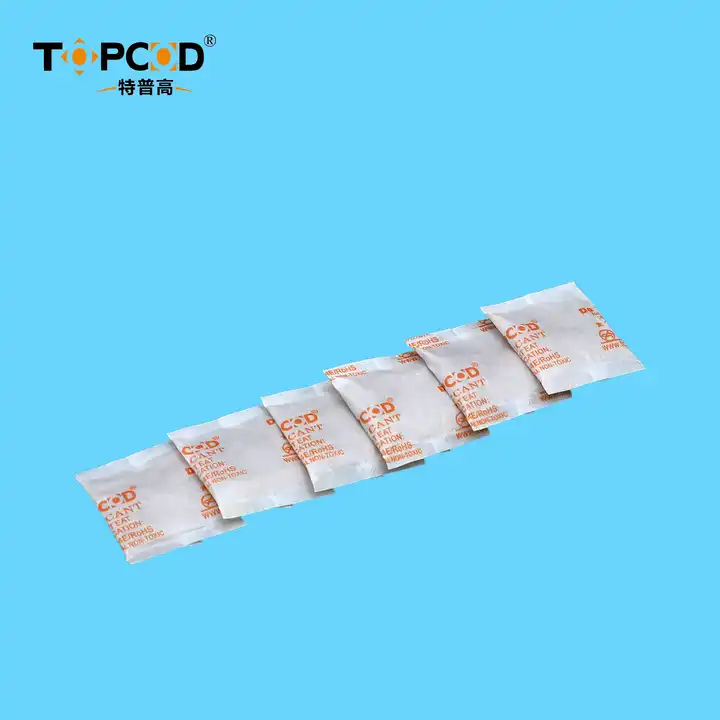
Deploying advanced moisture control spans multiple stages of the electronics lifecycle. Each application demands precise engineering protocols to protect specific vulnerabilities.
Modern surface-mount devices (SMDs) are incredibly susceptible to ambient moisture. Manufacturers utilize specialized drop-in packets during the dry-packing process. When you seal a tray of microchips inside a moisture barrier bag, you must aggressively pull down the internal humidity. This rapid dehydration prevents moisture from impregnating the chip's epoxy casing. Advanced packets drop the humidity within hours, establishing a safe micro-climate long before the bags reach the shipping pallet.
Bare boards and pre-preg composite materials act like sponges in humid factories. If a bare board absorbs moisture before entering the assembly line, the subsequent wave soldering process will cause the board layers to separate. You protect these materials by storing them in sealed dry cabinets or heavy-duty vacuum bags. You place packets inside these enclosures to scavenge any residual moisture left behind after vacuum sealing. This ensures the boards remain perfectly dry until the exact moment of assembly.
Optical components and MEMS (Micro-Electromechanical Systems) devices face a unique threat: micro-condensation. Even a microscopic drop of water can ruin a laser diode or fog an optical lens from the inside out. You must integrate a targeted adsorption desiccant directly into the final product housing. By doing so, you prevent internal fogging regardless of the external environmental swings the device encounters in the field.
High-reliability boards receive conformal coatings to protect against harsh environments. However, these coatings will not adhere properly if microscopic moisture exists on the board surface. Manufacturers use aggressive desiccants to maintain ultra-dry staging zones. Keeping the production environment completely dry guarantees optimal adhesion. It eliminates the risk of moisture getting trapped beneath the protective resin, which would otherwise lead to unseen corrosion over time.
Not all desiccants are formulated equally. When you select a specialized industrial drying agent for high-tech applications, you must evaluate strict chemical and physical parameters. You cannot simply order a generic product and expect aerospace-grade results.
Molecular sieves feature a crystalline structure with precise, uniform pores measured in Angstroms (Å). You must match the pore size to your specific target molecules. The 4A variant provides the standard solution for general water vapor removal. Its pores perfectly capture water molecules while excluding larger gases. If your electronics packaging contains specialized inert gases, you should specify the 3A variant. Its smaller pores absorb water but prevent the co-adsorption of backfill gases.
Pore Size Type | Pore Diameter | Primary Electronics Application | Key Advantage |
|---|---|---|---|
Type 3A | 3 Angstroms | Gas-filled electronics enclosures | Prevents co-adsorption of other gases |
Type 4A | 4 Angstroms | Standard bare PCB and SMD packing | Optimal water vapor adsorption |
Type 5A | 5 Angstroms | Specialty chemical environments | Captures larger complex molecules |
Type 13X | 10 Angstroms | Industrial cleanroom air purification | High capacity for moisture and VOCs |
Dust contamination is a critical engineering concern. Even highly effective moisture absorbers become liabilities if they shed particulates onto circuit boards. You must evaluate the binder strength of the desiccant beads. High-quality beads resist crushing and friction. Additionally, you must specify appropriate packet materials. Medical-grade Tyvek® is non-woven and virtually tear-proof. It allows water vapor to pass through while trapping 100% of the internal dust, ensuring a pristine cleanroom environment.
Engineers often confuse total moisture capacity with the rate of adsorption. Total capacity refers to how much water the beads can hold, typically around 20% to 22% of their own weight. Rate refers to how fast they grab that water. Molecular sieves act incredibly fast. This rapid rate is excellent for quickly drying a newly sealed bag. However, it also means the material will pull moisture from the factory air if left exposed on a workbench.
You cannot verify chemical quality by visual inspection alone. Therefore, you must demand rigorous documentation from your vendors. Ensure the product complies with RoHS (Restriction of Hazardous Substances) and REACH directives. Furthermore, verify that the supplier tests their products in accordance with MIL-D-3464E standards. These certifications guarantee that the material is safe, environmentally compliant, and capable of meeting published military-grade performance metrics.
Even the best electronic moisture absorber will fail if handled incorrectly on the factory floor. Proper implementation requires strict protocols and continuous quality assurance monitoring.
Premature saturation represents the single highest risk during implementation. Because these zeolites absorb moisture so aggressively, leaving a bulk container open to ambient factory air destroys their capacity. Operators must follow strict best practices:
Only open bulk desiccant containers when immediately ready for packing.
Extract only the precise number of packets required for the current batch.
Reseal the bulk container immediately using an airtight closure.
Ensure operators transition the packet into the final electronic enclosure within a maximum allowable exposure time, typically under 30 minutes.
No desiccant functions effectively without a high-quality vapor barrier. If you place premium packets into standard polyethylene bags, ambient moisture will constantly permeate the plastic. The packets will saturate within weeks. You must pair them with specialized Moisture Barrier Bags (MBBs) featuring metalized layers. Additionally, you must insert Humidity Indicator Cards (HICs) inside the bag before sealing. These cards provide a visual, color-changing confirmation that the internal environment remains safely dehydrated.
You cannot assume every incoming batch is ready for production. Logistics delays or compromised bulk packaging can ruin a shipment before it reaches your facility. Quality assurance teams must audit incoming batches. You should perform simple weight-gain tests or use environmental chambers to test active capacity. By verifying the shelf life and current capacity of a batch, you prevent compromised materials from ever reaching live production lines.
Transitioning your assembly lines to advanced moisture control requires a systematic approach. Follow these structured steps to evaluate and shortlist potential vendors:
Request Sample Packets: Obtain physical samples to inspect packet durability, seal strength, and dust containment (e.g., checking the Tyvek quality).
Run Chamber Stress Tests: Place the samples inside an environmental test chamber. Subject them to high heat and humidity to map their actual adsorption curves.
Calculate Exact Requirements: Use standard EIA-583 calculation methodologies to determine the exact gram-weight needed per package based on your MBB surface area and target shelf life.
Evaluate Supply Chain Stability: Audit the vendor's manufacturing capacity and lead times. Ensure they can consistently supply certified batches to support your global manufacturing footprint.
Implementing these workflows guarantees that you achieve the promised reliability and fully protect your sensitive electronic assets from environmental degradation.
Transitioning from basic silica gel to advanced molecular sieves represents a strategic risk-mitigation decision. It is far more than a simple packaging line-item adjustment. By maintaining aggressive, high-temperature moisture control, you safeguard delicate semiconductors, bare PCBs, and optical sensors from irreversible damage. To begin optimizing your process, we strongly encourage you to audit your current Return Merchandise Authorization (RMA) data. Identifying moisture-related field failures will instantly highlight where legacy desiccants are failing your products. Take action today by contacting technical sales teams for a custom moisture calculation, or request detailed specification sheets tailored to your exact electronic packaging applications.
A: Technically, they can be regenerated by applying extreme heat (typically between 200°C and 315°C) to drive off trapped moisture. However, single-use is the strict standard practice in high-reliability electronics. True regeneration in a factory setting is difficult to verify and risks introducing compromised capacity or physical degradation into precision packaging lines.
A: Raw desiccant beads can create friction dust, which is a valid concern for electronics. To eliminate this risk, high-quality products use specialized low-dust binder formulations to create robust beads. Furthermore, they are packaged in tear-proof, non-woven films like Tyvek. This material allows moisture to enter while permanently trapping any internal particulates.
A: You should utilize standard industry calculation methodologies, primarily the EIA-583 standard. This formula factors in the total surface area of your moisture barrier bag, the specific Moisture Vapor Transmission Rate (MVTR) of the bag's film, and your desired shelf life in months. This ensures you include enough grams to maintain <10% RH.


