
T: +86-757-2339-5985
E: tp@topcod.com.cn
E: tp@topcod.com.cn
No.6, Pai Sha Industrial Road, Pai Sha Community, Longjiang Town, Shunde District, Foshan City, Guangdong Province, China.
Views: 0 Author: Site Editor Publish Time: 2026-06-23 Origin: Site


Moisture damage in global supply chains often feels like an unavoidable shipping hazard. Many supply chain managers simply brace for "container rain" as a frustrating, accepted cost of doing business. However, you should view it as a predictable and entirely preventable financial liability. During long maritime voyages, extreme temperature fluctuations cause rapid condensation inside closed steel boxes. Warm air hits dropping ocean temperatures, turning ambient humidity into a destructive physical force. This relentless moisture destroys retail packaging, triggers rampant mold growth on agricultural products, and accelerates severe metal oxidation. You do not have to accept these cargo losses. This guide provides a clear technical and commercial framework for securing international freight. We will explore how to evaluate, select, and implement the precise moisture protection systems you need. You will learn the exact science behind effective absorption and how to calculate accurate dosage requirements to continuously safeguard your global investments.
Financial Protection: The cost of implementing a commercial-grade cargo moisture absorber is a fraction of the cost associated with rejected shipments and insurance deductibles.
Ingredient Efficacy: Calcium chloride-based desiccants significantly outperform traditional silica gel in prolonged, high-humidity ocean transit scenarios.
Form Factor Matters: Choosing between a strip container desiccant, hanging poles, or loose bags depends entirely on cargo density, container type, and loading processes.
Data-Driven Implementation: Proper dosage relies on measurable variables: voyage duration, cargo moisture content, and container volume—not generalized estimates.
To solve complex moisture problems, we must first define "container rain" objectively. It is a predictable physical process driven by temperature and trapped humidity. As a vessel moves across the ocean, it experiences shifting climate zones. When ocean temperatures drop rapidly at night, the trapped warm air inside the box quickly reaches its dew point. Heavy condensation forms rapidly on the cold metal ceiling. Eventually, these collected water droplets drip relentlessly onto your vulnerable cargo below. We call this phenomenon container rain, and it creates immense operational chaos.
The hidden costs of this moisture damage run incredibly deep across your entire organization. When goods arrive soaked or moldy, the immediate impact involves severe product write-offs. You lose the manufacturing value of the goods entirely. Furthermore, serious brand reputation damage occurs when overseas clients open ruined shipments. They quickly lose trust in your supply chain reliability. You also face increased insurance premiums after filing frequent cargo damage claims. Finally, you must endure brutal reverse logistics costs. Shipping ruined goods back, or paying for specialized local disposal, drains profit margins rapidly.
Let us look closely at the return on investment for dedicated prevention. Comparing the cost of a ruined 40-foot container load to the price of proper protection reveals a massive financial gap. The average loss of a compromised shipment easily reaches tens of thousands of dollars. Sometimes it reaches hundreds of thousands for sensitive electronics, furniture, or pharmaceuticals. Conversely, outfitting that same box with a reliable international shipping desiccant setup costs only a very small fraction of that amount. Proper protection yields an undeniable, immediate return on investment. It acts as the cheapest and most reliable insurance policy you can buy for your freight.
You need to know exactly how a cargo moisture absorber functions over weeks at sea. The underlying mechanism of action dictates whether your goods survive a multi-week voyage. We must differentiate clearly between physical absorption and chemical absorption. Traditional silica gel relies entirely on physical absorption. It holds water vapor in microscopic surface pores. While effective for small shoe boxes or electronics packaging, silica gel reaches its maximum capacity very quickly in a massive maritime environment. Calcium chloride operates differently. It utilizes aggressive chemical absorption to pull moisture directly from the humid air. This active chemical process dramatically outperforms physical trapping during prolonged, high-humidity ocean transit scenarios.
When you evaluate performance claims from various suppliers, you must scrutinize their absorption rates carefully. A trustworthy manufacturer clearly states their product's absorption capacity relative to its own physical weight. You should look for transparent testing data from verifiable sources. For example, high-grade options absorb 200% to 300% of their own weight over a standard 30-to-60-day voyage. If a supplier uses vague terminology without specifying the exact weight-to-absorption ratio, you should question their efficacy claims.
Leak-proofing technology represents another critical factor for your supply chain security. The active ingredients must stay securely contained, even under intense physical pressure. As calcium chloride absorbs massive amounts of water, it transforms completely. You need microporous packaging combined with specialized gelling agents. These vital agents turn the absorbed liquid into a thick, solid gel. This ensures zero leakage happens, even if shifting pallets squeeze the pouches tightly against the container wall. Leaking brine causes severe, immediate corrosion to metal cargo, so foolproof gel transformation remains mandatory for safe transport.
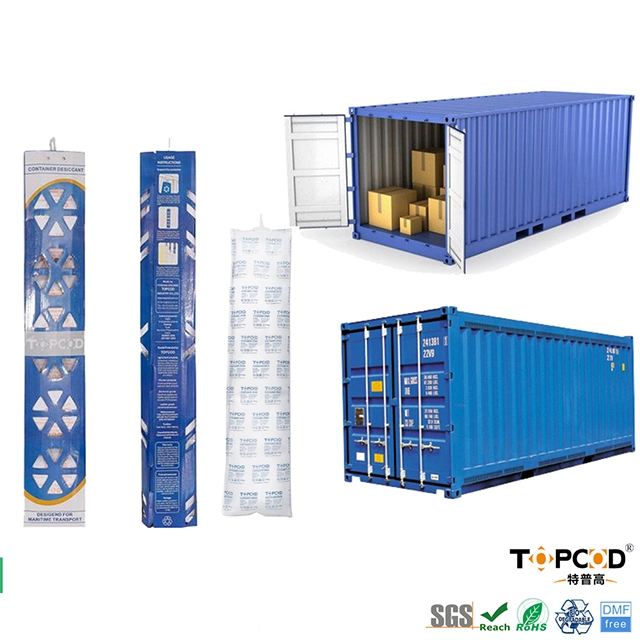
Supply chain teams must choose the right physical format to match their specific shipping environment. You cannot use a one-size-fits-all approach when loading parameters change daily. We see two primary solution categories dominating industrial shipping today.
These rigid or semi-rigid formats fit perfectly into tightly packed operational spaces. They excel when available floor space equals zero. You hang a strip container desiccant directly into the vertical corrugated recesses of the container walls. This intelligent orientation keeps them entirely out of the way during high-speed loading. Forklift operators can maneuver heavy pallets seamlessly without knocking them down. We highly recommend this format for tightly loaded consumer electronics, automotive parts, and palletized machinery.
Loose bags or broad blankets serve a completely different operational purpose. They work best for bulk agricultural goods or irregular cargo profiles. If you have open top-loading space above the freight, bags offer distinct advantages. They provide direct proximity to moisture-emitting goods. You can scale their placement easily across the top tier of your pallets. Blankets drape over massive surface areas, capturing rising vapor immediately before it hits the ceiling.
To make the absolute best choice, always audit your actual loading process first. We advise buyers to observe their warehouse operations directly. Determine if your teams load pallets uniformly or stack loose cartons directly on the floor. Proper evaluation ensures seamless integration into existing warehouse workflows. Palletized loads strongly favor wall-hanging strips to prevent accidental crushing. Floor-loaded bulk shipments often require strategically placed top bags.
Consider this format comparison chart to guide your procurement strategy effectively:
Format Type | Best Cargo Application | Ideal Placement Area | Primary Operational Advantage |
|---|---|---|---|
Hanging Strips / Poles | Tightly packed, palletized goods | Wall corrugations / lashing rings | Zero interference with forklifts |
Loose Bags | Irregular shapes, agricultural bulk | Top of cargo / empty voids | Flexible, scalable dosing |
Large Blankets | High-moisture emitting loads | Draped over top of pallets | Maximum surface area coverage |
Even the most advanced, premium container desiccant will fail completely if you use too little of it. Under-dosing remains the most common implementation failure in the global logistics industry today. Providing an inadequate quantity for a massive moisture load virtually guarantees widespread condensation. A premium product simply cannot overcome mathematical impossibilities when water volume exceeds absorption capacity.
Calculating the proper dosage requires concrete data from your logistics team. You must analyze specific variables rather than relying on generalized estimates from your freight forwarder. Follow these exact metrics to calculate your usage accurately:
Container Size: Calculate the baseline air volume for 20ft, 40ft, or 40ft High Cube units. Larger volumes hold exponentially more airborne moisture.
Cargo Type: Distinguish between highly hygroscopic goods like coffee beans, cocoa, and raw wood, versus non-hygroscopic goods like steel, glass, and plastics. Hygroscopic goods release internal moisture continuously throughout the voyage.
Voyage Routing: Factor in your specific transit paths. Crossing the equator creates massive, rapid temperature swings. Static climate routes pose far less risk.
Pallet Material: Account for the hidden moisture content evaporating from fresh wooden pallets. Wet timber introduces gallons of water into a sealed box.
Once you calculate the precise dosage, you must follow strict placement rules. These active products require maximum exposed surface area to function correctly. Blocking their airflow renders them entirely useless. Consider these skeptical-friendly warnings for your loading teams to prevent common operational mistakes:
Never bury the units under heavy layers of plastic shrinkwrap or tarp.
Avoid jamming them tightly between stacked cartons where air cannot physically circulate.
Do not leave them lying flat on the floor where pooling water might submerge or damage them.
Ensure heavy cargo does not press aggressively against the breathable membrane to prevent accidental bursting.
The global shift toward sustainable supply chains changes how we evaluate all packaging materials. Authoritative compliance now demands strict attention to end-of-life material processes. Procurement evaluators must consider what happens to the desiccant at the destination port. You cannot simply focus on the transit phase anymore. When your container arrives in Europe, North America, or Asia, strict environmental regulations dictate exactly how receiving facilities handle your waste.
Disposal challenges vary widely based on the product chemistry you select. Historically, some industrial absorbents contained heavy-metal-laced materials or toxic chemical additives. Disposing of these hazardous elements into standard commercial waste streams violates local regulations in many major jurisdictions. The resulting regulatory fines severely impact profitability. Today, regulatory bodies demand cleaner alternatives. Non-toxic, food-safe options simplify disposal immensely. They eliminate hazardous waste handling fees and remove frustrating compliance headaches for your overseas partners.
Forward-thinking evaluators should demand clear sustainability metrics from their suppliers. Modern, eco-friendly options utilize degradable outer packaging materials or fully recyclable plastics. These intelligent innovations directly support corporate Environmental, Social, and Governance (ESG) targets. Crucially, they achieve this vital environmental compliance without sacrificing heavy-duty absorption efficacy. You can effectively protect your valuable cargo from ruin while simultaneously protecting the planet.
Protecting international freight against severe moisture damage requires deliberate strategy, not hopeful guessing. Securing your supply chain involves matching the right active ingredient, physical form factor, and precisely calculated dosage to your specific voyage profile. You must view moisture control as an engineered system rather than an afterthought. Consider the unique humidity challenges of your routing, the inherent moisture content of your cargo, and the daily workflow of your loading personnel.
We urge supply chain managers to take proactive, data-driven next steps. Do not wait for the next shipment of ruined goods to force a costly reaction. Conduct a comprehensive moisture risk audit of your warehouse operations today. Request a pilot test using varied dosage levels on your highest-risk shipping routes. Gather empirical data on absorption performance and refine your corporate shipping standards accordingly.
A: Typically 45 to 90 days, depending on the active ingredient and baseline humidity, which covers standard international shipping durations.
A: Generally, no. Industrial-grade calcium chloride desiccants undergo a chemical change (turning into a gel) and are single-use for safety and efficacy.
A: In the vertical corrugated grooves of the container walls, clipping them to the lashing rings to maximize space and airflow while preventing crushing.


