
T: +86-757-2339-5985
E: tp@topcod.com.cn
E: tp@topcod.com.cn
No.6, Pai Sha Industrial Road, Pai Sha Community, Longjiang Town, Shunde District, Foshan City, Guangdong Province, China.
Views: 0 Author: Site Editor Publish Time: 2026-09-22 Origin: Site


Moisture damage acts as a hidden tax on global supply chains. It oxidizes heavy machinery components during transit and causes rejected pharmaceutical batches upon delivery. Reactive moisture control creates unpredictable failure rates across your entire operation. You must balance optimal moisture protection with packaging line throughput, material waste, and strict compliance standards. An optimized strategy decreases manufacturing waste by up to 30 percent while extending product shelf life significantly. This guide provides a structured evaluation framework. You will learn how to select, calculate, and integrate the right materials into your factory packaging lines. We explore matching desiccant chemistry to specific transit profiles, standardized calculation models, and automated dispensing integration. This ensures verifiable product integrity from your facility to the end-user.
Material Alignment: Selecting between silica, clay, or molecular sieves requires matching the desiccant’s adsorption isotherm to the specific temperature and humidity profile of the shipping route.
Precision Calculation & Placement: Relying on guesswork leads to either costly over-packing or catastrophic product failure; standardized formulas based on Moisture Vapor Transmission Rate (MVTR) and strategic internal placement are mandatory.
Line Integration: Automated dispensing requires strict environmental controls on the factory floor to prevent premature desiccant saturation before the final package seal.
Compliance Mandates: Adherence to specific regulatory standards (e.g., MIL-SPEC, IPC/JEDEC, FDA) dictates not only the desiccant type but also the required packaging barrier materials and user-safe formats.
You cannot improve what you do not measure. Establishing a robust moisture control strategy begins with a thorough audit of your current packaging failure rates. You must walk the factory floor and inspect incoming return shipments. Look closely at instances of white rust on galvanized metal parts. Track micro-corrosion on printed circuit board solder joints. Document agglomeration and clumping in powdered chemical drums. These specific data points establish a quantifiable baseline for improvement. Without this hard data, any modifications to your packaging line remain pure guesswork.
Moisture Vapor Transmission Rate (MVTR) serves as the foundational metric for all packaging calculations. MVTR defines the exact amount of moisture gas passing through a specific barrier material over a 24-hour period. Manufacturers express this rate in grams per square meter per day (g/m²/day). A low MVTR indicates a strong moisture barrier. You must verify the MVTR of your primary packaging film using standardized testing methods like ASTM F1249. A standard low-density polyethylene (LDPE) bag might have an MVTR of 4.0 g/m²/day, while a high-grade foil laminate bag drops that rate to 0.0006 g/m²/day. This massive difference dictates exactly how much moisture will penetrate the barrier during the expected shelf life.
Transit and storage variables introduce massive fluctuations in internal relative humidity (RH). Packaged goods rarely travel in climate-controlled environments. Shipping containers experience severe microclimates as they cross different latitudes. Rapid temperature drops create a phenomenon known as container rain. A standard 40-foot shipping container holds roughly 60 cubic meters of air. At 30°C and 80 percent RH, that air holds over a liter of water vapor. When the ship moves into colder waters, the steel walls cool rapidly. The trapped air hits its dew point, and condensation forms on the ceiling before dripping directly onto your cartons. Prolonged port storage further exacerbates these conditions. Goods sitting on humid docks absorb ambient moisture rapidly.
Measuring post-packing performance validates your entire strategy. You must utilize digital data loggers inside sample shipments. Place one logger near the container door, one in the center of the cargo load, and one directly inside the sealed moisture barrier bag. These devices record temperature and humidity levels throughout the journey, providing empirical evidence of environmental conditions. You should also integrate Humidity Indicator Cards (HICs) inside the final packaging. HICs offer a visual confirmation of internal humidity levels upon arrival. They prove that your chosen moisture control strategy actively works in the field. This hard data allows you to adjust your packaging protocols based on real-world performance rather than theoretical models.
Silica gel features a highly porous microscopic structure made of synthetic silicon dioxide. This structure creates a massive internal surface area for moisture adsorption. It demonstrates exceptional efficiency at standard room temperatures. The material traps water molecules physically via capillary condensation without changing its chemical shape. It can hold up to 40 percent of its own weight in moisture. This makes it a highly stable option for sensitive applications where chemical off-gassing is unacceptable.
Manufacturers rely heavily on this material for protecting high-value assets. It prevents surface oxidation on sensitive metal components and protects printed circuit boards from micro-corrosion. It keeps heavy equipment dry during long ocean freights. The material remains completely non-corrosive and non-deliquescent. It never turns into a liquid, even when fully saturated. These reliable physical properties make silica gel for machinery the undisputed industry standard for critical component protection.
However, silica gel possesses specific thermal limitations. Its adsorption capacity drops significantly at elevated temperatures. When ambient temperatures exceed 100°F (38°C), the kinetic energy of the trapped water molecules begins to overcome the physical bonds holding them in the pores. The material may begin to release trapped moisture back into the packaging environment. You must evaluate the expected transit temperatures carefully. If your shipping route involves prolonged exposure to extreme heat, such as sitting on a tarmac in the Middle East, you must consider alternative desiccant chemistries.
Montmorillonite clay provides a highly cost-effective moisture control solution. It occurs naturally as a volcanic ash derivative and requires minimal chemical processing. Manufacturers mine, dry, and grade the clay for packaging use. This makes it an environmentally friendly option for large-scale operations. Clay performs exceptionally well within standard temperature ranges. It absorbs moisture effectively at normal room temperatures and moderate humidity levels, holding up to 25 percent of its weight in water.
This material excels in secondary packaging applications. Manufacturers use it extensively for crating industrial parts and protecting general bulk goods during domestic transit. It works perfectly when extreme temperature fluctuations are not anticipated. These reliable characteristics solidify the use of clay desiccant for cartons as a budget-friendly bulk option for high-volume packaging lines.
You must weigh the economic trade-offs carefully. Clay offers a significantly lower unit cost compared to synthetic alternatives. However, it generally possesses a lower overall adsorption capacity per gram. You will need a higher physical volume of clay to achieve the same moisture protection as a smaller amount of silica gel. This increased volume adds weight to your shipments and requires more physical space inside the packaging.
Calcium chloride offers aggressive moisture absorption capabilities. It can absorb up to 300 percent of its own weight in water. Manufacturers primarily use it in large shipping container poles to pull massive amounts of ambient moisture from the air. However, calcium chloride is highly deliquescent. It turns into a liquid brine as it absorbs moisture. Manufacturers mix it with starch to form a gel, but you must still manage the severe risk of liquid leakage. If a forklift tine punctures a packet, the highly corrosive saltwater brine will destroy metal components instantly.
Molecular sieves provide specialized moisture control for extreme requirements. These synthetic zeolites feature precise, uniform crystalline pore sizes, typically 3A, 4A, or 13X. They trap water molecules rapidly and hold them securely through chemical bonding. They excel in applications requiring moisture reduction to near-zero humidity levels. Medical device manufacturers use them to protect diagnostic equipment. Chemical producers use them to stabilize specialized reactive compounds. They perform exceptionally well at high temperatures where other materials fail, though they carry a significantly higher acquisition cost.
Industrial Desiccant Material Comparison | ||||
Material Type | Optimal Temperature Range | Adsorption Capacity (by weight) | Primary Industrial Use Case | Key Limitation |
|---|---|---|---|---|
Silica Gel | Below 100°F (38°C) | Up to 40% | Machinery, Electronics, PCBs | Releases moisture at high heat |
Montmorillonite Clay | Below 120°F (49°C) | Up to 25% | Cartons, Bulk Goods, Crating | Requires larger physical volume |
Calcium Chloride | Broad Range | Up to 300% | Shipping Container Poles | Corrosive liquid brine leakage risk |
Molecular Sieves | High Temperatures | Up to 22% | Medical Devices, Chemicals | Higher material acquisition cost |
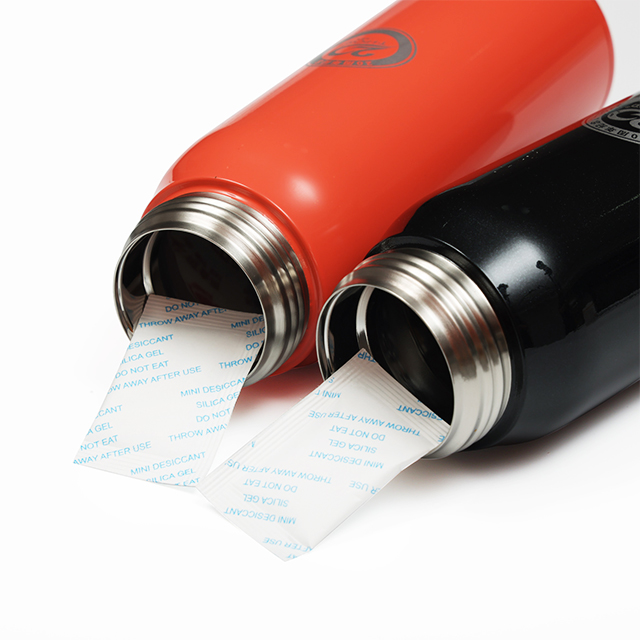
Accurate quantity calculation requires precise data points. You must gather five primary variables before performing any calculations. First, measure the internal volume of the sealed package. Second, calculate the total surface area of the moisture barrier bag in square meters. Third, identify the exact MVTR of the barrier material from the manufacturer's technical data sheet. Fourth, determine the maximum expected duration of transit and storage in months. Finally, assess the expected climatic extremes along the shipping route.
You must also account for hygroscopic dunnage inside the package. Wooden pallets absorb and release massive amounts of water. A standard wooden pallet weighs roughly 20 kilograms. At a typical 15 percent moisture content, that single pallet holds 3 kilograms of water. Cardboard inserts hold hidden moisture. Paper manuals act like sponges. These materials alter the baseline moisture load significantly. If you seal a wooden pallet inside a foil barrier bag, that trapped water will evaporate and attack your product. You must calculate the moisture content of these materials and add massive amounts of desiccant capacity to neutralize this internal threat, or switch to plastic pallets.
Industry professionals rely on standardized calculation models to ensure accuracy. Military specification MIL-P-116 provides a rigorous formula for determining desiccant quantities based on barrier area and dunnage weight. The German standard DIN 55473 offers another globally recognized calculation method. These formulas factor in the barrier area, the MVTR, and the internal volume. They provide a mathematical certainty to your moisture control strategy, eliminating the risk of under-packing.
These standards calculate requirements in "Units" rather than just grams. A standard Unit represents a specific adsorption capacity. It defines the exact amount of desiccant required to absorb 3 grams of water at 20 percent RH, and 6 grams of water at 40 percent RH, at a temperature of 25°C. Calculating by Units standardizes the process across different desiccant chemistries. It allows you to swap a silica gel packet for a clay packet while maintaining the exact same level of moisture protection, provided both packets equal the same number of Units.
Calculating the correct quantity represents only half the equation. Strategic placement within the packaging determines actual performance. You cannot simply toss packets into a box randomly. You must distribute the packets evenly throughout the internal space. This ensures uniform moisture adsorption across the entire product surface. Poor placement leaves certain areas vulnerable to micro-condensation, leading to localized rust spots on large machinery.
Internal airflow dynamics play a critical role in desiccant effectiveness. The material must have access to the ambient air inside the package. Do not bury packets under dense layers of foam packaging or tape them tightly into corners. Ensure adequate internal airflow around every packet. Furthermore, avoid direct physical contact between the packet and highly sensitive bare metal components. Direct contact can cause localized desiccation damage and increases the risk of microscopic dust transfer onto precision machined surfaces. Use dedicated suspension pouches or tie-strings to hang the packets safely within the crate.
The electronics industry operates under strict moisture control mandates. The IPC/JEDEC J-STD-033 standard dictates the handling, packing, and shipping protocols for moisture-sensitive devices. Surface mount devices (SMDs) absorb ambient moisture rapidly on the factory floor. During the reflow soldering process, temperatures reach 260°C. Any trapped moisture inside the SMD expands violently into steam. This causes the component to crack, a failure known as popcorning, leading to catastrophic board failure.
Compliance requires a highly specific packaging configuration. You must use designated desiccant types approved for electronic applications. You must pair these packets with specialized Humidity Indicator Cards (HICs) that monitor specific RH thresholds (e.g., 5%, 10%, 60%). The entire assembly must be sealed inside compliant Moisture Barrier Bags (MBBs). The standard dictates the exact MVTR requirements for the MBBs and specifies the precise number of desiccant Units required based on the bag's surface area. Failure to follow these protocols results in immediate shipment rejection by electronics manufacturers.
Consumable products require stringent safety compliance. The FDA mandates that all materials used in food packaging achieve GRAS (Generally Recognized As Safe) status. You must use non-toxic desiccant chemistries. The packaging material itself must prevent any dust contamination. Medical-grade Tyvek packets provide the necessary tear resistance and dust-free performance required for food and pharmaceutical applications, ensuring no silica dust contaminates the consumable product.
The pharmaceutical and medtech sectors show a massive shift toward user-friendly options. Patient safety drives these packaging trends. Manufacturers now favor rigid drop-in canisters over traditional flexible packets for high-speed bottling lines. They also utilize integrated desiccant closures built directly into the bottle cap. These formats prevent accidental ingestion by the end-user. They maintain strict moisture control for sensitive active pharmaceutical ingredients (APIs) while eliminating choking hazards entirely.
Military logistics demand extreme durability. The MIL-D-3464E specification governs desiccant use for defense applications. This standard focuses heavily on physical durability, dusting limits, and reactivation protocols. The packets must withstand severe vibration and drop impacts without rupturing. The standard classifies desiccants into Type I (general use) and Type II (non-dusting). Military hardware often sits in uncontrolled storage depots for years. The moisture control system must perform flawlessly upon deployment, requiring strict adherence to these testing standards.
Scaling production requires evaluating your dispensing methods. Manual drop-in methods work for low-volume operations. However, they introduce significant human error. Workers forget to insert packets. They insert the wrong size. They drop packets on the floor, pick them up, and insert them anyway, introducing severe contamination risks. Continuous-strip desiccant dispensers eliminate these variables entirely. These machines use stepper motors and pneumatic knives to cut and drop packets directly from a continuous spool at high speeds. They match the throughput capabilities of modern automated packaging lines perfectly.
You must analyze the capital expenditure (CapEx) of integrating dispensing machinery. The initial cost of the equipment requires justification. Compare this CapEx against the long-term labor savings. Automated dispensers reduce headcount on the packaging line. More importantly, they drastically reduce human error. Eliminating un-protected product runs saves thousands of dollars in rejected shipments and rework labor. The return on investment for automated dispensing equipment typically materializes within the first year of operation.
Automated integration introduces the critical floor life problem. Desiccants begin absorbing ambient moisture the moment you expose them to factory air. If a spool sits in a machine hopper for four hours in a facility with 60 percent RH, it saturates prematurely. By the time the packet drops into the final package, it has lost most of its adsorption capacity. This renders the entire moisture control strategy useless. You must manage factory floor exposure times rigorously to maintain packet integrity.
Mitigation strategies require strict environmental controls. You must install environmentally controlled hoppers on your dispensing machines. Implement compressed dry air (CDA) or nitrogen purges to keep the hopper environment below five percent humidity. Establish strict staging protocols for desiccant spools. Do not open sealed spools until the exact moment of integration. Store backup spools in dedicated dry cabinets. Monitor the hopper humidity continuously with digital sensors.
Sensor calibration presents another significant implementation risk. Automated lines rely on optical sensors to detect the registration mark on the continuous strip and trigger the pneumatic knife. Transparent packets or improperly spliced spools confuse these sensors. The machine may cut the packet in half, spilling desiccant beads directly onto the product. It may also miss the packet entirely, leading to un-protected product runs. You must calibrate optical sensors specifically for the exact packet material you choose. Conduct daily sensor verification checks to ensure continuous cutting accuracy.
Evaluating packaging materials purely on a cost-per-packet basis creates dangerous blind spots. A cheaper packet often leads to catastrophic downstream failures. You must focus on how the right Industrial Desiccant decreases overall manufacturing waste. Proper moisture control prevents raw material degradation. It stops finished goods from spoiling in transit. Implementing a precise strategy can decrease overall packaging and product waste by up to 30 percent. This reduction directly improves your production efficiency and output metrics.
Several value-influencing factors determine the success of your packaging strategy. The primary factor is the reduction of Return Merchandise Authorization (RMA) rates. When products arrive dry and functional, customers do not return them. Lowering your RMA rate saves massive amounts of administrative and reverse logistics labor. Reworking rusted metal parts requires chemical stripping, labor, and time. Additionally, verifiable moisture control protocols often lead to lowered insurance premiums for export freight. Insurers recognize the reduced risk of cargo damage. Consistent product quality protects your brand reputation in highly competitive markets.
Supply chain reliability dictates production quality. You must audit your desiccant suppliers rigorously. Do not evaluate them solely on delivery times. You must inspect their raw material activation processes. Ensure their production facilities operate under strict climate controls. Ask for their activation oven temperature logs. A reliable supplier guarantees maximum adsorption capacity upon delivery. If the industrial packaging desiccant arrives partially saturated because they shipped it in thin poly bags, your entire line suffers. Demand quality assurance certificates and incoming moisture content tests for every batch you receive.
Initiate a pilot testing phase utilizing digital data loggers inside sample shipments to validate your calculation models.
Audit your automated dispensing hoppers to ensure dry-air purges maintain internal humidity below five percent.
Verify the MVTR specifications of your current barrier bags directly with your packaging film supplier.
Standardize your procurement requirements using the Unit calculation method to ensure consistent protection across different material types.
Conduct a physical inspection of your supplier's raw material activation ovens and request batch testing certificates.
A: You calculate the requirement by measuring the internal volume of the package and the surface area of the moisture barrier bag. You factor in the barrier's Moisture Vapor Transmission Rate (MVTR), transit duration, and climatic extremes. Standardized formulas like MIL-P-116 use these variables to determine the exact number of Units needed.
A: Silica gel is a synthetic, highly porous material that holds up to 40 percent of its weight in moisture and remains stable at room temperatures. Clay is a natural, cost-effective mineral that absorbs up to 25 percent of its weight. Silica gel offers higher efficiency per gram, while clay requires larger physical volumes.
A: Internal placement dictates airflow and absorption uniformity. Packets must be distributed evenly throughout the package to prevent localized micro-condensation. They require adequate airflow to absorb ambient moisture. You must avoid direct physical contact with sensitive components to prevent localized desiccation damage or dust transfer.
A: Effectiveness duration depends entirely on the barrier bag's MVTR and the external climate. A properly calculated desiccant inside a high-quality foil barrier bag protects goods for several years. If the barrier bag is highly permeable or compromised, the desiccant saturates within a few weeks.
A: Yes, automated dispensing machines cut and drop packets from continuous spools at high speeds. They require strict environmental controls. You must use dry-air purged hoppers to prevent the spools from absorbing ambient factory moisture before they drop into the final package.
A: A Unit is a standardized measurement of adsorption capacity, not a measurement of weight. One Unit is defined as the exact amount of desiccant required to absorb 3 grams of water at 20 percent relative humidity, and 6 grams of water at 40 percent relative humidity, at 25°C.


