
T: +86-757-2339-5985
E: tp@topcod.com.cn
E: tp@topcod.com.cn
No.6, Pai Sha Industrial Road, Pai Sha Community, Longjiang Town, Shunde District, Foshan City, Guangdong Province, China.
Views: 0 Author: Site Editor Publish Time: 2026-09-23 Origin: Site


Moisture ingress in sealed packaging carries hidden financial and reputational costs. When water vapor breaches a barrier, it triggers product degradation, accelerates mold proliferation, and compromises chemical efficacy. Selecting the correct Moisture Absorber Packets is a strict engineering decision. Generic, improperly sized, or mismatched absorbers inevitably lead to premature saturation. This results in regulatory compliance failures or costly product recalls. You must establish a rigorous evaluation framework for specifying these packets based on packaging permeability, environmental variables, and product chemistry. In this guide, we break down how to calculate moisture vapor transmission rates, evaluate core desiccant technologies, and implement strict quality assurance protocols to protect your sealed products.
Matching desiccant chemistry to specific relative humidity (RH) requirements and temperature fluctuations is critical; there is no universal solution.
Accurate sizing requires calculating the Moisture Vapor Transmission Rate (MVTR) of the primary barrier packaging alongside the product's inherent moisture content.
Regulatory compliance dictates substrate and chemical selection, particularly when specifying food grade desiccant packets for consumables or pharmaceuticals.
Improper facility storage of unused packets drastically reduces their absorption capacity before they are even introduced to the production line.
Temperature fluctuations during shipping and storage cause condensation. We call this the sweat effect. It happens inside seemingly impermeable containers when trapped air cools. The air loses its ability to hold water vapor. It drops its moisture payload directly onto your product. This physical reaction occurs regardless of how tightly you seal the external container. You must account for these temperature swings during global transit. A shipping container sitting on a dock in Singapore at 95°F and 90% relative humidity traps a massive amount of water vapor. When that container loads onto a vessel and the ocean air drops to 50°F at night, the internal air hits the dew point. Water condenses on the ceiling and rains down on the pallets.
You must define the maximum allowable relative humidity for specific product categories. Electronics require different baselines than dried foods or pharmaceuticals. Exceeding these thresholds initiates immediate degradation. For example, bare printed circuit boards often require an RH below 10% to prevent micro-corrosion on solder joints. Dried organic goods might tolerate up to 30% RH before mold spores activate. You need to establish this target RH before selecting any desiccant. The target dictates the required absorption capacity and the specific chemical compound you deploy.
Product Category | Target Relative Humidity (RH) | Primary Moisture Risk |
|---|---|---|
Bare Printed Circuit Boards | Below 10% | Micro-corrosion, solder joint failure |
Pharmaceutical Powders | Below 15% | Caking, loss of active ingredient efficacy |
Dried Foods & Jerky | 20% - 30% | Mold proliferation, texture degradation |
Leather Goods & Textiles | 30% - 40% | Mildew growth, odor accumulation |
The primary packaging material dictates the workload placed on the desiccant. Foil laminates offer strong resistance to moisture vapor. High-density polyethylene allows more vapor transfer over time. You must evaluate the barrier efficacy to size the desiccant accurately. A weak barrier forces the desiccant to work harder. It absorbs continuous ingress rather than just the initial trapped moisture. Upgrading your primary packaging often reduces the required desiccant volume. This creates a functional balance between packaging materials and moisture control units.
Vacuum sealing reduces the initial trapped air volume. However, it does not stop continuous moisture ingress. The Moisture Vapor Transmission Rate still applies to the packaging material. Micro-perforations and seal seams allow vapor to penetrate slowly. You need precise desiccant pairing for long-term storage protection. Vacuum sealing handles the immediate atmospheric volume. The desiccant handles the long-term vapor transmission. Relying solely on vacuum sealing for multi-year storage is a massive engineering flaw. Over time, the vacuum degrades, and ambient moisture slowly permeates the barrier, leaving the product entirely unprotected if no desiccant is present.
Silica gel adsorbs moisture via microscopic pores. It traps water molecules within its internal structure without changing its physical shape or expanding. This makes it highly predictable for tight packaging spaces. The synthetic silicon dioxide matrix provides a massive surface area. A single gram contains hundreds of square meters of internal surface. This structure pulls moisture from the surrounding air rapidly. The pores typically measure between 20 and 30 Angstroms, perfectly sized to capture and hold water molecules.
These silica gel moisture packets are highly effective at room temperature. They maintain a stable physical form even when fully saturated. They do not turn into a liquid or a paste. This physical stability prevents product contamination. They perform best in environments between 70°F and 90°F. Their absorption capacity drops significantly above 100°F. You should specify silica gel for climate-controlled transit and standard warehouse storage where extreme heat is not a factor.
Indicating variants change color when saturated. This provides a visual cue for replacement. Be aware of regulatory restrictions on cobalt(II) chloride indicators. Many regions ban this blue-to-pink chemical due to toxicity concerns. You should specify copper-chloride or iron-salt indicators instead. These offer a safer orange-to-green or orange-to-colorless transition. Always verify the chemical safety data sheet before approving an indicating desiccant for your packaging line.
Recharging silica gel is possible in consumer markets. You can bake it to release trapped moisture. However, commercial viability is extremely low. The strict quality assurance risks make this impractical. Labor costs for tracking, baking, and repackaging exceed the cost of new units. Industrial settings require guaranteed performance. Single-use packets eliminate the risk of introducing partially saturated desiccants into your production line. You cannot afford to risk a high-value product shipment to save fractions of a cent on reused silica gel.
Calcium chloride offers an aggressive absorption profile. It can absorb several times its own weight in water. It pulls moisture rapidly from high-humidity environments. This chemical compound acts as a powerful hygroscopic agent. It actively strips water vapor from the surrounding air. It continues to absorb moisture even as the ambient humidity drops. Unlike silica gel, which caps out around 30% to 40% of its weight in moisture, calcium chloride can absorb up to 300% of its weight depending on the formulation.
These calcium chloride absorber packets are highly effective for extreme humidity. They excel in ocean shipping containers. However, they carry a risk of liquid leakage. We call this deliquescence. As the chemical absorbs water, it turns into a corrosive brine. If the packet substrate tears, this brine will ruin your product. If a forklift clips a pallet and ruptures a calcium chloride bag, the resulting liquid can eat through steel components. You must specify heavily reinforced, leak-proof packaging for these absorbers.
Identify specific industrial and bulk-transit use cases for this technology. High-capacity absorption often outweighs localized leakage risks in these scenarios. Use them in shipping containers transporting heavy machinery, steel coils, or bulk textiles. Suspend them away from direct product contact using specialized hanging poles or reinforced wall traps. Do not use them inside primary retail packaging. The risk of consumer exposure to the resulting brine is too high.
Bentonite clay is a cost-effective, environmentally friendly alternative. It is a naturally occurring mineral. It works exceptionally well for low-temperature environments. It absorbs moisture efficiently up to 120°F. Beyond this temperature, it begins to release trapped moisture back into the package. You must avoid clay desiccants for products stored in hot warehouses or unventilated transit containers. Clay is also heavier than silica gel. While it is cheaper by volume, the added weight can increase shipping costs for air freight operations.
Molecular sieve provides a rapid absorption rate. It traps moisture at extremely low relative humidity levels. It can drive the internal RH down to nearly zero. It retains moisture even at high temperatures. This makes it ideal for highly sensitive biochemical or pharmaceutical applications. Medical diagnostic equipment often relies on molecular sieves to protect sensitive reagents. It is more expensive than silica or clay. You should reserve it for high-value products requiring absolute moisture eradication.
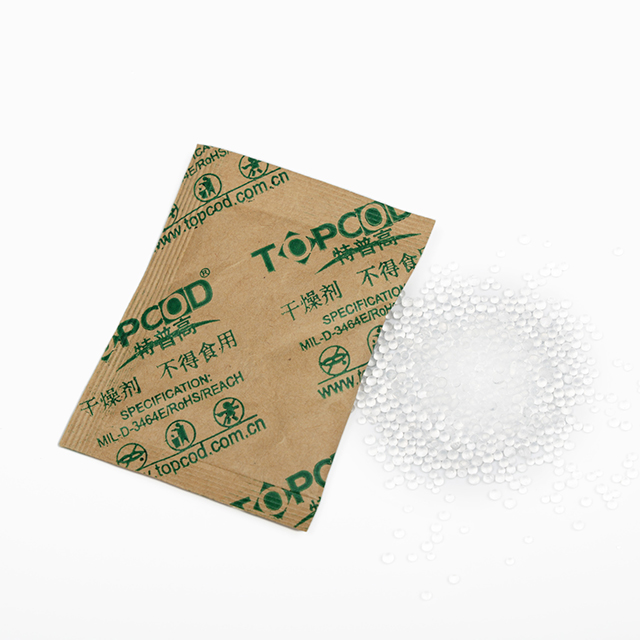
Moisture absorber packets control humidity to prevent mold and clumping. Oxygen absorbers remove O2 to prevent oxidation and rancidity. They serve entirely different preservation functions. You cannot use them interchangeably. Moisture absorbers trap water vapor. Oxygen absorbers trigger a chemical rusting process using iron powder. This rusting process consumes the available oxygen in the sealed environment, bringing the internal oxygen level down to 0.01%.
Using both simultaneously carries significant technical risk. Oxygen absorbers require a specific level of ambient moisture to activate. Aggressive desiccants can inadvertently strip this moisture away. If the desiccant works faster, the oxygen absorber fails to activate. Your product remains exposed to oxidation. You must understand this chemical conflict before designing your packaging protocol. Putting a heavy-duty silica gel packet next to an oxygen absorber in a bag of beef jerky will result in oxidized, spoiled meat because the oxygen absorber never turned on.
You need a clear decision framework for implementation. Use moisture control for dry powders, electronics, and hardware. Use oxygen control for high-fat foods, cured meats, and baked goods. If your product requires both, use a carefully staged combination. Place the oxygen absorber in the package first. Allow it to consume the oxygen over 24 hours. Then, introduce the moisture absorber. Alternatively, source specialized dual-action packets designed to manage both elements without internal conflict.
Preservation Goal | Required Technology | Mechanism of Action | Common Applications |
|---|---|---|---|
Prevent Mold & Caking | Moisture Absorber | Adsorbs water vapor to lower RH | Spices, electronics, pills, hardware |
Prevent Rancidity & Oxidation | Oxygen Absorber | Iron oxidation consumes ambient O2 | Jerky, nuts, baked goods, coffee |
Prevent Both (Staged) | Dual-Action / Staged Insertion | Manages O2 first, then lowers RH | Specialty pharmaceuticals, military rations |
FDA and EU compliance requirements dictate desiccant use. These rules apply strictly to desiccants in direct or indirect contact with consumables. The desiccant material must hold Generally Recognized As Safe (GRAS) status under FDA 21 CFR regulations. You cannot use industrial-grade chemicals near food or medicine. Regulatory bodies require full traceability of the desiccant components. You must maintain documentation proving the chemical purity of your absorbers to pass facility audits.
You must evaluate the packet substrates carefully. Compare Tyvek, Kraft paper, and perforated plastic films. You must evaluate tear resistance, dust-proofing, and breathability. Tyvek, a spunbond polyethylene material, offers superior puncture resistance and zero dusting. Kraft paper is economical but risks tearing under pressure. When specifying food grade desiccant packets, prioritize zero-dust substrates. Even microscopic desiccant dust violates food safety standards and triggers immediate quality control rejections.
Utilize non-toxic, non-dusting formulations. This prevents product contamination during transit. A compromised packet can ruin an entire production batch. If a packet bursts, the physical desiccant beads mix with the product. This triggers immediate recalls. Specify ultrasonically welded seams for the packet edges. Avoid glued seams, as adhesives can degrade in high humidity environments. Robust construction is your primary defense against contamination on the retail shelf.
You must calculate the continuous moisture ingress over the product's shelf life. Use the Moisture Vapor Transmission Rate of the packaging material. The manufacturer provides this rating. It measures how many grams of water pass through one square meter of material in 24 hours. Multiply this rate by the total surface area of your package. Then multiply by the desired shelf life in days. This gives you the external moisture load.
You must also account for the trapped air volume at the time of sealing. Calculate the cubic volume of the package. Determine the absolute humidity of the air during the sealing process. Next, calculate the moisture naturally off-gassing from the product itself. Wood, paper, and certain plastics release moisture over time. Add the external moisture load, the trapped air moisture, and the off-gassing moisture. This equals your total moisture capacity requirement.
Standardized sizing methodologies transition desiccant selection from guesswork to precise unit calculations. MIL-STD-2073-1 guidelines provide a reliable baseline. A "Unit" of desiccant is defined by its absorption capacity, not its physical weight. One unit absorbs 3 grams of water at 20% RH and 6 grams at 40% RH. Divide your total moisture capacity requirement by the unit capacity. This yields the exact number of desiccant units required per package.
Consider a practical calculation for a sealed electronic enclosure. The enclosure has a surface area of 0.5 square meters. The barrier bag has an MVTR of 0.02 grams per square meter per day. The target shelf life is 365 days. The external moisture load is 0.5 * 0.02 * 365, which equals 3.65 grams of water. The trapped air contains 0.5 grams of water. The total moisture load is 4.15 grams. Using the MIL-STD-2073-1 baseline, you need a desiccant capable of absorbing at least 4.15 grams of water to maintain the target RH for a full year.
Packaging Material | Average MVTR (g/m²/day) | Barrier Quality | Desiccant Workload |
|---|---|---|---|
Foil Laminate (MIL-PRF-131) | < 0.001 | Excellent | Very Low |
High-Density Polyethylene (HDPE) | 0.1 - 0.5 | Moderate | Medium |
Low-Density Polyethylene (LDPE) | 1.0 - 1.5 | Poor | High |
Standard Cardboard / Kraft | > 50.0 | None | Unmanageable |
Desiccants have a realistic shelf life in their master packaging. You must track their efficacy over time. Most manufacturers guarantee performance for 12 to 18 months in an unopened master bag. Once the expiration date passes, the packets may have absorbed ambient moisture through micro-leaks in the master packaging. Implement a strict first-in, first-out inventory system. Never deploy expired desiccants into high-value product packaging. Test older inventory using a moisture analyzer before approving it for the production line.
Implement strict protocols for storing unused packets. Keep them in airtight, climate-controlled environments. Avoid frequent operational failures on the assembly line. Leaving master bags open on the production floor causes premature saturation. Operators open a 1,000-count master bag at 8 AM. By 3 PM, those desiccants have absorbed the factory humidity and lost half their capacity. Operators must extract the required packets and immediately reseal the master bag. Exposure to ambient factory air degrades desiccant capacity within hours. Purge opened master bags with dry nitrogen before resealing if possible.
Humidity Indicator Cards serve as a verifiable quality assurance tool. They monitor the internal environment of the sealed product post-assembly. Place an HIC inside the primary barrier alongside the desiccant. The card features chemically treated spots that change color at specific RH thresholds. This provides visual confirmation of desiccant performance upon delivery. If the card shows high humidity, you know the barrier failed or the desiccant was undersized. This allows you to catch packaging failures before the customer opens a degraded product.
Audit your current packaging MVTR to establish a baseline for moisture ingress.
Calculate required desiccant units using industry standard formulas and total moisture load.
Request Technical Data Sheets from prospective suppliers to verify absorption capacities.
Implement strict storage protocols for unused desiccant inventory on your production floor.
A: You calculate the total moisture load. Add the moisture from trapped air, product off-gassing, and continuous ingress through the packaging. Use the material's Moisture Vapor Transmission Rate multiplied by surface area and shelf life. Divide this total water weight by the desiccant's absorption capacity per gram to find the required size.
A: Silica gel traps water vapor to lower relative humidity. This prevents mold, corrosion, and clumping. Oxygen absorbers use a chemical reaction to remove oxygen gas. This prevents oxidation, rancidity, and aerobic bacterial growth. They serve entirely different purposes and cannot replace one another.
A: No. Calcium chloride turns into a corrosive liquid brine as it absorbs moisture. If the packet substrate tears, this liquid will contaminate and ruin the food. You should only use calcium chloride for bulk transit or industrial shipping containers where it is suspended away from the product.
A: They remain effective until they reach their maximum absorption capacity. This depends entirely on the barrier packaging's MVTR and the ambient environment. In a perfectly sealed, high-barrier foil pouch, a properly sized desiccant can maintain low humidity for several years.
A: Store them in their original, unopened master bags in a climate-controlled room. Once opened, operators must extract what they need and immediately reseal the master bag. Do not leave packets exposed to ambient factory air, as they will saturate prematurely.
A: It is not recommended for industrial applications. While you can bake silica gel to release moisture, the labor costs and quality assurance risks are too high. You cannot guarantee the packet's renewed capacity. Single-use packets ensure predictable, guaranteed performance for commercial products.
A: For most dry goods and electronics, there is no risk to over-desiccating. It simply extends the protection time. However, for products like leather, cigars, or certain pharmaceuticals, stripping too much moisture causes the product to crack, dry out, or lose chemical efficacy.


