
T: +86-757-2339-5985
E: tp@topcod.com.cn
E: tp@topcod.com.cn
No.6, Pai Sha Industrial Road, Pai Sha Community, Longjiang Town, Shunde District, Foshan City, Guangdong Province, China.
Views: 0 Author: Site Editor Publish Time: 2026-11-15 Origin: Site


Packaging engineers often grapple with the apprehension that naturally derived moisture absorbers introduce an unwanted earthy or mineral odor to sealed products. This concern frequently influences procurement decisions for sensitive packaging environments, including food, pharmaceuticals, luxury textiles, and electronics. The assumption that nature-based desiccants are inherently aromatic can lead teams to reject perfectly viable materials, often defaulting to more expensive synthetic alternatives. However, the chemistry of processed mineral desiccants contradicts this common myth. In this guide, we evaluate the chemical properties of clay desiccant packs, debunk misconceptions surrounding odor, and provide a framework for selecting the right desiccant for your industrial applications. By understanding the mechanical and material profiles of these desiccants, you can ensure product integrity while optimizing your supply chain costs.
Montmorillonite clay, known commercially as bentonite clay, is a naturally occurring porous mineral. Manufacturers extract this mineral from the earth and refine it into an Activated Clay Desiccant through intensive kiln-drying. This process is the key to its performance. During manufacturing, the clay undergoes high-temperature treatment that eliminates organic impurities and biological matter. Raw, unprocessed clay might retain a characteristic damp scent, but industrial-grade desiccant is fundamentally different. It is chemically inert, meaning it does not react with the items inside your packaging. Because the material is stripped of volatile organic compounds and biological traces, it possesses no smell or taste, ensuring it remains invisible to the end user's senses.
When you select Clay Desiccant for your operations, you are choosing a mineral that is effectively neutralized. It does not off-gas, and it does not contaminate the atmosphere of the package. For applications involving high-end textiles or sensitive food goods, this neutrality is a baseline requirement. The kiln-drying process acts as a form of purification, vaporizing substances that might otherwise cause odor. By the time the clay is sealed into its packet, it is a stable, sterile mineral product ready for industrial use.
The moisture-trapping mechanism of montmorillonite clay is rooted in its layered lattice structure. At a microscopic level, these layers capture water molecules and hold them tightly within the mineral structure. A distinct advantage of this architecture is its dimensional stability. Unlike some chemicals that expand when wet, clay maintains its original shape and size. This makes it ideal for dense packaging where space is limited and swelling would be detrimental to the product’s presentation or structure.
Beyond moisture control, these packs function as active participants in maintaining a neutral internal environment. By maintaining a low relative humidity, the clay prevents the growth of mold and mildew, which are the primary culprits behind musty odors in shipping containers. Furthermore, the massive internal surface area of activated clay allows it to adsorb certain volatile organic compounds. Rather than emitting an odor, the clay acts as a buffer against external smells that might have entered the package during assembly. It essentially scrubs the air inside the enclosure, keeping the product's natural scent preserved throughout its transit lifecycle.
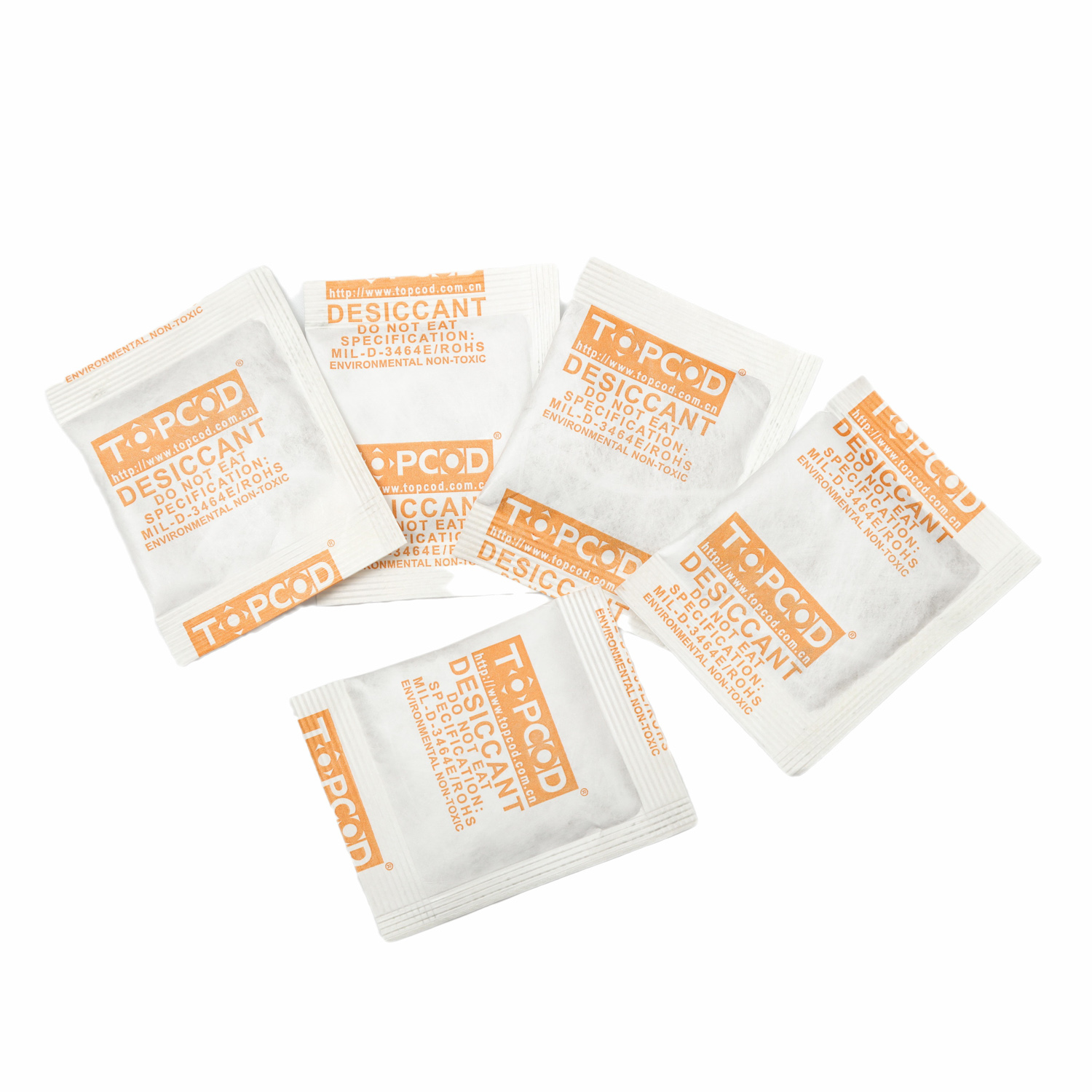
In industries like pharmaceutical and food distribution, safety is the primary metric for packaging components. You must compare clay against silica gel regarding both safety and odor. Silica gel is common, but certain indicating variants contain cobalt chloride, a chemical that is prohibited in many food and pharmaceutical applications due to toxicity concerns. In contrast, montmorillonite clay desiccant is a natural, non-toxic mineral. It meets FDA and MIL-SPEC requirements for safety, which is why it is preferred for items that require a clean, non-leaching environment. Because the clay is chemically inert, it does not alter the flavor profile of dry foods or the chemical composition of sensitive medical components.
When you use inert clay, you eliminate the risk of chemical migration. This is essential for long-term storage or high-value electronics where micro-contaminants could affect performance. Feature-to-outcome analysis shows that using clay ensures the packaging remains a neutral bystander, protecting the goods without adding variables. Whether you are shipping grain, dried snacks, or complex circuitry, the choice of clay provides a level of chemical stability that synthetic gels struggle to match at a competitive price point.
| Feature | Activated Clay Desiccant | Silica Gel |
|---|---|---|
| Chemical Nature | Naturally occurring mineral (Inert) | Synthetic silicon dioxide |
| Odor Profile | Odorless; traps ambient VOCs | Odorless |
| Safety | Non-toxic; Food safe | Generally safe; avoid cobalt chloride |
| Thermal Stability | Works up to 120°F | Effective up to higher temperatures |
| Cost Efficiency | High (Ideal for bulk) | Variable |
While clay is highly effective, it has different physical requirements compared to synthetic alternatives. Clay granules are more fragile. Under extreme vibration or physical pressure, they can suffer from mechanical breakdown. This is why packet engineering is central to the implementation of clay. If the packet material is too thin or prone to tearing, the natural dust of the clay can escape, which may be unacceptable in cleanroom or optical environments. This does not mean the clay is failing; it means the packaging needs to be robust enough to hold the mineral securely.
We see companies solve this through smart material choices. For example, moving from standard Kraft paper to non-woven, tear-resistant substrates significantly reduces the dust problem. If your product is not dust-sensitive, Kraft paper is often sufficient. If you are shipping precision instruments, opt for Tyvek or a similar high-density polyethylene fiber that allows moisture transmission while trapping all particulate matter inside the packet. By selecting the correct containment material, you capture the benefits of clay's low cost and environmental friendliness without the risks of dust contamination.
A common misconception in the warehouse is that all desiccant packs are rechargeable. For clay, this is a flawed strategy. Because the porous structure of montmorillonite is delicate, exposing it to the temperatures required for regeneration (typically above 120°F or 50°C) often leads to structural collapse. Once the lattice collapses, the clay loses its ability to adsorb moisture and begins to degrade into dust. Attempting to bake these packs in an oven is not only inefficient but also counterproductive to your moisture control goals.
Compare this to silica gel, which is much more resilient under heat. If your operation demands high-temperature regeneration, you should use synthetic alternatives. However, if your strategy is based on single-use, high-volume shipping, clay is the superior choice. The cost of labor to collect, heat, and re-pack clay desiccants often exceeds the cost of purchasing fresh, high-quality packs. Focus your efforts on efficient disposal rather than attempted regeneration to maintain the integrity of your packaging system.
Clay desiccant packs are workhorses for industries requiring protection from humidity during shipping. Machinery, automotive parts, textiles, and secondary food packaging are primary candidates. The mineral’s natural ability to trap moisture and hold it makes it excellent for static storage and regional transit. However, you must avoid clay in environments where excessive heat or constant, extreme vibration is present. For example, in shipping containers that may reach internal temperatures of 130°F in the summer, clay might begin to desorb, meaning it gives moisture back to the air. In these cases, you would need to calculate your transit routes to ensure the temperatures remain within the effective range of the desiccant.
For firms looking to reduce their carbon footprint, clay is an obvious choice. It is a naturally occurring earth mineral, which means its production has a much lower environmental impact than the energy-intensive manufacturing required for silica beads. At the end of its life, a clay desiccant pack can be discarded without creating hazardous waste. This simplifies your logistics and helps your firm meet sustainability metrics. When you buy in bulk, the economics of clay are favorable, allowing you to scale your packaging operations without significant increases in unit costs.
The packet substrate acts as the primary defense against the natural fragility of clay. To mitigate the risk of dust reaching your goods, follow this simple selection hierarchy:
Efficiency in desiccant use depends on accurate sizing. You must calculate the moisture load based on the volume of your container, the permeability of your barrier film (the MVTR), and the duration of the shipment. Under-sizing leads to moisture damage and potential odor issues, while over-sizing is simply a waste of capital. Conduct an audit of your typical shipment volume to ensure each pack is working at its maximum capacity. This involves calculating the weight of the water vapor that could theoretically enter your package and matching that with the adsorption capacity of your chosen clay pack size.
Industrial-grade clay desiccant packs are an excellent choice for businesses that need reliable moisture control without the baggage of synthetic chemicals. They are odorless, inert, and structurally stable for the vast majority of shipping applications. To get the most out of them, follow these action steps:
A: No. High-grade, kiln-dried montmorillonite clay is completely odorless and chemically inert. The manufacturing process removes all organic matter, ensuring that the packs themselves emit no smell or taste, even in humid conditions.
A: Yes. Natural clay is non-toxic and compliant with international standards for food contact. Unlike certain silica gels containing cobalt chloride, clay presents no risk of chemical leaching, making it an ideal choice for dry food protection.
A: It is not recommended. The cellular structure of the clay is thermally fragile. Heating it to the temperatures required to drive out moisture often causes the mineral to crumble, rendering the pack ineffective and creating dust contamination.
A: A broken pack will leak clay dust. While the dust is non-toxic, it can be abrasive. If you notice a breakage, clean the area with a vacuum. To prevent this, use reinforced packet materials like Tyvek for products that are sensitive to particulates.
A: Both are odorless, but clay has an advantage. Because clay has a large surface area, it helps neutralize ambient VOCs and prevent mold-based odors. Both prevent musty smells by removing the humidity that mold requires to survive.
A: Clay is effective up to 120°F (50°C). If your shipment is likely to be exposed to temperatures exceeding this, the clay may release trapped moisture back into the container, which will compromise your protective barrier.


