
T: +86-757-2339-5985
E: tp@topcod.com.cn
E: tp@topcod.com.cn
No.6, Pai Sha Industrial Road, Pai Sha Community, Longjiang Town, Shunde District, Foshan City, Guangdong Province, China.
Views: 0 Author: Site Editor Publish Time: 2026-11-13 Origin: Site


In industrial packaging engineering, pushing moisture-absorbing beads to their physical limits is not just a scientific curiosity. It is a critical compliance metric. Global supply chains currently face unprecedented climate extremes. Consequently, packaging logistics trends show a massive shift toward ultra-durable moisture control solutions. Supply chain engineers now view the physical crush strength of a saturated bead as a primary focus for quality assurance.
Picture the journey of a sensitive camera lens or a batch of life-saving medicine shipped across the ocean. Inside the protective box, tiny beads work tirelessly to trap ambient humidity. If these beads fail and shatter under the pressure of stacked pallets, the resulting abrasive dust ruins expensive products instantly. This comprehensive guide explores the exact pressure required to break a wet moisture-absorbing ball. We will examine the thermodynamics of structural failure, detail the catastrophic effects of liquid exposure, and provide actionable engineering standards to keep your products pristine.
To understand how external weight and pressure affect these materials, we must first analyze their microscopic architecture. The most common material used in the industry is synthetic silicon dioxide. This compound is widely utilized as a high-capacity Silica Gel Desiccant. Despite the word gel in its name, this material is actually a hard, glassy, and highly porous solid. Other variations include activated alumina, natural bentonite clay, or synthetic molecular sieves.
Regardless of the specific chemical compound, these beads feature a sponge-like internal structure. A single gram of high-quality material possesses an internal surface area of up to 800 square meters, roughly the size of a professional tennis court. To the naked eye, they appear as solid glass or plastic spheres. Microscopically, they resemble a dense and rigid maze of interconnected pores.
It is a common misconception that these beads absorb water the way a standard kitchen sponge does. A standard sponge absorbs liquid by filling empty physical spaces, causing the material to swell and change shape. In contrast, high-efficiency Moisture absorbers utilize a molecular process called adsorption.
During adsorption, water vapor molecules from the surrounding air adhere directly to the vast internal surface area of the silica pores through chemical bonds. The bead does not swell significantly. However, this continuous molecular bonding process alters the internal tension and physical dynamics of the sphere. As the microscopic pores fill with moisture, the rigid crystalline matrix begins to experience internal stress. This tension sets the stage for structural vulnerability.
The transition from a completely dry bead to a fully saturated state is a fundamental thermodynamic event. As the material pulls moisture from the air, the chemical process of adsorption generates mild kinetic heat. This is a natural exothermic reaction. When humidity is absorbed slowly over weeks inside a sealed package, this heat dissipates harmlessly into the surrounding environment.
Furthermore, rapid moisture uptake changes this dynamic entirely. The internal pores experience slight thermal expansion. This microscopic expansion creates localized stress. As the bead transitions from dry to partially saturated, the physical presence of water molecules wedging into the nanometer-sized pores creates microscopic stress fractures within the silicon dioxide structure. These micro-fractures mark the first stage of structural degradation.
A bead reaches its maximum adsorption capacity when holding water equivalent to 30 to 40 percent of its own weight. At this stage, it is considered fully saturated. The internal network of pores is completely filled with condensed water.
A brand-new dry bead derives its impressive crush strength from an unbroken rigid matrix. Once saturated, the presence of dense liquid acts as an internal wedge. Because the internal tension has shifted and micro-fractures have formed during the heat of adsorption, the bead loses a significant portion of its mechanical strength. Consequently, a wet bead becomes highly brittle and vastly more susceptible to crumbling when external physical pressure is applied.
Determining the exact breaking point of these beads is a critical quality control metric. Packaging engineers use universal testing machines to apply controlled downward force until the bead fractures. In industrial packaging, this durability is measured in crush strength, typically expressed in Newtons or pounds of force.
Industry testing reveals a stark contrast between dry and wet states. A high-quality dry silica gel bead measuring between 2 millimeters and 4 millimeters usually exhibits a crush strength ranging from 30 to 65 Newtons. This equals roughly 6.7 to 14.6 pounds of force. This baseline makes them surprisingly resilient to normal handling, warehouse stacking, and shipping vibrations.
When fully saturated with water vapor, this crush strength experiences a sharp decline. Empirical tests show that saturated beads lose up to 50 percent of their structural integrity. It might take only 15 to 30 Newtons, or 3.3 to 6.7 pounds of force, to crush a wet bead. To put this into perspective, 15 Newtons is roughly equivalent to the force exerted by placing a heavy textbook directly on a single tiny sphere.
| Desiccant State | Average Crush Strength in Newtons | Average Crush Strength in Lbs | Structural Integrity |
|---|---|---|---|
| Completely Dry | 30 N to 65 N | 6.7 lbs to 14.6 lbs | High Rigid and intact |
| Saturated with Vapor | 15 N to 30 N | 3.3 lbs to 6.7 lbs | Compromised and Brittle |
| Exposed to Liquid | 0 N Self-shattering | 0 lbs Self-shattering | Destroyed via Decrepitation |
It is important to note that 15 to 30 Newtons is an average baseline. The exact breaking pressure fluctuates based on several variables. The physical size of the bead plays a major role. A smaller 1-millimeter bead often has a higher relative crush threshold due to a denser core, whereas a larger 5-millimeter bead has more internal surface area that can fracture.
Manufacturing quality also dictates strength. Lower-grade beads with uneven pore distribution or chemical impurities crack under much less pressure than premium beads. Finally, the exact moisture content percentage dictates the fragility. The closer the material is to maximum saturation, the less external pressure is required to break it.
There is a massive scientific difference between a bead slowly adsorbing water vapor from humid air and a bead coming into direct contact with liquid water. Vapor causes slow structural weakening over time. Liquid water triggers catastrophic failure.
If you drop a standard dry bead into a glass of liquid water, it will almost instantly crack, pop, and shatter into sharp fragments. This dramatic phenomenon is known as decrepitation. In this scenario, the pressure breaking the ball does not come from external physical weight. Instead, the liquid water rushes into the microscopic pores so rapidly that it traps air inside the core. Combined with the sudden intense spike in heat from rapid adsorption, the bead explodes from the inside out due to immense capillary pressure.
Understanding decrepitation is vital for packaging engineering. Moisture control solutions must be placed carefully to avoid direct contact with potential liquid spills, rain exposure during loading, or severe condensation pooling inside shipping containers. If the packaging gets soaked in liquid rather than just humid air, the beads inside turn into sharp shards and fine dust. This destroys their ability to control humidity and introduces a severe contamination risk.
When wet beads are crushed under the weight of a shipped product, the resulting debris poses a significant threat. The most immediate risk is particulate contamination. If the beads grind against each other, they produce a fine abrasive silica dust. Should you use cheap permeable materials, this dust easily escapes into the primary packaging.
In the food and pharmaceutical industries, this is considered a critical failure. To prevent this, engineers specify high-quality desiccant packets designed specifically for food packaging moisture absorption. Silica dust contaminating pill bottles or edible items creates an unpleasant gritty texture and serious health hazards. Such contamination events often lead to massive product recalls, strict regulatory scrutiny, and severely damaged brand reputation.
The spherical geometry of a bead is carefully engineered to maximize the surface-area-to-volume ratio. This ensures optimal and predictable moisture control. When a bead shatters into irregular shards, this delicate ratio is drastically altered. The broken pieces pack together densely, restricting airflow and preventing water vapor from reaching the inner layers of the material. Consequently, overall efficiency drops sharply, leaving packaged goods vulnerable to high humidity, mold growth, or metal oxidation.
For industrial machinery and consumer electronics, broken beads are a mechanical nightmare. Fine silica dust is highly abrasive and carries static charges. Imagine a warehouse worker unboxing a high-end server rack, only to find it coated in fine white powder. If dust from crushed beads infiltrates sensitive microchips, optical lenses, or lubricated moving parts, it causes micro-abrasions, short circuits, and severe operational failures.
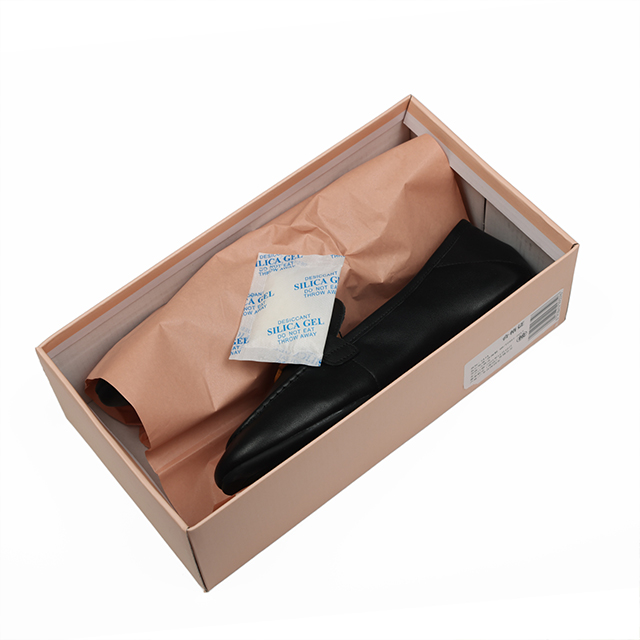
For sustainability and cost-efficiency, many businesses utilize a reusable Silica Gel Desiccant format, such as 1-gram packets for protecting medicine, to reduce environmental waste. These products are regenerated by baking them in an oven at specific temperatures, usually around 120 to 150 degrees Celsius, for several hours. This thermal energy breaks the chemical bonds between the silica walls and the water molecules, driving the moisture out as steam and restoring the active state.
While regeneration effectively restores moisture capacity, it unfortunately does not restore the physical crush strength of the bead. In fact, the regeneration process degrades it further. The thermal shock of repeated heating causes expansion, and the subsequent cooling causes contraction. This constant thermal cycling widens the micro-fractures created during the initial adsorption phase.
Over dozens of regeneration cycles, the internal crystalline structure becomes deeply compromised. A wet bead regenerated ten times breaks under significantly less pressure than a brand-new wet bead. Eventually, thermal stress causes the beads to turn into a chalky powder. At this point, they must be safely discarded to prevent dust contamination.
Protecting your investment requires actionable selection standards rather than guesswork. For heavy-duty industrial environments with extreme physical stress, specify highly durable molecular sieves. They often possess a slightly higher crush strength than standard silica gel. Additionally, matching the bead size to the packaging volume is crucial. Smaller 1-millimeter to 2-millimeter beads distribute physical loads much better within a packet, reducing the likelihood of individual bead fracture under moderate pressure.
The material housing the beads is just as important as the beads themselves. Standard paper packets fail under high compression. Specify robust substrates like spunbond olefin, heavy non-woven fabrics, or reinforced cotton. These materials act as a physical cushion, absorbing external pressure and preventing the beads from taking the full force of an impact. Furthermore, tightly woven tear-resistant materials ensure that even if a wet bead crushes under an extreme load exceeding 30 Newtons, the resulting dust remains safely trapped inside the pouch.
Strategic placement within a box or shipping container is your final line of defense. Packets should never be placed in a load-bearing position. Placing a packet at the very bottom of a crate beneath a heavy metal casting guarantees the beads will bear the full weight of the product during transit. Instead, secure packets to the sides of the container, place them in dedicated void-fill spaces, or suspend them in mesh pouches. Keeping them away from direct physical compression ensures they maintain structural integrity even when fully saturated.
Dry moisture-absorbing beads are incredibly resilient components of modern packaging. However, their physical properties change drastically once they fulfill their purpose. Becoming fully saturated with moisture significantly lowers structural integrity, dropping the pressure required to break them to an average of just 15 to 30 Newtons. Beyond physical pressure, direct exposure to liquid water triggers catastrophic decrepitation, causing the beads to violently shatter from internal capillary stress.
Understanding these physical limits is essential for anyone involved in manufacturing, logistics, or product safety. Broken beads create abrasive dust that ruins sensitive electronics, contaminates food, and compromises pharmaceuticals. By implementing rigorous selection standards and utilizing robust tear-resistant packaging, supply chain teams can completely eliminate dust contamination risks.
If your supply chain demands foolproof humidity control, you need engineered solutions built for extreme conditions. Visit Topcod Dry Packaging to explore high-efficiency, eco-friendly moisture absorbers and find the exact specifications to keep your products safe, dry, and perfectly intact from the factory floor to the consumer's hands.
A premium dry bead is generally too rigid to crush between your thumb and index finger. However, when the matrix becomes fully saturated with moisture or undergoes repeated thermal regeneration cycles, its structural integrity degrades. In these weakened states, strong direct finger pressure can easily snap or crumble the sphere.
Standard synthetic silicon dioxide is non-toxic and chemically inert. It will not cause poisoning if accidentally ingested. Nevertheless, inhaling the fine silica dust from crushed spheres irritates the respiratory tract and lungs. Certain older color-indicating materials contain heavy metals like cobalt chloride, which require extreme care and proper hazardous disposal if broken.
This explosive reaction results from a thermodynamic process called decrepitation. When submerged, liquid water rushes into the microscopic pores rapidly, trapping air inside the core. This creates immense internal capillary pressure while generating a rapid spike in exothermic heat. The combined internal stress causes the sphere to shatter from the inside out.
These materials typically reach maximum saturation when exposed to relative humidity levels exceeding 80 percent for prolonged periods. At this stage, they hold water weight equivalent to 30 to 40 percent of their dry mass. Once fully saturated, they stop pulling moisture from the air and experience their lowest physical crush strength.
Visually, a compromised bead often appears cloudy or displays microscopic hairline cracks across its surface. If you gently shake a packet and notice a fine white dust sifting through the fabric, or if the packet feels like it contains gritty powder rather than distinct round spheres, the internal structure has failed and requires immediate replacement.
With proper care and controlled baking temperatures, reusable materials can be regenerated dozens of times. However, the thermal stress of expanding and contracting during the baking process eventually causes them to crack. Depending on the frequency of use and the humidity levels they face, they usually require replacement after one to two years of heavy use to prevent dust contamination.


