
T: +86-757-2339-5985
E: tp@topcod.com.cn
E: tp@topcod.com.cn
No.6, Pai Sha Industrial Road, Pai Sha Community, Longjiang Town, Shunde District, Foshan City, Guangdong Province, China.
Views: 0 Author: Site Editor Publish Time: 2026-11-12 Origin: Site


Printed Circuit Board Assemblies, commonly known as PCBAs, serve as the vital operational core of modern technological infrastructure. These intricate boards power everything from compact consumer gadgets to sophisticated aerospace avionics. Despite their advanced engineering, these assemblies remain acutely susceptible to environmental degradation during storage and transit. Ambient moisture ingress and electrostatic discharge pose constant, invisible threats to hardware reliability. If moisture permeates the substrate of a PCBA, it undergoes a rapid phase change into steam during high-temperature reflow soldering. This sudden thermal expansion triggers a destructive phenomenon known in the electronics industry as popcorning. The resulting internal micro-cracking and latent component failure can easily compromise entire production batches, leading to massive financial losses.
To mitigate these pervasive risks, electronics manufacturers must adopt rigorous packaging protocols. We are currently witnessing a massive industry shift driven by component miniaturization and the global transition to lead-free soldering. Lead-free solder pastes require significantly higher reflow temperatures, often exceeding 240 degrees Celsius. This elevated thermal profile leaves absolutely zero margin for error regarding trapped moisture. High-density boards populated with micro-components are more fragile than ever. Consequently, reliance on advanced, multi-layer protective packaging has shifted from a mere best practice to a mandatory component of quality assurance. Manufacturers are moving toward highly standardized, data-driven humidity control. This ensures every sensitive assembly remains strictly within its specified floor life until the exact moment of soldering.
Surface Mount Devices and exposed circuit board laminates are naturally hygroscopic. They constantly absorb humidity from the surrounding factory environment. When a moisture-laden board enters a reflow oven, the trapped water vapor creates immense internal pressure. This physical stress fractures the component package from within. Such failures are often completely invisible to standard optical inspections, yet they prove fatal to long-term circuit stability.
Furthermore, static electricity represents an equally treacherous hazard on the production floor. A discharge as low as 20 volts is far below the threshold of human perception, yet it is sufficient to permanently damage sensitive microchips and delicate memory modules. To combat these dual threats, high-performance Moisture Barrier Bags are engineered with a sophisticated, multi-layer architecture. These specialized enclosures integrate static-dissipative outer surfaces, a central aluminum foil core, and an inner polyethylene sealing layer. This precise construction creates a highly effective Faraday cage. The structure not only blocks moisture vapor transmission but also neutralizes static charges, actively preventing the tribocharging effects that frequently occur during physical handling and transit.
Professional packaging requires a coordinated assembly of industrial-grade supplies. Neglecting any single element of this protection chain nullifies the effectiveness of the entire system. You must source certified bags specifically tailored for sensitive electronics. Utilizing advanced ESD Barrier Bags for integrated circuits guarantees a surface resistance between 10 to the 8th power and 10 to the 11th power ohms, ensuring both electrostatic shielding and high-barrier moisture protection.
In addition to the bags themselves, your packing inventory must include industrial desiccant packs. These are typically composed of activated clay or silica gel, working aggressively to absorb any residual humidity trapped during the vacuum sealing process. Humidity Indicator Cards are equally vital. These chemically treated visual aids change color in response to specific humidity thresholds. They offer the end-user a clear, empirical confirmation of the package's internal integrity upon arrival. Finally, employing an industrial-grade, ESD-safe vacuum sealer alongside accurate Moisture Sensitive Device labeling completes the preparation. This ensures your workflow meets the rigorous demands of global shipping standards.
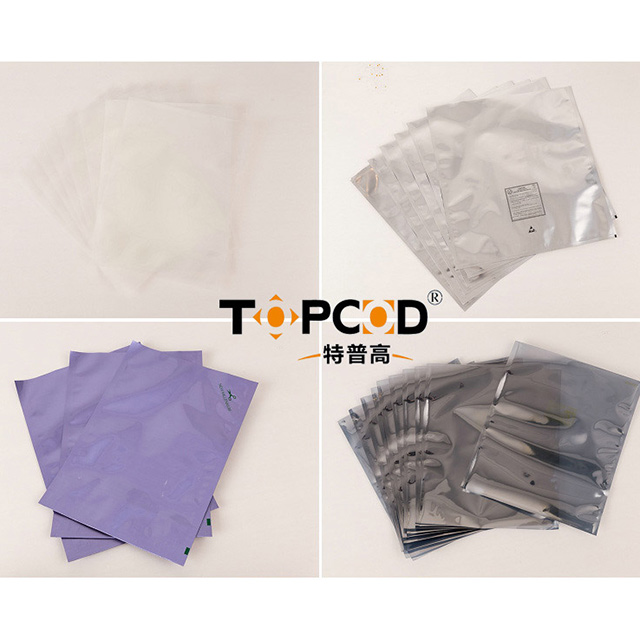
Standardizing your workflow provides the most effective defense against costly human error. First, ensure the operator is fully grounded using an ESD wrist strap and working strictly on a verified dissipative mat. If the boards have already exceeded their allowable floor life due to ambient factory exposure, you must perform a pre-baking cycle in a controlled oven. This critical step drives out absorbed moisture. Sealing a board that is already wet simply traps the hazard inside the bag, guaranteeing failure down the line.
Once the boards are thoroughly dry, place the calculated number of desiccant pouches and a Humidity Indicator Card inside the bag. Ensure the indicator card is positioned facing outward so it can be clearly observed through the packaging. Carefully insert the PCBA. If the board features sharp solder tails or protruding connectors, shield them using ESD-safe foam. When sealing, place the bag's opening flat across the vacuum chamber's sealing bar and initiate the air removal process. Be extremely cautious not to over-vacuum. Excessive pressure pulls the foil tightly against sharp points, creating microscopic internal punctures. A wide, consistent heat seal is the final touch required for a truly hermetic closure.
Not every manufacturing project requires the same level of mechanical protection. Matching the packaging material to the board’s specific physical profile is vital for both safety and cost-efficiency. Standard bags, typically ranging from 3.6 to 4.0 mil in thickness, offer an excellent balance of flexibility and protection for flat, unpopulated boards or lightweight integrated circuits. However, complex assemblies demand a much more robust approach.
For boards equipped with heavy metal heat sinks, thick wire harnesses, or rigid industrial connectors, upgrading to a Heavy-Duty Moisture Barrier Bag is absolutely necessary. These 6.0 to 7.0 mil options provide superior puncture resistance, often withstanding over 20 pounds of tensile force. Even a microscopic tear creates an immediate entry point for atmospheric moisture, effectively turning the bag into a failed seal over time. Investing in higher tensile strength materials ensures the moisture barrier remains intact under the severe physical pressures of international freight.
| Feature | Standard Barrier Bag | Heavy-Duty Barrier Bag |
|---|---|---|
| Thickness Profile | 3.6 mil to 4.0 mil | 6.0 mil to 7.0+ mil |
| Puncture Resistance | Moderate | Exceptional, > 20 lbs force |
| Best Application | Flat PCBs, lightweight ICs, memory modules | Heavy assemblies, sharp heat sinks, bulky connectors |
| Moisture Vapor Transmission | < 0.0003 grams per 100 sq.in | < 0.0003 grams per 100 sq.in |
A persistent and incredibly dangerous misconception on some assembly lines involves substituting industrial electronics packaging with commercial Foil Bags for Food. While it is true that these household pouches look visually similar and offer decent gas barrier properties for perishables, they are inherently unsuitable for sensitive hardware. The critical point of failure lies in their complete lack of anti-static properties.
Food-grade foils are typically constructed with highly insulative plastics. These materials generate significant electrostatic charges through basic friction, a destructive process known as tribocharging. Introducing an expensive, highly calibrated PCBA into such an environment actively invites a high-voltage discharge. This simple mistake can instantly destroy thousands of dollars worth of micro-components before the package even leaves your facility.
Global electronics manufacturing relies heavily on strict adherence to the IPC/JEDEC J-STD-033 standard. This comprehensive document acts as the definitive engineering roadmap for handling, packing, and shipping moisture-sensitive devices. It classifies components into specific Moisture Sensitivity Levels, ranging from Level 1 down to Level 6. These levels dictate the absolute maximum exposure time a board can endure on the factory floor before absorbing critical levels of moisture.
Adhering to these standards is not merely a suggestion for best practices. It is a strict requirement for maintaining ISO quality audits and ensuring the long-term reliability of your end product in the field. Proper packaging proves to your clients that quality control extends far beyond the soldering process.
Operational oversights can quickly undermine your best engineering efforts. One frequent error is omitting the indicator card entirely. This leaves the recipient with absolutely no method to verify the package’s internal climate upon receipt. Furthermore, using generic, commercial desiccants designed for footwear or clothing will fail to reach the ultra-low humidity requirements necessary for silicon components. Industrial-grade desiccant must be calculated based on the internal volume of the bag and the anticipated transit time.
Finally, operators must resist the urge to create the tightest possible vacuum. Excessive air removal leads to extreme surface tension. This allows the internal landscape of the PCBA, such as sharp pins and rigid edges, to pierce the barrier from the inside out. Always prioritize a gentle, effective seal that maintains the structural health of the bag while removing excess ambient air.
Packing printed circuit boards correctly serves as the final, critical checkpoint in the electronics manufacturing process. By pairing professional-grade barrier bags with correctly calibrated desiccants and reliable humidity monitoring, you effectively immunize your hardware against the dual threats of oxidation and static shock. Whether you are moving high-density microchips or bulky industrial control boards, strict commitment to industry-standard packaging is a direct investment in your company’s quality reputation.
If you are ready to upgrade your packaging protocols and eliminate moisture-induced failures, explore the comprehensive range of industrial-grade solutions at Topcod Dry Packaging. From custom sizes to heavy-duty electrostatic options, secure your electronics with packaging engineered for absolute reliability and global compliance.
When stored in a climate-controlled environment following J-STD-033 protocols with appropriate desiccant levels, boards can safely be kept for 12 months or longer. The actual duration is heavily dictated by the Moisture Vapor Transmission Rate of the bag material and the temperature stability of the external storage warehouse.
In theory, they can be reused, but with major operational caveats. If the bag remains completely free of microscopic tears or punctures, it may see a second life. However, every time you open the package, the heat-sealed edge must be cut off, permanently reducing the bag's usable volume. Furthermore, you must replace the desiccant pouches and the indicator card with brand new components every single time, as their absorption and monitoring capacities are entirely consumed during the first use.
A standard silver static-shielding bag is designed solely to protect components from external electrical fields and friction-induced static. It completely lacks the thick, multi-layered aluminum construction needed to block water vapor. A true barrier bag is distinctly thicker, completely opaque, and engineered specifically to prevent both static buildup and ambient humidity infiltration simultaneously.
Yes, but you must verify it is specifically labeled as ESD-safe or anti-static. This specialized wrap is typically identified by a distinct pink hue. Standard, clear commercial bubble wrap acts as a massive generator of static electricity. Using it inside your package can cause catastrophic electrical damage to your components, rendering the quality of your exterior bag completely useless.
While vacuum sealing remains the preferred industry standard because it significantly reduces internal volume and extracts humid air, it is technically possible to achieve protection without it. However, if you choose not to vacuum seal, you must compensate by using a significantly larger quantity of desiccant. You must also ensure an exceptionally wide, uniform heat seal to manage the larger volume of ambient air remaining trapped inside the enclosure.
Reading an indicator card is a straightforward visual process. The card features several chemical spots, usually indicating 10 percent, 20 percent, and 30 percent relative humidity. In a safe, dry environment, these spots remain a solid blue color. If moisture has breached the packaging, the spots will chemically react and turn pink, starting from the lowest percentage. If the 10 percent spot turns pink, the internal environment is compromised, and the components may require a baking cycle before use.
Skipping the pre-baking process for boards that have exceeded their factory floor life is a critical error. The components will have already absorbed ambient moisture into their plastic or epoxy casings. If you seal these wet components into a barrier bag, you trap the moisture inside. During the subsequent high-temperature reflow soldering process, this trapped moisture rapidly expands into steam, causing the component to crack open from the inside out, leading to immediate or latent electrical failure.


