
T: +86-757-2339-5985
E: tp@topcod.com.cn
E: tp@topcod.com.cn
No.6, Pai Sha Industrial Road, Pai Sha Community, Longjiang Town, Shunde District, Foshan City, Guangdong Province, China.
Views: 0 Author: Site Editor Publish Time: 2026-09-26 Origin: Site


Moisture damage during global logistics operations creates severe financial liabilities. It directly impacts profit margins through elevated cargo rejection rates and extensive rework. Long-haul sea freight exposes containers to extreme diurnal temperature fluctuations. This creates a volatile internal microclimate. You frequently see "container rain," where trapped humidity condenses on steel walls and drips directly onto palletized goods. Legacy moisture control methods consistently fail under these prolonged stress conditions. Standard silica gel saturates too quickly. It loses adsorption efficacy within the first few weeks of a multi-month voyage. Calcium chloride solutions present a different hazard. They often leak highly corrosive brine onto sensitive cargo if the packaging membrane fails during rough transit. Engineered moisture control requires a more stable, high-capacity solution. The transition to advanced mineral-based formulations provides a sustainable and operationally viable alternative for export packaging. We will evaluate adsorption kinetics, packaging integration, and overall economic impact to help you implement a robust moisture defense strategy.
Absorption Efficiency: Active mineral desiccants offer superior moisture uptake at high humidity levels compared to traditional silica gel, maintaining structural integrity without turning into a liquid pool.
Environmental & Compliance Edge: Composed of naturally occurring, chemically inert materials, an activated clay desiccant eliminates toxic disposal costs and complies with strict international shipping regulations (e.g., DMF-free, REACH).
Application Specificity: Utilizing a mineral desiccant for cartons and palletized freight requires precise calculation based on transit duration, packaging volume, and cargo sensitivity to prevent under-dosing.
Risk Mitigation: Proper pre-loading storage, shelf-life management, and supplier purity audits are critical to preventing premature saturation and ensuring baseline performance metrics are met.
Export-grade moisture protection demands strict adherence to baseline performance metrics. Success criteria for any desiccant deployed in international shipping include a high adsorption capacity, completely leak-proof packaging, and performance stability across a 30- to 60-day transit window. Ocean freight routinely crosses multiple climate zones. This subjects containers to severe environmental stress. A viable desiccant must aggressively pull water vapor from the trapped air faster than the ambient temperature drops. This prevents the internal climate from reaching the dew point.
The physics of moisture migration inside shipping containers dictate the severity of cargo damage. When a container is loaded in a warm, humid climate, the ambient air sealed inside carries a high volume of water vapor. A container loaded in Jakarta at 32°C and 85% relative humidity holds roughly 30 grams of water per cubic meter of air. As the vessel navigates into colder latitudes, the steel walls of the container cool rapidly. The trapped warm air loses its capacity to hold moisture. When that same vessel reaches the North Atlantic and temperatures drop to 5°C, the air can only hold about 6.8 grams of water per cubic meter. The remaining 23.2 grams condense into liquid water on the coldest surfaces. This condensation accumulates and falls as container rain, soaking through outer packaging and directly damaging the goods inside.
Relying on default packaging materials offers zero protection against this phenomenon. Standard corrugated cartons act as sponges rather than barriers. Corrugated cardboard inherently contains 8% to 12% moisture by weight at the time of manufacture. Under high temperatures, cartons release this inherent moisture into the sealed container, exacerbating the humidity levels. Polybags trap moisture inside with the product. If a sealed polybag lacks an internal desiccant and a proper vapor barrier film, the microclimate inside the bag undergoes its own condensation cycle. This leads to localized mold, mildew, or oxidation directly on the product surface.
Temperature (°C) | Max Water Vapor Capacity (g/m³) | Condensation Risk Level |
|---|---|---|
30°C | 30.4 | Low (at loading) |
20°C | 17.3 | Moderate |
10°C | 9.4 | High |
0°C | 4.8 | Severe (Heavy Container Rain) |
Understanding the geological and chemical makeup of an Active Mineral Desiccant reveals why it outperforms legacy materials in extreme shipping conditions. The core material typically consists of naturally occurring bentonite or montmorillonite clay. Mining operations extract these clays, which then undergo mechanical crushing and thermal drying to create a highly porous structure. To elevate the adsorption capacity, manufacturers blend the raw clay with active hygroscopic salts, such as controlled amounts of calcium chloride. This engineered blend maximizes the rapid moisture-pulling power of the salts while utilizing the structural stability of the clay matrix to contain the resulting moisture.
The physical process of adsorption in mineral desiccants relies on unique kinetics. Montmorillonite features a layered crystalline structure. Water molecules are drawn into the spaces between these microscopic layers through a process called intercalation. The clay actively traps the water molecules within its mineral lattice. This mechanism contrasts sharply with the capillary condensation seen in synthetic desiccants like silica gel. Silica gel simply holds water in static surface pores. The layered trapping mechanism of the mineral blend ensures that moisture binds tightly at a molecular level. This prevents the moisture from easily escaping back into the air when temperatures rise.
The physical state of the material post-absorption provides a massive operational advantage. As the active salts pull in high volumes of water vapor, the surrounding clay matrix absorbs the moisture and swells. The material transforms into a solid gel or remains a dry, expanded clay. It never reaches a liquid state. This completely eliminates the risk of corrosive liquid leakage. Even if the outer pouch is accidentally punctured or crushed under heavy pallets, the bound moisture remains trapped within the solid matrix. This protects the export goods from chemical spills and secondary water damage.
Raw Material Sourcing: Natural bentonite and montmorillonite clays form the structural base.
Activation Process: Thermal drying expands porosity, followed by impregnation with hygroscopic salts.
Trapping Mechanism: Intercalation binds water molecules within the crystalline layers.
Final State: The absorbed moisture converts the powder into a thick, non-spilling solid gel.
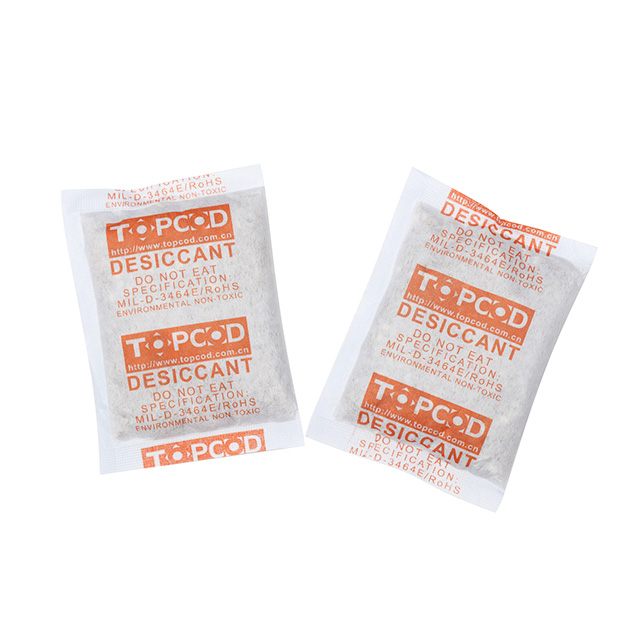
Evaluating desiccants requires analyzing their performance curves over realistic shipping timelines. Across a 40-day transit at 90% Relative Humidity (RH), adsorption profiles vary drastically. Silica gel absorbs moisture rapidly in the first few days but plateaus quickly. It typically maxes out at 25% to 30% of its own weight. Pure calcium chloride absorbs up to 200% of its weight but turns entirely into a liquid brine. This creates a massive leakage hazard on the warehouse floor and inside the container. Active mineral blends offer the optimal middle ground. They absorb 50% to 70% of their weight continuously over the 40-day period without ever liquefying.
Desiccant Type | Adsorption Capacity (at 90% RH) | Physical State Post-Absorption | High-Temperature Stability | Leakage Risk |
|---|---|---|---|---|
Silica Gel | 25% - 30% | Dry Bead | Poor (Desorbs above 40°C) | Zero |
Calcium Chloride (Pure) | 150% - 200% | Liquid Brine | Good | High |
Active Mineral Blend | 50% - 70% | Solid Gel / Dry Clay | Excellent (Retains moisture at 50°C) | Zero |
Molecular Sieve | 20% - 22% | Dry Bead | Excellent | Zero |
Performance across temperature extremes separates reliable desiccants from liabilities. Shipping containers sitting in direct sunlight on port tarmacs frequently experience internal temperature spikes exceeding 50°C (122°F). Under these conditions, silica gel undergoes desorption. It releases previously trapped water vapor back into the packaging, causing sudden, severe condensation. Mineral blends maintain their molecular grip on water molecules even during these extreme temperature spikes. This ensures the microclimate remains dry regardless of external weather conditions.
Regulatory compliance dictates material selection for global supply chains. Mineral-based solutions provide a distinct advantage in navigating international customs and environmental laws. They are inherently free of Dimethyl Fumarate (DMF), a toxic anti-fungal agent banned in the European Union. The absence of heavy metals and toxic chemical runoff allows for standard municipal disposal in most jurisdictions. This avoids the hazardous waste protocols required for heavily synthetic or chemically reactive alternatives.
Industrial standard certifications validate performance claims. Packaging engineers evaluate desiccants against rigorous global standards to ensure baseline reliability. Compliance with MIL-D-3464E confirms the material's adsorption rate and dust-free packaging integrity under military specifications. DIN 55473 serves as the European standard for desiccant bags, dictating strict tear-resistance metrics. For electronics, adherence to JEDEC standards for dry packaging is mandatory to prevent moisture-induced failures during downstream manufacturing processes.
Different export sectors face unique moisture-related threats. This requires tailored desiccant deployment. In the textiles, garments, and leather industries, long transit times through humid equatorial routes create the perfect breeding ground for mold, mildew, and foul odors. Leather goods are particularly susceptible to fungal growth, which permanently ruins the product finish. Deploying an activated clay desiccant absorbs the ambient humidity that spores need to survive. Because the clay binds the moisture as a solid, there is zero risk of chemical stains or liquid brine transferring onto expensive fabrics or leather surfaces.
The automotive and heavy machinery sectors deal primarily with oxidation and flash rust on bare metal components. Engine blocks, brake rotors, and machined gears can rust within hours if exposed to high humidity and salt-laden ocean air. Packaging engineers integrate active mineral desiccants alongside Volatile Corrosion Inhibitors (VCI). VCI emits a protective gas, but high humidity accelerates corrosion faster than the VCI layer can form. The desiccant aggressively lowers the relative humidity inside the export crate. This buys time for the VCI molecules to passivate the metal surface. This dual-action approach prevents rust without requiring messy oil or grease coatings that demand extensive cleaning upon arrival.
Electronics and semiconductor manufacturing require absolute moisture control to prevent catastrophic failures during assembly. Printed circuit boards (PCBs) and surface mount devices (SMDs) absorb microscopic amounts of moisture from the air. When these components pass through high-temperature reflow soldering ovens, the trapped moisture instantly turns to steam. The steam expands and causes micro-cracking, a phenomenon known as the "popcorn effect." Activated clay meets the strict dry-packing standards required to keep these components below critical moisture thresholds. This ensures high yield rates during final assembly.
Deploying desiccants effectively requires precise sizing and strategic placement. Guesswork leads to under-dosing, which results in cargo damage, or over-dosing, which wastes packaging budgets. Calculating the exact grammage of a mineral desiccant for cartons depends on three primary variables. You must measure the cubic volume of air inside the packaging, the Moisture Vapor Transmission Rate (MVTR) of the outer barrier material, and the expected duration of the transit. Engineers calculate the total moisture that will permeate the packaging over the voyage. They then specify a desiccant weight capable of absorbing that exact volume, plus a 20% safety margin for unexpected port delays.
Desiccants cannot function effectively in open systems. Synergy with barrier packaging is mandatory. Placing a desiccant inside a standard cardboard box without a liner is futile. The desiccant will simply attempt to dehumidify the entire ocean container until it saturates. Mineral desiccants must be paired with appropriate outer barrier foils, such as Aluminum foil bags or high-density polyethylene (HDPE) liners. These barriers restrict the infinite ingress of moisture from the outside environment. This allows the desiccant to quickly dry the trapped internal air and maintain a low relative humidity for the duration of the trip.
The outer membrane of the desiccant pouch itself plays a major role in performance and safety. Pouch materials must possess high tear resistance and unidirectional moisture vapor transmission. Materials like Tyvek or Spunbond Meltblown Spunbond (SMS) non-woven fabrics are industry standards. These membranes feature microscopic pores that allow water vapor to enter the pouch and bind with the clay matrix. The pores are too small to allow any resulting gel or dust to escape. Evaluating membrane compatibility ensures the desiccant does not contaminate the cargo with particulate matter.
Integration into the packing line dictates operational efficiency. High-speed fulfillment centers cannot afford bottlenecks caused by manual desiccant placement. Manual insertion works for low-volume, heavy machinery crating. High-volume carton packing requires automated dispensing. Roll-fed desiccant pouches integrate directly into automated packaging lines. The machines cut and drop precise grammages into cartons just before sealing. Facilities must manage the exposure time of these rolls. Leaving an unsealed roll of desiccant on the factory floor during a shift change allows it to absorb ambient facility moisture. This reduces its effective capacity before it even enters the shipping carton.
Procurement teams must evaluate moisture protection through the lens of comprehensive risk management rather than isolated unit costs. Analyzing the cost-per-gram of an active mineral desiccant against the financial risk of scrapped inventory reveals the true value of engineered packaging. A single container of electronics or automotive parts holds hundreds of thousands of dollars in value. Saving fractions of a cent by under-sizing the desiccant pouch or opting for inferior silica gel introduces an unacceptable level of risk. The financial fallout of a rejected shipment includes the lost inventory, the costs of return shipping, rework labor, and severe brand damage with the end customer.
Disposal and end-of-life costs heavily influence the economic viability of packaging materials. Chemical-heavy alternatives, particularly pure calcium chloride pools or chemically treated synthetic gels, often trigger hazardous waste protocols at the receiving facility. Receivers must pay specialized waste management companies to dispose of the toxic brine safely. Activated clay desiccants avoid these hidden fees entirely. The natural clay and bound moisture are chemically inert and non-toxic. Receivers can dispose of the exhausted pouches in standard municipal waste streams. This significantly reduces the labor and regulatory burden at the destination warehouse.
Conceptual trade-offs regarding physical volume must be factored into packaging design. Mineral desiccants are highly effective and safe, but they require a slightly higher physical volume than pure calcium chloride to achieve identical peak absorption capacities. The clay matrix takes up physical space inside the carton. Packaging engineers account for this volume during the carton design phase. They ensure the desiccant pouches fit securely without crushing delicate components or requiring an upsize in the overall carton dimensions.
Premature saturation represents the highest risk during the implementation of any desiccant program. Desiccants begin absorbing moisture the moment they are exposed to ambient air. Forklift operators often leave bulk boxes of desiccants open on the packing floor. If warehouse staff leave these supplies open during a shift, the pouches absorb facility humidity. This drastically reduces their remaining capacity for the actual ocean transit. Facilities must implement strict Standard Operating Procedures (SOPs) for shelf-life management. Bulk supplies must remain hermetically sealed in foil-lined bags until the exact moment of use. Once opened, staff must reseal any unused pouches immediately. Inventory rotation must strictly adhere to the manufacturer's 12- to 18-month shelf-life limits to guarantee baseline performance.
Auditing supplier quality and purity standards prevents catastrophic failures caused by substandard materials. The desiccant market contains suppliers who cut costs by mixing active clay with inert fillers like sand or low-grade dirt. These fillers provide zero adsorption capacity. Procurement teams must vet manufacturers rigorously. Checklists should include verifying ISO 9001 certifications, requesting independent third-party lab testing for absorption rates, and demanding documentation on raw clay purity. Technical Data Sheets (TDS) must align with independent lab results to ensure the delivered product matches the engineered specifications.
Packaging integrity failures compromise the entire moisture defense strategy. Sharp cargo edges, heavy metal components, or rough handling during palletization can tear the desiccant pouch. If a pouch tears, the clay and trapped moisture spill directly onto the product. This causes abrasion and localized moisture damage. Engineers specify puncture-resistant membrane materials, particularly when packing heavy industrial goods. Securing the pouches to the inside of the carton walls or using dedicated desiccant baskets prevents them from shifting. This stops them from being crushed under the weight of the cargo during rough ocean transit.
Active mineral desiccants provide a structurally stable, high-capacity moisture defense system that outperforms legacy silica gel and pure calcium chloride in extreme export conditions. By utilizing a natural clay matrix to bind moisture as a solid, these engineered blends eliminate the risk of corrosive leaks while maintaining aggressive adsorption rates across prolonged, high-temperature ocean transits. The operational safety and disposal advantages make them highly effective for protecting high-value global shipments.
To optimize your export packaging strategy, execute the following steps:
Map your current supply chain routes to identify specific high-risk temperature fluctuation zones.
Calculate the exact internal air volume and barrier film MVTR for your top three export SKUs.
Request physical samples and independent lab testing data from prospective suppliers.
Run a 60-day live transit trial using internal data loggers to track relative humidity.
A: An active mineral desiccant typically absorbs between 50% and 70% of its own weight in moisture at 90% Relative Humidity (RH). The exact capacity depends on the specific blend of natural clay and active hygroscopic salts used in the formulation.
A: Active mineral desiccants use a natural clay structure combined with salts to trap moisture securely, even at high temperatures. Silica gel is a synthetic silicon dioxide that absorbs less moisture overall and can release trapped water vapor back into the air if temperatures exceed 40°C.
A: The required grammage depends on the carton's internal air volume, the moisture vapor transmission rate (MVTR) of the outer barrier bag, and the total transit days. A standard formula multiplies the total expected moisture ingress by a safety factor to determine the exact weight needed.
A: Yes. Activated clay is chemically inert, non-toxic, and non-corrosive. High-quality mineral desiccants comply with RoHS, REACH, and JEDEC standards, making them completely safe for dry-packing sensitive electronics and, when properly packaged, food products.
A: While technically possible to bake out moisture from raw clay, it is highly advised against for export packaging. The regeneration process degrades the clay's structural integrity and the pouch membrane, severely compromising absorption capacity and increasing the risk of pouch rupture.
A: Yes. They are sourced from naturally occurring minerals and require significantly less energy to manufacture than synthetic alternatives. Because they are non-toxic and free of heavy metals, exhausted pouches can typically be disposed of in standard municipal waste.
A: No. The unique clay matrix absorbs water vapor and binds it at a molecular level, causing the material to swell into a solid gel or dry, expanded clay. It never turns into a liquid, completely eliminating the risk of corrosive spills.


