
T: +86-757-2339-5985
E: tp@topcod.com.cn
E: tp@topcod.com.cn
No.6, Pai Sha Industrial Road, Pai Sha Community, Longjiang Town, Shunde District, Foshan City, Guangdong Province, China.
Views: 0 Author: Site Editor Publish Time: 2026-11-10 Origin: Site


Have you ever opened a sealed storage bin only to hear the frustrating snap of brittle 3D printer filament? Perhaps you discovered stale emergency food rations or found a faint layer of rust on your precision calipers. Moisture absorbers are fantastic for preserving our valuable assets. However, they certainly do not last forever without routine maintenance. Once their microscopic pores become completely saturated, they stop working entirely. This leaves your sensitive items highly vulnerable to ambient humidity.
Recharging these packs becomes an inevitable maintenance step. The exact timing depends heavily on your storage environment, container seal quality, and the specific desiccant type. Properly maintaining them saves your equipment from irreversible water damage. More importantly, it keeps money in your pocket. In this comprehensive guide, we will break down exactly how to reactivate your moisture control solutions safely and efficiently from an engineering perspective.
Key Takeaways
Recent market analyses highlight a massive shift in industrial and consumer moisture control strategies. As precision manufacturing, high-end electronics, and 3D printing markets expand, the demand for reliable humidity management has skyrocketed. Market experts note that professionals are aggressively moving away from disposable, single-use moisture absorbers. Instead, there is a strong industry push toward sustainable, rechargeable solutions.
This transition mitigates supply chain waste and significantly reduces long-term overhead costs. Upgrading to high-efficiency, eco-friendly materials aligns with modern environmental standards while offering superior performance. Consequently, understanding the precise maintenance cycles of these reusable materials has evolved from a simple hobbyist concern into a standard best practice for asset preservation across multiple sectors.
To master maintenance schedules, you must first grasp the underlying mechanics of moisture control. Desiccants operate through a physical process known as adsorption. Absorption involves a substance chemically integrating water into its volume, much like a kitchen sponge soaking up a spill. In contrast, adsorption involves moisture molecules adhering strictly to the vast microscopic surface area of the desiccant material. Because this forms a physical bond rather than a chemical one, applied heat can force the trapped water out. This effectively reverses the process.
While various moisture absorbers exist on the market, silica gel packets remain the undisputed industry standard. They dominate consumer goods, food packaging, electronics, and specialized applications. These highly efficient pouches are chemically inert, non-toxic, and incredibly reliable.
Within this category, a distinct difference exists between indicating and non-indicating varieties. Indicating types contain a safe chemical additive that changes color when the pores become saturated with water vapor. This provides a clear visual cue. Non-indicating varieties remain white or clear regardless of their water content.
The underlying efficiency of these products comes down to the quality of the Desiccant Raw Material. Typically composed of synthetic silicon dioxide, this substance features a highly porous, interconnected microscopic structure. Premium industrial-grade materials often feature precise bead sizes ranging from 1 to 3mm or 2 to 4mm. This uniform sizing maximizes airflow and adsorption efficiency. To put its power into perspective, a single teaspoon of this raw material boasts an internal surface area roughly equivalent to a professional football field. This massive surface area makes it exceptionally effective at trapping airborne humidity before it degrades your stored goods.
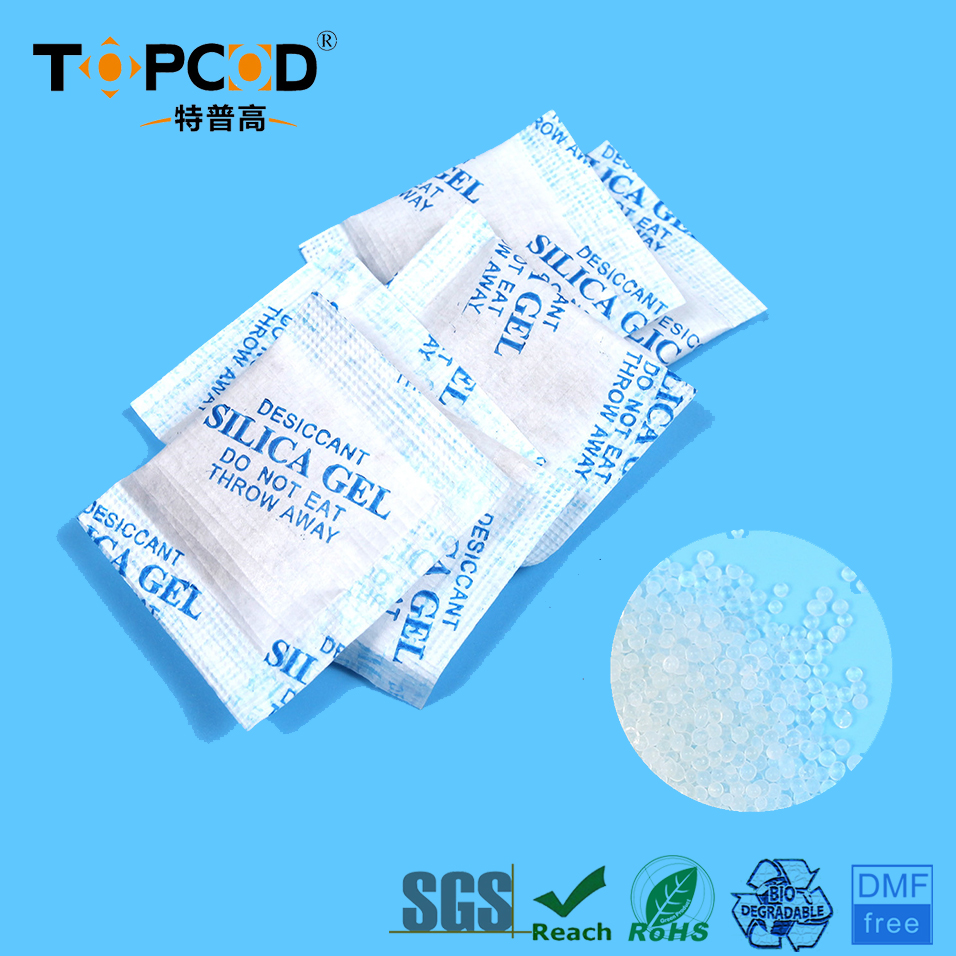
The short answer to the maintenance question is simple. There is no universal timeline. For average household use in a moderate climate, a standard packet might last one to three months before reaching capacity. Nevertheless, a proactive approach requires evaluating the specific variables that dictate how quickly the material reaches its absorption limit.
Several environmental and physical factors directly impact the lifespan of your moisture absorbers before they require intervention.
Humidity Levels: The ambient relative humidity acts as the primary driver of saturation. High-humidity environments force the material to work significantly harder. These include unconditioned basements, garages, or tropical climates. In a room sitting at 70 percent relative humidity, a packet will saturate exponentially faster than it would in a climate-controlled office at 40 percent.
Container Air-Tightness: The environment immediately surrounding the packet dictates its overall workload. Tossing a packet into an unsealed cardboard box means it is practically attempting to dehumidify the entire room. This leads to rapid saturation. Conversely, locking it inside a gasket-sealed dry box isolates the air volume. This drastically extends the time between recharges.
Volume of Desiccant: The ratio of absorbing material to the volume of trapped air is critical. Using too few packets for a massive space means the available surface area will be overwhelmed in a matter of days. Proper sizing proves absolutely essential for extending your maintenance intervals.
To provide a more objective baseline, review these estimated timelines based on common application scenarios. Keep in mind that these represent averages and require adjustment based on your specific geographical climate.
| Storage Application | Container Type | Estimated Time Until Recharge |
|---|---|---|
| 3D Printing Filament | Airtight Sealed Dry Box | 3 to 6 weeks |
| Firearms & Ammo Safes | Heavy Steel Safe | 2 to 4 months |
| Food Packaging & Spices | Sealed Mylar Bags or Glass Jars | 4 to 6 months |
| Camera Gear & Electronics | Hard Waterproof Case with O-ring | 3 to 5 months |
| Closets & Open Shelving | Unsealed Environment | 3 to 7 days |
Relying purely on a calendar schedule often leads to unnecessary maintenance. Worse, it creates dangerous periods where your valuables sit unprotected by saturated packets. Instead, utilizing objective measurement methods ensures you only intervene when the packs have genuinely reached their functional capacity.
If you utilize indicating Silica Gel Beads, visual inspection is wonderfully straightforward. Modern indicating beads are typically infused with methyl violet. When perfectly dry and actively protecting your gear, these beads exhibit a vibrant orange color. As they adsorb moisture and approach their capacity limit, the color gradually shifts to a dark, murky green.
Older indicating beads shift from deep blue when dry to a light pink when saturated. The blue-to-pink variety utilizes cobalt chloride as the moisture indicator. Because cobalt chloride is classified as a toxic substance, the industry has largely shifted toward the safer orange-to-green alternatives. Regardless of the type you own, once the final color is achieved, the physical pores are full. Reactivation is now necessary.
Standard white packets do not offer a convenient visual cue. This makes them impossible to evaluate by sight alone. The most scientifically accurate way to determine their saturation level is the weighing method. Silicon dioxide can hold approximately 30 to 40 percent of its own weight in water vapor. By establishing a baseline dry weight, you can accurately track moisture accumulation.
Take a freshly reactivated packet and weigh it on a precise digital kitchen scale. Let us assume it weighs exactly 10.0 grams. Record this baseline weight directly on the packet using a permanent marker. Periodically re-weigh the packet during its use. If that 10.0-gram packet now tips the scales at 13.0 to 14.0 grams, it has absorbed its maximum capacity of water. It is time to process it for moisture removal.
While admittedly less precise than weighing, tactile feedback can occasionally indicate saturation. When standard packets are entirely gorged with moisture, they may feel slightly heavier in the hand. They often become less pliable or surprisingly rigid. In extreme cases of high humidity, the exterior packaging might even feel faintly damp. If you squeeze the packet and the beads inside feel clumped together rather than flowing freely, they are overdue for maintenance.
Understanding maintenance frequency is directly tied to using the correct amount of material in the first place. The importance of proper sizing cannot be overstated. If you place a tiny moisture absorber in a massive storage bin, it will reach its maximum adsorption capacity within days. This forces you into an endless cycle of maintenance. Using the appropriate volume prevents premature saturation and ensures a stable relative humidity for your stored items.
As a general engineering rule of thumb, industry standards suggest using approximately 1.2 units of desiccant per cubic foot of enclosed space. In commercial packaging terms, a unit typically equates to about 33 grams of silica gel. For everyday applications, calculating requirements based on the raw weight of the material relative to the container size is highly effective.
| Container Volume | Enclosed Space Equivalent | Recommended Silica Gel Weight | Typical Application Scenarios |
|---|---|---|---|
| 1 Quart | 0.03 Cubic Feet | 5 to 10 grams | Small electronics, jewelry boxes |
| 1 Gallon | 0.13 Cubic Feet | 15 to 20 grams | Food storage jars, small camera cases |
| 5 Gallons | 0.66 Cubic Feet | 50 to 100 grams | 3D printer filament buckets, ammo cans |
| 10 Gallons | 1.33 Cubic Feet | 100 to 150 grams | Large storage totes, document safes |
| 30 Gallons | 4.0 Cubic Feet | 300 to 400 grams | Wardrobe boxes, medium gun safes |
Targeted scenarios often require slight adjustments to these baseline figures. For instance, 3D printing enthusiasts frequently utilize custom printed desiccant holders that fit neatly inside their material stations. Because 3D printer filament actively draws moisture from the air, it is advisable to over-index on your desiccant volume. Filling these custom trays entirely ensures the internal humidity remains below the critical 20 percent threshold for a much longer duration.
Similarly, when outfitting a large gun safe, the internal air volume is substantial. The heavy door is opened frequently, introducing fresh ambient humidity. In these cases, utilizing large 500-gram canisters or multiple heavy-duty packets is highly recommended to prevent rust and corrosion over several months.
When your moisture absorbers reach their maximum capacity, they cease to protect your valuables. Fortunately, the underlying physics of adsorption allows you to reverse the process with ease. By applying controlled heat, you can force the trapped water molecules to evaporate. This effectively restores the material's capabilities.
Using a standard conventional kitchen oven is widely considered the most reliable and controlled method for reactivation. The oven provides consistent ambient heat. This minimizes the risk of thermal shock to the internal microscopic structure.
Step 1: Preheat the oven. Set your oven temperature to a low setting, ideally between 200°F and 250°F. It is absolutely critical not to exceed 250°F. Higher temperatures can damage certain packaging materials or degrade the chemical structure of the silicon dioxide itself.
Step 2: Prepare the baking sheet. Line a standard baking sheet with aluminum foil. Spread your loose beads or intact packets evenly across the foil. Ensure they sit in a single, uncrowded layer so that heat can circulate freely and escaping steam is not trapped.
Step 3: Bake and monitor. Place the baking sheet in the oven for 1.5 to 2 hours. If you are using indicating beads, you will slowly see the color change back to its original dry state. If you are using non-indicating packets, you can verify completion by weighing them. They should return to their original dry baseline weight.
Step 4: Cool in an airtight environment. This is perhaps the most crucial step of the entire process. Do not leave the freshly baked material on the counter to cool. As soon as they drop in temperature, they will immediately begin eagerly absorbing moisture from your kitchen air. Carefully transfer the hot packets or beads into an airtight container, such as a glass sealing jar, and allow them to cool completely before returning them to storage.
If you are short on time, a microwave can expedite the process. However, it requires much closer monitoring. Microwaves heat the water molecules violently and directly. This can cause rapid expansion, steam generation, and potential fracturing of the beads.
To use this method safely, set your microwave to the Defrost or medium-power setting. High heat is strongly discouraged. Heat the packets for 3 to 5 minutes total. Break this time up into short 1-minute to 2-minute bursts. After each burst, open the microwave door to let the released steam escape. Gently stir loose beads to ensure even heating.
You must exercise extreme caution regarding the packaging material. While the silica itself can withstand microwave radiation, many commercial packets are housed in synthetic plastics or thin non-woven fabrics. These will rapidly melt, warp, or ignite if subjected to concentrated microwave heat. If you are unsure about the heat resistance of the packaging, cut the packets open. Microwave the loose beads in a glass bowl, and repackage them later in breathable cotton bags.
For those looking for alternative, gentler methods, food dehydrators offer an excellent solution. Because dehydrators operate at lower temperatures and feature active, continuous airflow, they are incredibly safe for almost all types of delicate packet materials. The trade-off is time. It may take anywhere from 6 to 24 hours in a dehydrator to fully extract the trapped moisture.
While the reactivation process is relatively straightforward, several common pitfalls can ruin your materials. Being aware of these mistakes will ensure you get the maximum lifespan out of your moisture control products.
Melting the Packaging: Failing to account for the packet's exterior material is the most frequent error users make. Not all pouches are manufactured with heat-resistant packaging. Packets made from high-density polyethylene have relatively low melting points. If you place these in an oven at 250°F, the packaging will melt into a plastic puddle. Standard heavy cotton or thick paper packets generally fare better in the oven. When in doubt, the safest protocol is always to cut the packet open and recharge the loose beads.
Overheating the Beads: There is a persistent misconception that applying more heat will simply speed up the drying process. Exposing the material to temperatures exceeding 300°F can cause irreversible damage. At these extreme temperatures, the water trapped inside the microscopic pores turns to steam too rapidly. This causes the beads to physically fracture, shatter, and pop. Furthermore, excessive heat permanently alters the structural integrity of the raw material. Once the porous structure collapses, the material loses its moisture-absorbing properties entirely.
Leaving Them Out to Cool: The reactivation process is not complete when you turn off the oven. A very common mistake is pulling a baking sheet of freshly dried silica gel out of the oven and leaving it on the stove to cool. Silica gel is ruthlessly efficient. As it cools, it aggressively pulls humidity from the ambient room air. By the time it reaches room temperature, it may have already absorbed 15 percent of its capacity.
A common question among professionals is whether moisture absorbers last forever. While you can reactivate them multiple times, they do not possess an infinite lifespan. Understanding when to retire your old packs and invest in new ones is vital for ensuring ongoing, reliable protection.
Every time you heat and cool silica gel, it undergoes thermal stress. Over time, this repeated thermal cycling causes the microscopic pores on the surface of the beads to slowly degrade, clog with microscopic ambient dust, or collapse. Most standard silica gel can withstand 5 to 10 full recharge cycles before its efficiency drops noticeably. This typically translates to 1 to 2 years of heavy use.
There are several clear indicators that your desiccants have reached the end of their usable life:
Attempting to salvage degraded material is no longer cost-effective or safe for your stored items. At this stage, replacing your degraded packets is mandatory. Investing in high-quality, eco-friendly Silica gel packs ensures better longevity, higher absorption rates, and safer storage for your specialized equipment.
Not all desiccants are designed for reuse. While silica gel and activated alumina are easily rechargeable through standard heating methods, other types are strictly single-use. Calcium chloride desiccants work by absorbing moisture until they dissolve into a liquid brine or thick gel. These cannot be reversed. Similarly, natural clay desiccants can technically be heated, but they require much higher temperatures that are difficult to safely achieve in a standard oven.
Standard white and modern orange-indicating beads are non-toxic, chemically stable, and completely safe to heat in a standard kitchen oven or microwave. However, caution is required with older blue-to-pink indicating beads. The blue color is derived from cobalt chloride, which is classified as a known toxin. Heating these blue beads can potentially release harmful compounds. If you possess blue indicating beads, they should be safely disposed of and replaced with modern orange-to-green alternatives.
Recharging in a microwave usually takes between 3 to 5 minutes total when using a medium or Defrost power setting. Because microwaves heat the internal water molecules very rapidly, it is crucial to apply the heat in short bursts. Heating them continuously on high power runs a severe risk of melting the plastic packaging and violently fracturing the beads.
Yes, it absolutely does. Even if you follow perfect recharging protocols, the microscopic pores within the material will eventually degrade. Repeated thermal cycling causes these delicate structures to slowly collapse. Environmental dust can also clog the surface area over time. As a result, the maximum moisture capacity steadily decreases. Most products will need to be entirely replaced after 5 to 10 recharge cycles.
Silica gel effectively begins releasing trapped moisture at temperatures around 150°F to 175°F. However, to ensure a complete and efficient recharge, maintaining an ambient temperature between 200°F and 250°F is the industry standard. Exceeding 250°F is not recommended, as excessive heat can permanently damage the silica's porous structure.
Using a hair dryer is highly inefficient and generally not recommended. While a hair dryer produces heat, it does not create the sustained, enclosed, and consistent high-temperature environment required to force moisture out of the microscopic pores deeply embedded within the beads. You will likely just blow the packets around without actually drying them out.
Don't let moisture compromise your valuable assets. Whether you are protecting industrial electronics, securing food packaging, or optimizing your 3D printing setup, choosing the right moisture control solution is critical. Explore the full range of high-efficiency, eco-friendly desiccants at Topcod to find the perfect fit for your specific application today.


