
T: +86-757-2339-5985
E: tp@topcod.com.cn
E: tp@topcod.com.cn
No.6, Pai Sha Industrial Road, Pai Sha Community, Longjiang Town, Shunde District, Foshan City, Guangdong Province, China.
Views: 0 Author: Site Editor Publish Time: 2026-11-17 Origin: Site


Manufacturer specifications for moisture absorption typically highlight maximum capacity at 80% to 100% relative humidity (RH). Real-world operational environments often require maintaining a stable 40% RH. You see this strict requirement in 3D printing AMS (Automatic Material System) dryboxes, sensitive electronics storage, and commercial HVAC systems. Relying on extreme-humidity benchmarks leads to overestimating operational lifespan. It drastically overestimates the efficiency of a desiccant in moderate-humidity applications. This engineering miscalculation results in premature saturation and system failures. To build reliable moisture-removal systems, engineering and procurement teams must evaluate desiccant beads based on specific adsorption kinetics. You must assess structural stability and regeneration viability at a strict 40% RH baseline.
Defining the operational goal is the first step in moisture control. Preventing 3D printer filament degradation requires strict environmental management. Inhibiting mold growth demands consistent low humidity. Protecting bare printed circuit boards prevents rapid oxidation. Success is measured by the duration the desiccant maintains a stable low vapor pressure. You want to extend the operational time before requiring manual intervention.
An indoor ambient humidity of 40% is considered perfectly dry for general living. It works fine for open-air printing environments. Maintaining a strict 40% RH inside a sealed enclosure presents a different challenge. You constantly fight continuous moisture ingress from gasket leaks. You also battle internal material outgassing. This dynamic environment requires active and highly efficient desiccant management. We often see enclosures that appear sealed but still suffer from micro-leaks around cable glands and door seals. These leaks introduce a steady stream of water vapor. The desiccant must work continuously to adsorb this incoming moisture and hold the internal environment at the 40% target.
Industry standard testing occurs at 25°C and 80% RH. This extreme environment produces impressive marketing claims. It completely fails to predict actual performance in a 40% RH environment. Adsorption isotherms are highly non-linear. A material absorbing 40% of its weight at 80% RH might only absorb 12% at 40% RH. Engineers cannot extrapolate high-humidity data down to moderate levels accurately. When you design a system based on the 80% RH capacity, you under-size the desiccant bed. This leads to frequent maintenance cycles. It also causes unexpected humidity spikes when the material saturates much earlier than calculated.
Industrial and commercial scenarios frequently target the 40% RH threshold. You need a desiccant performing efficiently at these moderate moisture gradients. Common applications include:
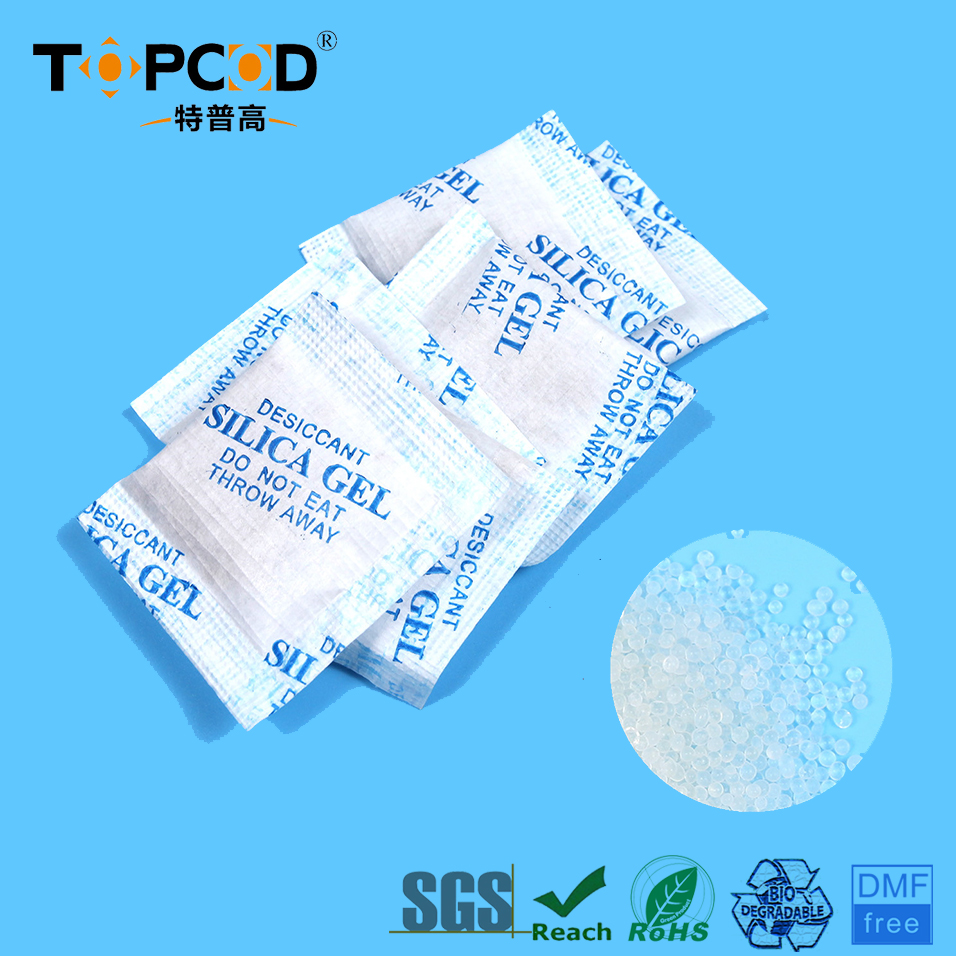
You must choose between different structural categories of beads. Type A silica gel features narrow pores. It works exceptionally well at low to moderate humidity levels. Type B features wider pores. It performs much better at high humidity levels approaching saturation. You also must choose between indicating and non-indicating variants based on maintenance protocols.
Synthesized from sodium silicate, this material forms a highly porous internal structure. The expected adsorption curve of a standard Silica Gel Desiccant drops sharply at moderate humidity. At 40% RH, expect realistic weight-gain percentages around 15% to 20%. Do not plan maintenance schedules around the theoretical maximums of 35% to 40%. Relying on maximums guarantees premature failure. The internal pore network acts like millions of microscopic sponges. Water molecules bind to the silica surface through physical adsorption. This process generates a small amount of heat. In a tightly packed bed, you can actually measure this temperature rise during rapid moisture uptake.
The packaging industry is rapidly shifting away from toxic cobalt(II) chloride indicators. High-efficiency and eco-friendly silica gel desiccants utilize safer compounds like copper(II) chloride or methyl violet. These cobalt-free indicating gels offer excellent visual contrast. They transition clearly from orange to green or orange to clear as they saturate. High-porosity variants balance rapid adsorption speed with strict environmental compliance. They easily meet global safety regulations for sensitive medical and food packaging. Operators can visually confirm saturation levels without handling hazardous materials.
Physical properties dictate operational outcomes directly. High surface area increases the total moisture capacity. Optimal pore volume determines the speed of moisture uptake. These factors dictate the exact time to saturation at 40% RH. Understanding this relationship helps you select the right material. A bead with massive surface area but tiny pores might hold a lot of water eventually. However, it will adsorb that water too slowly to protect a rapidly leaking enclosure. You need a balanced pore structure for optimal kinetics.
| Desiccant Category | Pore Structure | Optimal RH Range | Expected Capacity at 40% RH | Primary Application Field |
|---|---|---|---|---|
| Type A Silica Gel | Narrow Pore (2-3 nm) | 20% - 50% | 18% - 22% | Electronics, 3D Printing, Pharmaceuticals |
| Type B Silica Gel | Wide Pore (7-9 nm) | 50% - 100% | 8% - 12% | Liquid phase adsorption, High-humidity transit |
| Cobalt-Free Indicating | Mixed Pore | 30% - 60% | 15% - 20% | Visual monitoring in dryboxes and packaging |
| Molecular Sieve (Type 4A) | Crystalline (0.4 nm) | 1% - 30% | 18% - 20% (Fast saturation) | Deep drying, Refrigerant lines, Gas dehydration |
| Activated Alumina | Highly Porous | 10% - 60% | 12% - 16% | Compressed air dryers, Catalyst support |
Setting up proper evaluation dimensions is necessary for accurate data. Set up a controlled climate chamber. You can also construct a sealed micro-environment. This allows you to test the Desiccant Raw Material accurately. Maintain the internal temperature at a constant 25°C. Regulate the internal humidity to exactly 40% RH using saturated salt solutions or active mechanical control. Potassium carbonate provides a stable 43% RH environment when mixed as a saturated slurry. This offers a cheap and reliable calibration standard for your test chambers.
Tracking mass increase provides the most reliable performance metric. Follow a strict procedural framework to ensure data integrity. We use this exact method in the lab to verify incoming material batches.
The cup method provides excellent real-world application data. Monitor the internal RH of a sealed test cup. Observe how quickly the suitable adsorbing desiccant pulls the environment down. Measure its ability to hold the target stable low vapor pressure over time. This test mimics the exact conditions inside a sealed electronics case or 3D printer drybox. You place a known quantity of water inside a permeable membrane within the cup. This simulates a continuous leak rate. You then measure how long the desiccant can maintain 40% RH against this steady moisture load. This dynamic test reveals the true kinetic performance of the material.
Overall value depends on analyzing multiple competing factors. High initial adsorption capacity is excellent for short-term use. However, the ability to survive repeated thermal cycling matters more for long-term deployments. Beads must withstand rapid heating without fracturing. You must evaluate this trade-off carefully. A cheap material might absorb well on day one. It will likely turn to dust after three trips through the oven.
Use evidence-based parameters for regenerating Silica Gel Beads. Recharging desiccant for an AMS drybox requires specific temperature settings. Place them in a ventilated oven at 100°C to 120°C. Bake them for 45 minutes to an hour. Spread the material thinly on a baking sheet. A thick pile traps moisture in the lower layers. This forces the bottom beads to steam rather than dry. Longer durations release more trapped moisture. However, extended baking increases energy consumption unnecessarily and risks structural damage. Never use a microwave for regeneration. Microwaves heat the trapped water too rapidly. This causes the beads to explode like popcorn, ruining the batch instantly.
Silica gel beads face severe physical breakdown over multiple thermal cycles. Dusting and cracking are common operational issues. You see this frequently in refrigeration moisture-removal systems. Air conditioning units also experience this after repeated regeneration phases. Structural degradation creates fine particulate dust. This dust impacts system airflow and compromises overall cleanliness. In a 3D printer AMS, silica dust coats the filament. The extruder pulls this abrasive dust into the hotend, causing partial clogs and accelerated nozzle wear.
Thermal shock is the primary cause of this degradation. Rapidly heating saturated beads causes trapped water to boil. The expanding steam fractures the delicate internal pore structure. Gradual heating profiles mitigate this risk significantly. Start the oven at 60°C for the first twenty minutes. Ramp up to 120°C for the remainder of the cycle. Always allow beads to cool slowly in a dry environment to prevent immediate moisture re-adsorption. Storing freshly baked, hot beads in an airtight glass jar prevents them from pulling moisture out of the room air while they cool.
Sourcing low-quality material introduces severe operational hazards. Inconsistent bead size leads to uneven airflow through packed desiccant beds. High dust content contaminates sensitive electronics and optical sensors. False indicating dyes lose their color-changing ability after just one thermal cycle. These implementation risks cause unexpected system downtime. We frequently reject batches that fail basic visual inspections for dust and fractured spheres.
Scaling from a bench test at 40% RH is notoriously difficult. Full-scale deployment in HVAC systems introduces complex new variables. Packaging lines and large-scale dry rooms require massive airflow management. You must account for dynamic moisture loads in industrial applications. A small cup test does not replicate the high-velocity airflow of a commercial dehumidifier. In large desiccant wheels, the material faces constant mechanical vibration. It also experiences continuous thermal cycling. The mechanical crush strength of the bead becomes just as important as its adsorption capacity. Weak beads pulverize under the weight of the bed above them.
Vetting suppliers requires strict attention to technical documentation. Do not rely solely on marketing brochures. You need hard data to verify performance claims.
Take the following steps to optimize your moisture control strategy:
A: Silica gel absorbs up to 40% of its weight at high humidity levels like 80% RH. At 40% RH, the functional capacity drops significantly. You should expect a working capacity between 15% and 20%. Designing systems around this lower capacity prevents premature saturation and ensures stable environmental control.
A: Regeneration frequency depends entirely on specific application variables. You must consider the total volume of desiccant used and the enclosure leak rate. The air exchange rate heavily dictates saturation speed. A sealed 3D printer drybox requires less frequent regeneration than an actively vented cabinet. Monitor indicating beads to determine exact maintenance intervals.
A: The optimal range for recharging is between 100°C and 120°C. Bake the beads for 45 minutes to an hour in a well-ventilated oven. We strongly warn against using higher temperatures. Excessive heat rapidly destroys the internal pore structure. This thermal shock causes cracking and permanently reduces future adsorption capacity.
A: Yes, they are highly effective. The industry shifted away from toxic Cobalt(II) chloride found in traditional blue gels. Modern alternatives use safer compounds like Copper(II) chloride or Methyl Violet. These eco-friendly options maintain excellent moisture adsorption efficiency. They ensure safety and environmental compliance without sacrificing kinetic performance.
A: Start by weighing the fully saturated material. Regenerate the beads using standard oven protocols. Weigh the regenerated dry material once it cools completely in a sealed container. Compare this new dry weight to the original baseline dry weight. A significant loss in dry mass or adsorption capacity indicates the lifespan is ending.
A: Beads crack due to severe thermal shock. When heated too quickly, trapped water vapor inside the pores expands rapidly. The internal pressure fractures the silica structure. You must use gradual heating to maintain structural stability. Avoid placing cold, saturated beads directly into a pre-heated, high-temperature oven.


