
T: +86-757-2339-5985
E: tp@topcod.com.cn
E: tp@topcod.com.cn
No.6, Pai Sha Industrial Road, Pai Sha Community, Longjiang Town, Shunde District, Foshan City, Guangdong Province, China.
Views: 0 Author: Site Editor Publish Time: 2026-11-07 Origin: Site


Moisture damage is a silent, pervasive, and incredibly expensive threat in the world of global shipping and long-term storage. Every single year, ruined consumer electronics, mold-infested leather goods, and degraded food products cost businesses millions of dollars in unsellable inventory. While the vast majority of supply chain managers recognize the absolute necessity of moisture protection, a common and costly dilemma persists. Figuring out exactly how much protection is actually required remains a major industry challenge.
Guessing your moisture protection levels is a dangerous gamble. It frequently wastes valuable packaging budgets. Conversely, utilizing inadequate amounts inevitably leads to completely ruined shipments. As packaging engineers, we know the industry-standard solution for reliable, scalable moisture control relies on specialized humidity control packets. This comprehensive guide breaks down the exact variables, mathematical formulas, and environmental factors that dictate the precise amount of moisture protection needed for any given container. We will ensure your products arrive in pristine condition.
Key Takeaways
Let us briefly examine current logistics trends. Global supply chain disruptions have fundamentally shifted how packaging engineers approach moisture control. Transit delays are increasingly common. Cargo ships often wait at ports for weeks, leaving goods sitting in humid environments much longer than anticipated. Consequently, the industry is moving away from reactive moisture control. Experts now emphasize a holistic view of the micro-climate. Pairing precisely calculated desiccants with ultra-low MVTR barrier films is the new standard practice for ensuring product integrity over extended, unpredictable shipping windows.
To accurately calculate your precise packaging needs, you must first understand the core material doing the heavy lifting. The active component inside these packets is hygroscopic Silica Gel. This is a highly porous, amorphous form of silicon dioxide. A standard kitchen sponge absorbs water by pulling liquid into its actual physical structure, causing it to swell and change shape. In contrast, this material operates through a fascinating scientific process known as adsorption.
During the adsorption process, airborne water vapor molecules are magnetically drawn into the microscopic pores of the silica beads. They become trapped on the vast internal surface area via Van der Waals forces. The moisture adheres to the surface rather than chemically bonding with the material. Therefore, the beads remain physically dry to the touch even when they have reached their absolute maximum capacity.
Furthermore, this specific compound remains the gold standard in logistics for several empirical reasons. It boasts an exceptionally high capacity. It is capable of holding up to 40 percent of its own weight in moisture under high-humidity conditions. In addition, it is chemically stable, non-corrosive, and non-toxic. This makes it a remarkably safe and versatile choice for everything from heavy industrial machinery to daily consumer perishables.
The foundational metric for deciding how many packets to use is the physical size of the enclosed space. Moisture exists suspended in the air. Therefore, the larger the volume of air trapped inside your packaging, the more ambient moisture there is to aggressively control. Calculating this baseline is straightforward geometry requiring you to measure the internal dimensions of your box or barrier bag by multiplying length times width times height.
Depending on your regional logistics standards, this calculation gives you the total volume in either cubic inches, cubic centimeters, or cubic feet. Industry packaging standards directly correlate this cubic volume to the specific grams or units of Silica Gel Desiccant required to maintain a dry environment.
A frequent debate among junior packaging engineers is whether to calculate requirements based on the empty volume of the box or the remaining air volume after the physical product is inserted. It is true that the product displaces a certain amount of air. However, the objective best practice is to base your mathematical calculation on the total empty box volume. This conservative approach provides a necessary safety buffer. It accounts for the hidden moisture that might be trapped within the product itself, such as dampness lingering in cardboard inserts or wooden pallets. This ensures the moisture absorber capacity is never undersized.
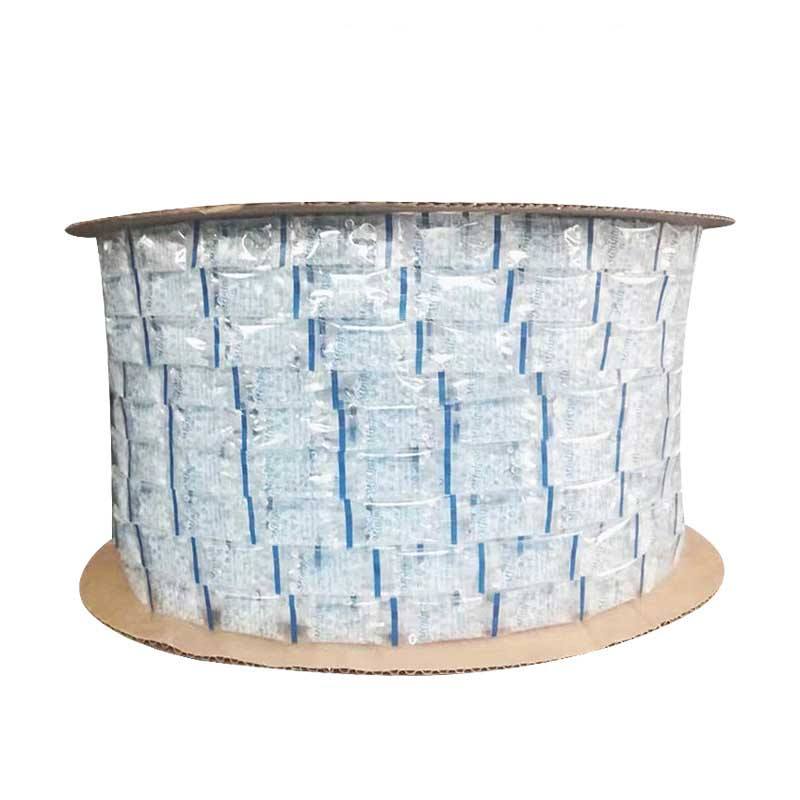
Not all commercial goods react to ambient humidity in the exact same way. The specific moisture sensitivity level of the items being shipped is a critical variable in your overall calculation. Different materials possess vastly varying tolerances for relative humidity. Exceeding these critical thresholds can lead to irreversible, costly damage.
Food and Pharmaceuticals
Consumables and medications are governed by incredibly strict sizing rules for safe, long-term storage. Excess moisture in food packaging rapidly leads to staleness, powder clumping, and dangerous microbial growth. Similarly, moisture in pharmaceuticals can quickly degrade active chemical ingredients, rendering life-saving drugs ineffective. These highly regulated applications require strict adherence to FDA-approved, food-grade materials. For example, utilizing perfectly sized Silica gel packs is standard practice for small pill bottles or diagnostic kits. This guarantees that the micro-climate remains exceptionally dry without ever introducing harmful chemical contaminants to the patient.
Electronics and Metal Parts
Metals and delicate electronic components are highly susceptible to oxidation and galvanic corrosion. When the relative humidity inside a sealed package creeps above 40 percent, the risk of microscopic rust on circuit boards increases exponentially. For these high-value items, seasoned packaging engineers typically recommend adding an extra 10 to 20 percent safety buffer of desiccant beyond the standard volume calculation. This guarantees the relative humidity stays well below the danger zone throughout the entire journey.
Textiles and Leather
Organic materials like premium leather shoes, cotton garments, and wooden artisan items inherently hold a baseline level of internal moisture. When these goods are sealed in a dark box, even a slight increase in external temperature can cause the materials to off-gas or release their internal moisture into the packaging air. This creates a humid, greenhouse-like environment ripe for mold and mildew. Consequently, these products often require a significantly higher desiccant-to-volume ratio to manage both the trapped air moisture and the off-gassed product moisture.
One of the most frequently overlooked factors in moisture control calculations is the actual structural integrity of the container itself. It is a harsh reality of logistics that no standard corrugated box or basic plastic bag is entirely waterproof over an extended period. The specific rate at which external environmental moisture permeates the packaging barrier is known as the Moisture Vapor Transmission Rate or MVTR.
The MVTR heavily dictates how much active material is needed to maintain a dry environment over time. If moisture enters the package faster than the beads can adsorb it, the entire protection strategy fails.
The external weather environment and the timeline of the supply chain are dynamic, ever-changing variables that must be factored into your final calculations. A small package shipped overnight via domestic air freight requires vastly less protection than a heavy steel casting sitting in the belly of a slow-moving cargo ship for 45 days.
Temperature and Humidity Fluctuations
When goods are shipped internationally, they frequently cross multiple extreme climate zones. This leads to a severe logistical phenomenon known as container rain. Imagine a metal shipping container being loaded in a hot, high-humidity port in Southeast Asia. Weeks later, that same container arrives in the freezing temperatures of Northern Europe. The sudden, drastic temperature drop causes the air inside the container to hit its dew point. The trapped moisture vapor rapidly condenses into liquid water, literally raining down onto the cardboard boxes below. If your packaging is exposed to these extreme fluctuations, you must aggressively increase the packet quantity to manage the sudden spikes in relative humidity.
Storage Conditions
The final destination warehouse also dictates sizing requirements. If a product will sit safely in a climate-controlled, modern facility, a standard allocation is perfectly sufficient. In contrast, if the product will be stored in a non-climate-controlled, drafty warehouse where temperatures and humidity swing wildly between day and night, the packets will be forced to work much harder. In these harsh scenarios, calculating for an extended lifespan is necessary to prevent the beads from becoming fully saturated before the product ever reaches the end consumer.
While understanding the underlying variables is crucial for custom shipments, packaging professionals rely heavily on standardized mathematical formulas to determine the baseline quantity needed. In industrial and military specifications, moisture absorbers are often measured in Units. One Unit is defined as the amount required to adsorb 3 grams of water at 20 percent relative humidity, or 6 grams of water at 40 percent relative humidity. Practically speaking, 1 Unit is equivalent to approximately 28 grams of material.
To make the selection process actionable, refer to this core comparison table for standard packaging environments.
| Enclosure Size | Internal Volume | Recommended Desiccant Weight | Ideal Application |
|---|---|---|---|
| Small | Under 100 cubic inches | 0.5g to 1g | Pill bottles, jewelry boxes, small electronics |
| Medium | 100 to 400 cubic inches | 3g to 5g | Shoe boxes, small appliances, leather goods |
| Large | 1 cubic foot | 30g to 35g | Standard moving boxes, medium shipping cartons |
| Extra Large | Over 3 cubic feet | 100g+ or Multiple Units | Industrial machinery, bulk food storage |
The Basic Rule of Thumb:
Calculating the total grams required is only half of the packaging equation. Selecting the appropriate physical format for the absorber is equally important to line efficiency. The active beads are encased in various materials, including Tyvek, specialized non-woven fabric, cotton, and perforated plastic.
The material encasing the beads must strike a very delicate balance. A high-quality Pouch Silica Gel Desiccant needs to be incredibly durable. It must not tear or puncture during the harsh vibrations of transit. A ruptured pouch would spill hard silica beads and potentially contaminate or scratch the product. Simultaneously, the pouch material must be highly breathable, possessing a high MVTR itself, so it can pull moisture from the surrounding air rapidly. Tyvek and medical-grade non-woven fabrics are generally preferred for commercial use because they offer high tear resistance while allowing excellent vapor transmission.
Specifically, sizing granularity severely impacts operational efficiency on the factory floor. If your mathematical calculation requires 10 grams of protection per box, you must decide whether to use one single 10g pouch or ten individual 1g pouches. Using a single, properly sized pouch significantly reduces manual packaging time. It lowers labor costs and presents a much cleaner, premium unboxing experience for the end consumer.
Even with the perfect mathematical calculation and the highest quality barrier materials, improper execution on the packaging assembly line can render your entire moisture protection strategy completely ineffective. Avoiding these common empirical errors is vital for supply chain success.
Leaving the Box Unsealed
Moisture absorbers are entirely indiscriminate. They will aggressively attempt to pull humidity from any air they touch. If a box or internal polybag is left improperly sealed on the packing table, the packets will continuously draw in moisture from the entire warehouse atmosphere. By the time the package is finally loaded onto an outbound truck, the beads may already be fully saturated and entirely useless. Hermetic, airtight sealing is mandatory for success.
Poor Placement
The physical placement of the sachets within the container drastically affects their efficiency. They should be distributed as evenly as possible throughout the void space. A common, disastrous mistake is burying a packet underneath a dense, heavy metal casting at the very bottom of a box where airflow is zero. For maximum adsorption speed, the packs should be placed near the top or suspended within the packaging where internal air circulates most freely.
Using Expired or Saturated Desiccants
These products have a finite lifespan, even before they are placed inside a product box. A frequent operational failure occurs when massive bulk bags of sachets are ripped open on the factory floor and left exposed to ambient air for days at a time. The packs will passively adsorb warehouse moisture and reach their maximum capacity before they are ever used to protect a product. Unused inventory must be kept in strictly sealed, airtight containers until the exact moment they are needed on the line.
Deciding exactly how many moisture control packets a box needs is never a guessing game. It is a highly calculated process relying on volume, product type, packaging material, and the transit environment. Taking the time to properly evaluate your MVTR and shipping duration ensures that you are neither under-protecting your goods nor wasting money on excessive packaging. Spending a few extra cents on the correct amount of high-quality humidity control is a brilliant operational investment. It protects thousands of dollars in valuable product inventory.
Evaluate your current packaging strategy today, and ensure your goods always arrive in the hands of your customers in absolutely perfect condition. To find the exact specifications, high-efficiency pouches, and food-grade protection tailored to your industry, explore the professional solutions available at Topcod Dry Packaging.
Standard clear silica gel is entirely non-toxic, chemically inert, and generally safe to handle. The ubiquitous warning printed on the packets is primarily because the small sachets pose a severe choking hazard to small children and pets, not because the gel itself is poisonous. However, it is worth noting that some older, color-indicating gels which change color from blue to pink contained cobalt chloride, a known heavy metal toxin. Fortunately, most modern, high-quality indicating gels use safe, heavy-metal-free alternatives like methyl violet or iron salts.
The effective lifespan of a moisture absorber depends entirely on the environment it is placed in. In a perfectly sealed, low-MVTR container such as a Mylar foil bag or a hard plastic case, they can actively protect goods for several years without ever needing replacement. However, in frequently opened cardboard boxes or display cases where new, humid air is constantly introduced, they may need replacing every 3 to 6 months. Using modern color-indicating gels can take the guesswork out of this maintenance process, as they visually change color the moment they become fully saturated.
Yes, many standard packets can be easily recharged or reactivated for repeated use. This is typically done by baking them in a conventional oven at a specific, controlled temperature, usually around 200 to 250 degrees Fahrenheit, for a few hours. This gentle heating process bakes off the trapped water vapor, effectively resetting the adsorption capacity of the beads. Always check the external packaging material first, as some cheaper plastic pouches or thin non-woven fabrics may melt in an oven, ruining the batch.
Generally speaking, you cannot over-dry the vast majority of consumer or industrial products. Using more packets than mathematically required is completely harmless to items like electronics, machined metals, and hard plastics. It merely wastes your packaging budget. However, there are notable exceptions. Specific organic goods, such as premium leather jackets, wooden musical instruments, or fine cigars, require a specific baseline humidity to prevent the materials from cracking, shrinking, or degrading. For these highly specialized items, extreme dryness must be carefully avoided.
Leftover or recycled packets have numerous brilliant, practical applications around the home and office. Common life hacks include placing them in a sealed ziplock bag to draw moisture out of a wet smartphone. You can toss them into sweaty gym bags or shoes to prevent odor-causing bacteria from multiplying. Keep them in garage toolboxes to prevent expensive metal tools from flash-rusting, and store them inside fireproof safes with important paper documents or vintage photographs to prevent irreversible moisture degradation over time.
Calculating the volume is a straightforward geometric process. Measure the internal length, width, and height of your shipping box or barrier bag in inches. Multiply these three numbers together to get the total cubic inches. Divide that number by 1728 to convert it into cubic feet. This final cubic foot measurement is the standard baseline used by packaging engineers to determine the required units of moisture protection based on industry formulas.
When stored correctly in their original, hermetically sealed factory packaging, they generally have a shelf life of approximately one to two years. The key factor is the integrity of the master bag. If the master foil or heavy-duty plastic bag sustains micro-punctures or is left partially open in a warehouse environment, the packets will passively absorb ambient moisture. Always store bulk inventory in a cool, dry place and ensure airtight seals are maintained until they are ready for the assembly line.


