
T: +86-757-2339-5985
E: tp@topcod.com.cn
E: tp@topcod.com.cn
No.6, Pai Sha Industrial Road, Pai Sha Community, Longjiang Town, Shunde District, Foshan City, Guangdong Province, China.
Views: 0 Author: Site Editor Publish Time: 2026-11-08 Origin: Site


Global shippers face a persistent, invisible enemy during long sea voyages. We call it "Container Rain." When you ship goods across shifting climate zones, extreme temperature fluctuations occur. This creates a hostile, humid microclimate inside the steel walls. Without aggressive intervention, trapped moisture condenses rapidly. It drips down and silently destroys entire shipments long before they reach the destination port.
As field engineers dealing with cargo preservation, we see this failure mode constantly. The 40-foot shipping container is the undisputed workhorse of international freight. However, its massive internal volume presents unique thermodynamic challenges. First-time buyers often ask a logical question regarding moisture control. Do I need a single continuous blanket that spans the entire length of the unit? The short answer is no. Modern cargo protection relies entirely on a modular approach. We strategically deploy multiple high-capacity strips of specific lengths throughout the cargo space to create an overlapping zone of protection.
This technical guide breaks down the exact dimensions, required quantities, and optimal chemical formulations needed to keep a 40-foot container perfectly dry. By understanding these engineering parameters, procurement teams can make data-driven purchasing decisions that protect their bottom line.
Let us look at current market shifts. With recent global port congestions and unpredictable transit times, vessels spend more days idling in high-humidity equatorial zones. Consequently, the logistics sector is rapidly shifting its moisture control strategies. We are seeing a massive departure from traditional bulk clay. Shippers now demand hyper-efficient, space-saving chemical absorbers that can sustain high absorption rates over extended voyages. The focus has moved entirely to modular, high-capacity formulations.
Manufacturers simply do not produce continuous 40-foot moisture-absorbing blankets. A fully saturated blanket of that size would weigh hundreds of pounds. It would inevitably tear under its own weight during rough seas. Furthermore, it would be a logistical nightmare for warehouse staff to install overhead.
Instead, the industry standard relies on manageable, standardized units. You need multiple 1-meter strips distributed uniformly across the entire length of the container.
The physical specifications of a commercial-grade strip are intentionally standardized. A 1-meter dimension holds a substantial volume of active chemical agent. Yet, it remains short enough to hang vertically without dragging on the floor or snagging on forklift pallets. They feature rigid plastic hooks at the top for rapid deployment.
For a standard 40-foot container loaded with general, non-hygroscopic cargo, the golden rule dictates using 8 to 12 strips. Each unit typically contains between 1000g to 1500g of active material. To provide a sense of scale, a smaller 20-foot container holds roughly half the cubic volume and usually requires only 4 to 6 of these exact same strips.
While the 8-to-12 rule serves as a reliable baseline, specific shipping parameters demand an upward adjustment. If you transport highly hygroscopic cargo, the goods themselves act as moisture batteries. Commodities like raw coffee beans, cocoa, rice, or untreated lumber continuously off-gas massive amounts of water vapor into the trapped air as temperatures rise.
Similarly, extreme cross-equator voyages expose the steel box to severe diurnal temperature shifts. Under these high-stress conditions, logistics engineers routinely increase the deployment to 14 or even 16 strips. This ensures an unbroken barrier of absorption capacity.
To engineer a proper solution, you must understand the failure mode. During a maritime voyage, the steel exterior bakes under intense solar radiation. Internal temperatures spike aggressively. This heat draws moisture out of wooden pallets, cardboard boxes, and the cargo itself. As night falls, ambient ocean air rapidly cools the exterior steel walls. When the internal air hits its dew point, it can no longer hold the suspended water vapor. Heavy condensation forms on the ceiling and walls.
The financial fallout from this phenomenon is staggering. Moisture damage manifests as toxic mold blooms on agricultural yields and aggressive rust on precision metal machinery. It also causes collapsed packaging that leads to immediate rejection by quality control inspectors.
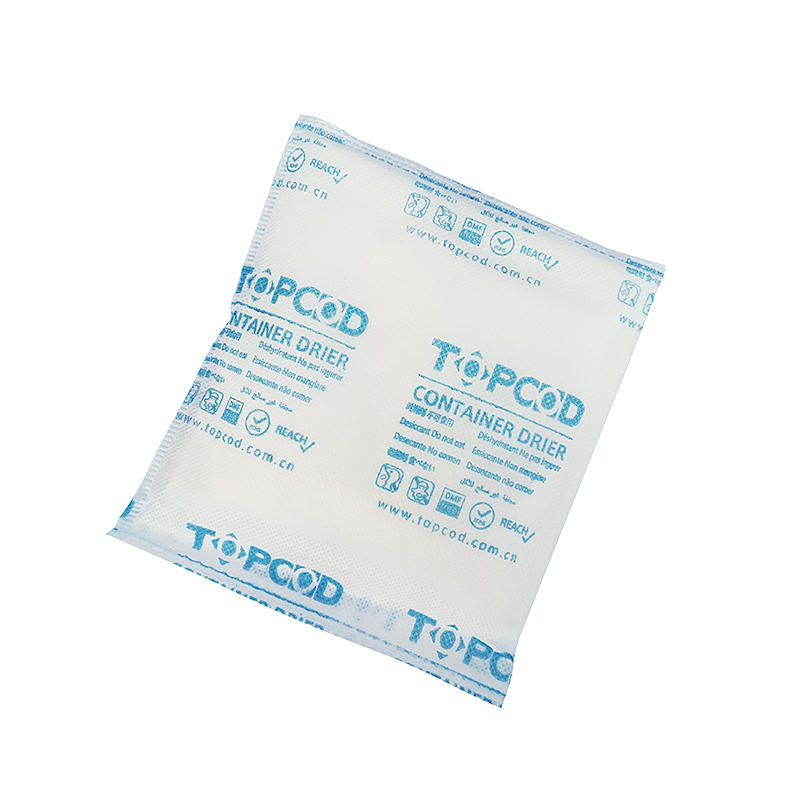
The most effective intervention is deploying a dedicated Container Desiccant. These engineered absorbers actively pull excess humidity from the air before it can reach the dew point. By fundamentally altering the relative humidity inside the 40-foot space, they break the condensation cycle entirely. Your cargo stays safe regardless of external temperature plunges.
The material inside the strip dictates its true field performance. Driven by escalating freight costs and rigorous zero-waste sustainability mandates, major shipping lines are abandoning bulk silica.
Historically, shippers relied heavily on silica gel or activated clay. While perfectly fine for small consumer electronics boxes, these traditional materials fail spectacularly in the cavernous macro-environment of a 40-foot container. Silica gel operates via physical adsorption. It typically maxes out at holding 25 to 30 percent of its own weight. Worse, at high temperatures, it can release previously trapped moisture back into the air.
In stark contrast, modern calcium chloride desiccant packs represent a massive leap in chemical engineering. Calcium chloride is a highly deliquescent salt. It chemically binds with water vapor, absorbing up to 300 percent of its initial dry weight. A single 1-kilogram strip can effectively trap up to 3 liters of water over a voyage.
| Performance Metric | Traditional Silica Gel | Advanced Calcium Chloride |
|---|---|---|
| Absorption Capacity | 25% - 30% of its own weight | Up to 300% of its own weight |
| High Heat Stability | May release moisture back into the air | Permanently binds moisture chemically |
| Post-Use Physical State | Remains loose solid beads | Transforms into a thick, leak-proof gel |
| Space Efficiency | Requires massive bulk and floor space | Highly compact, hangs in wall grooves |
A natural engineering concern is what happens to all that absorbed water. Advanced manufacturers utilize highly specialized leak-proof designs. Inside a premium Calcium Chloride Absorb Dry Pouch, the active powder is blended with a sophisticated modified starch binding agent. As the compound absorbs water vapor, it undergoes a phase change. It turns from a loose powder into a thick, viscous solid gel.
This gel is permanently trapped behind a one-way microporous Tyvek or non-woven membrane. Even if the strip is violently jostled during rough seas or squeezed tightly by shifting cargo, zero liquid can leak back out to contaminate the shipment.
Today's data-driven supply chains no longer rely on guesswork. Customizing your exact order requires evaluating three primary operational variables.
Assess Cargo Moisture Content: Differentiating your goods is step one. Low-moisture products like automotive parts, glass, or plastics do not generate internal water vapor. They only need protection from the ambient air trapped during loading. Conversely, natural textiles and wooden furniture breathe during transit. These shipments demand maximum protection. They often necessitate specialized formats like a 200g Calcium Chloride Dry Bag designed to handle intense agricultural off-gassing.
Evaluate Voyage Duration and Route: A brief 12-day sprint from Shanghai to Tokyo presents a relatively mild risk profile. In contrast, a 45-day marathon from Southeast Asia to Northern Europe involves crossing multiple climate zones. The longer the voyage and the more extreme the temperature differentials, the higher the required absorption capacity.
Account for Packaging Materials: Shippers frequently overlook the invisible threat lurking in their own packaging. Fresh wooden pallets and heavy corrugated cardboard contain massive amounts of hidden moisture. A single standard wooden pallet can hold up to 14 liters of water if not properly kiln-dried. You must size your strips to absorb this secondary off-gassing.
Procuring top-tier moisture absorbers is only half the battle. Proper installation dictates field success. Below is an actionable Standard Operating Procedure for warehouse teams loading a 40-foot unit.
Inspect the Container First: Before a single pallet moves, thoroughly inspect the empty steel box. Ensure it is swept clean, completely dry, and structurally sound. Check rubber door seals for rot. Look for pinholes in the roof that could allow seawater ingress.
Locate the Anchor Points: Look along the upper edges of the corrugated steel interior walls. You will spot heavy-duty metal D-rings welded just below the ceiling. These lashing rings are your designated anchor points.
Deploy the Strips: Only unseal the packaging right before loading begins. Utilize the rigid plastic hook built into the top header of the strip. Clip it securely onto the lashing ring. Ensure the 1-meter body hangs vertically, resting flush inside the recessed groove of the wall.
Optimize the Spacing: Never cluster the units in one corner. If your calculation calls for 10 strips, hang 5 evenly spaced along the left sidewall and 5 along the right. Space them roughly every 1.5 to 2 meters. This creates a uniform zone of moisture absorption across the entire 67-cubic-meter space.
Maintain Critical Airflow: Imagine a forklift operator hastily loading pallets. If they push the cargo completely flush against the steel walls, they physically suffocate the desiccants. These products require ambient air circulation to function. Always instruct your teams to leave a few inches of breathing room between the cargo and the walls.
A common operational question concerns the active lifespan of these chemical absorbers. Longevity is not measured strictly by the calendar. It is dictated by chemical saturation rates.
The speed at which a strip reaches maximum capacity depends heavily on the initial relative humidity at the port of origin. In highly humid environments, the chemical works aggressively in the first two weeks. In drier conditions, the absorption curve remains slow and steady.
Under standard global maritime conditions, high-quality calcium chloride strips are engineered to remain fully active for 45 to 90 days. This generous operational window safely covers almost any standard shipping route. Furthermore, warehouse receivers do not have to guess if a strip is exhausted. Modern iterations feature a clear viewing window. If the internal powder has completely transformed into a thick, swollen gel upon arrival, the strip has successfully exhausted its capacity and protected the load.
Protecting a 40-foot shipping container from the ravages of cargo sweat is a highly calculated engineering process. It requires moving past the myth of a single continuous blanket. Instead, logistics teams must deploy 8 to 12 strategically placed, 1-meter-long strips.
By upgrading from outdated silica gel to advanced, high-capacity calcium chloride formulations, shippers guarantee a dry microclimate regardless of route severity. Investing in premium moisture absorbers is a microscopic fraction of the cost compared to the catastrophic financial loss of an entire shipment ruined by water damage.
Do not leave your next global shipment to chance. Evaluate your cargo's specific moisture profile, choose the correct capacity, and ensure proper installation. Browse the comprehensive catalog at TOPCOD Dry Packaging to find the exact formulation for your needs, or contact our technical sales team today for a custom moisture control calculation to secure your cargo from port to port.
No, desiccant strips are not manufactured as single 40-foot continuous pieces. The logistics industry standard dictates using multiple 1-meter strips. These are hung at regular intervals along the container's sidewalls to ensure even, highly efficient moisture absorption throughout the entire cargo space without risking the material tearing under its own weight.
A container desiccant strip is specifically engineered for macro-environmental control. It features a rigid hook to hang securely in the vertical grooves of container walls, saving valuable floor space and maximizing ambient airflow. Standard pouches are much smaller. They are designed to be placed directly inside individual product cartons to protect the micro-environment of a specific item.
Premium modern strips are engineered with high-strength Tyvek or non-woven microporous membranes. Because the active calcium chloride powder turns into a thick, viscous solid gel as it absorbs moisture, there is no free-flowing water inside the strip. Even if severely squeezed by shifting pallets, the gel remains trapped, preventing any liquid from leaking onto your shipment.
No. The chemical reaction that binds the water vapor is a one-way process. Once the dry powder has fully transformed into a solid gel, it has reached its absolute maximum absorption capacity. The exhausted strips must be discarded and replaced with fresh units for the next voyage.
Yes. High-quality calcium chloride moisture absorbers are non-toxic and environmentally friendly. Once the voyage is complete and the active powder has safely transformed into a solid gel, the exhausted strips can typically be disposed of alongside regular commercial solid waste. However, logistics managers should always verify their specific local municipal waste regulations prior to disposal.
Agricultural commodities, such as cocoa, coffee beans, or raw rice, release massive amounts of internal moisture during transit. While 12 strips serve as an excellent baseline for general dry cargo, highly hygroscopic agricultural shipments frequently require increasing the quantity to 14 or 16 strips. This depends heavily on the exact moisture content of the crop and the total duration of the voyage.


