
T: +86-757-2339-5985
E: tp@topcod.com.cn
E: tp@topcod.com.cn
No.6, Pai Sha Industrial Road, Pai Sha Community, Longjiang Town, Shunde District, Foshan City, Guangdong Province, China.
Views: 0 Author: Site Editor Publish Time: 2026-11-01 Origin: Site


Shipping bare steel coils across the globe is a brutal stress test for any supply chain. The margin for error? Zero. A single rusted coil triggers a cascade of disasters. You face rejected shipments, complex insurance claims, and permanently damaged client trust. During a 45-day ocean transit, temperatures swing wildly. This environmental instability creates a phenomenon known as container rain. Condensation builds on the cold ceiling. Eventually, it drips directly onto the metal surfaces below. Severe oxidation begins almost instantly.
The most effective solution to this widespread logistical challenge is aggressive humidity control. This is where the strategic application of a premium Container Desiccant becomes your frontline defense. By actively absorbing excess airborne moisture, these specialized moisture absorbers prevent the internal climate from ever reaching the critical dew point.
This comprehensive engineering guide helps logistics managers, procurement officers, and packaging engineers make data-driven decisions. Below, we break down exactly how to choose the right type, size, and quantity of moisture control materials to keep heavy metal cargo completely rust-free from the loading dock to the final destination.
Key Takeaways
The Threat of Corrosion
The science of rust is straightforward. Yet, its impact on industrial supply chains is devastating. When the relative humidity inside a shipping environment exceeds 40 percent, oxidation on bare metal accelerates exponentially. Steel coils feature massive surface areas and highly reactive metallic properties. This makes them exceptionally susceptible to rapid chemical degradation. Even microscopic layers of moisture initiate the formation of iron oxide. This degrades both the structural integrity and the aesthetic value of the metal.
Industry Trend: The Impact of Supply Chain Volatility
Recent maritime logistics data reveals a structural shift in metal transport strategies. Global supply chain disruptions continue to cause unprecedented port congestion and vessel delays. Transit times are now highly unpredictable. A voyage scheduled for 30 days might easily stretch to 60 days while a ship idles offshore. Consequently, major steel exporters are rapidly abandoning traditional, low-capacity physical absorbents. The prevailing industry trend has decisively moved toward advanced chemical moisture control solutions. These robust systems sustain humidity regulation for extended, volatile periods, ensuring cargo survival regardless of docking delays.
Understanding Container Rain
Imagine a cargo ship arriving at a European port after a grueling four-week voyage across the equator. The doors swing open. The inspection team finds streaks of orange rust bleeding through the packaging. This is the direct result of container rain. During the day, intense solar radiation heats the metal walls, causing moisture trapped in the ambient air and wooden pallets to evaporate. As temperatures drop rapidly at night, the air loses its capacity to hold this water vapor. Once the temperature hits the dew point, the vapor condenses on the coldest surface. Typically, this is the ceiling. The accumulated water then drips steadily onto the vulnerable steel below.
When selecting a moisture absorber for heavy-duty industrial shipping, logistics planners must recognize a hard truth. Not all materials perform equally. Understanding the chemical properties of different absorbents is crucial for protecting high-value steel.
Silica Gel vs. Clay Desiccants
Silica gel and bentonite clay are physical adsorbents. You commonly find them in small consumer packaging. While perfectly effective for small electronics in sealed foil, they present severe limitations in ocean freight. Primarily, their absorption capacity is extremely low. They typically hold only 25 to 40 percent of their weight in moisture. More alarmingly, physical adsorbents are prone to desorption. When temperatures inside a shipping container rise above 40 degrees Celsius, silica gel and clay actually release previously trapped moisture back into the air. They actively contribute to the humidity problem rather than solving it.
Calcium Chloride Solutions
For heavy metals, relying on Calcium Chloride Container Desiccants is the definitive standard in maritime logistics. Calcium chloride is a highly hygroscopic, deliquescent salt. It offers an aggressive absorption rate. Unlike physical adsorbents, it undergoes a chemical change. This means it remains stable and effective across a wide spectrum of extreme temperatures, permanently trapping the moisture it pulls from the air.
Core Material Comparison Matrix
| Performance Metric | Silica Gel / Montmorillonite Clay | Calcium Chloride Formulation |
|---|---|---|
| Absorption Capacity | 25% - 40% of its own weight | Up to 300% of its own weight |
| High-Temperature Stability | Poor. Releases moisture above 40°C | Excellent. Remains stable up to 90°C |
| Action Mechanism | Physical adsorption | Chemical reaction and gel transformation |
| Best Application | Small, sealed consumer goods | Large-scale ocean freight and heavy machinery |
The sheer volume of air inside a 20-foot or 40-foot container holds a massive amount of water vapor. To combat this, you need industrial-grade capacity.
High Absorption Capacity and Real Parameters
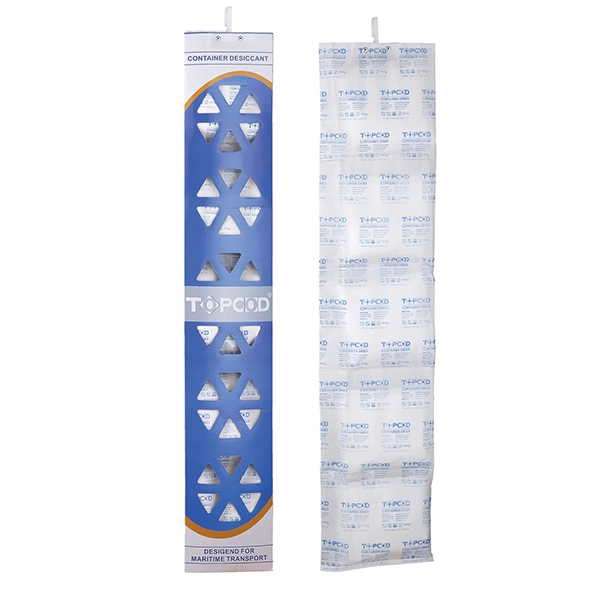
By absorbing up to three times its weight in water, calcium chloride efficiently handles high moisture loads. It rapidly pulls the relative humidity below the critical 40 percent threshold to halt rust formation. For macro-environmental control, engineers typically specify 1400g high-efficiency strips. These long units maximize surface area exposure to the humid air. For localized protection inside individual wooden crates, a 100g Cacl2 Desiccant provides targeted moisture defense right next to the metal surface.
Gel-Transformation Technology
Historically, shippers worried that salt-based absorbents would create corrosive liquid brine. Modern engineering has completely solved this issue. Advanced formulas incorporate a binding agent, often a modified starch. As the active ingredients absorb airborne moisture, they chemically react with this starch. This transforms the absorbed water into a thick, viscous, leak-proof gel. This specific feature is non-negotiable. Liquid water escaping from a saturated packet would instantly corrode the steel coils.
Long-Lasting Effectiveness
Because ocean freight schedules are subject to delays, these specialized formulations are designed for slow, continuous moisture absorption. Instead of peaking in the first few days, they provide sustained humidity control for voyages spanning 30 to 90 days. They offer relentless protection from the moment the doors are sealed until arrival at the final destination.
Leak-Proof Packaging Membranes
The outer membrane enclosing the active ingredients is just as critical as the chemicals inside. High-quality packs feature double-layered, micro-porous materials. Spunbond polyethylene fabrics or Tyvek are industry standards. This specialized one-way barrier allows water vapor molecules to easily pass into the pouch. Conversely, it prevents the resulting thick gel from leaking out, ensuring the metal cargo remains uncontaminated.
Hanging Hooks vs. Flat Packs
The physical design dictates placement efficiency. Strip configurations equipped with heavy-duty plastic carabiner hooks are ideal for shipping containers. Because warm, moist air naturally rises, condensation primarily forms on the ceiling. Hanging these strips positions the absorbent material exactly where moisture concentration is highest. Flat packs are highly useful inside individual wooden crates, but they are vastly inferior for controlling the macro-climate of an entire shipping container.
Tear-Resistant Durability
The maritime environment involves intense vibrations, swaying, and potential impacts. Steel coils are incredibly heavy. If they shift slightly during loading via forklift or crane, they could scrape against the container walls. Therefore, the outer shell of the moisture absorber must be tear-resistant and puncture-proof. It must withstand accidental physical contact without rupturing.
Determining the correct quantity of moisture control material is a delicate balance. Using too little leaves the steel vulnerable. Over-applying incurs unnecessary packaging costs.
Factors Influencing Desiccant Quantity
Several distinct variables dictate the required absorption capacity for a specific shipment. First, the voyage duration and route play a massive role. A short 15-day transit requires significantly less protection than a 60-day transit crossing humid equatorial zones. Second, the container size matters. A 40-foot container naturally holds more ambient moisture than a 20-foot unit. Finally, the moisture content of the dunnage is frequently overlooked. Heavy wooden pallets, blocks, and bracing naturally contain high levels of water. During a hot voyage, this porous wood releases hidden moisture into the air. This drastically increases the overall humidity load.
Actionable Calculation Guidelines
While exact requirements always vary based on the timber's moisture content, industry best practices provide a reliable baseline for steel shipments:
Because steel represents high-value, high-risk cargo, calculating the precise volume of bulk calcium chloride depends heavily on your specific packaging protocols. Consulting directly with a packaging manufacturer to perform a custom moisture load calculation is always the safest route.
Even top-tier absorbent materials will fail if installed incorrectly. Strategic placement maximizes air circulation and moisture capture.
Hanging on the Top Rings
The optimal installation method utilizes the corrugated grooves of the container walls. Most standard ISO shipping containers feature small lashing rings along the top edge near the ceiling. Personnel should use a step ladder to reach the upper lashing rings. Secure the carabiners or hooks tightly so the strips sit flush against the recessed corrugations. This prevents the strips from violently swinging and potentially getting crushed during cargo loading or rough seas.
Even Distribution
To maintain a uniform relative humidity, distribute the units evenly throughout the space. Clustering all the packs near the doors creates isolated micro-climates. This leaves the rear of the container vulnerable to dew point fluctuations. Installers should space the strips symmetrically along the left, right, and front walls.
Avoiding Direct Contact
Under no circumstances should any chemical packet be placed directly on bare steel coils. Modern packaging is highly leak-resistant. However, the extreme conditions of ocean freight always carry a marginal risk of physical puncture. Maintaining a physical buffer space between the absorbent strips and the metal cargo prevents localized chemical reactions or physical abrasion.
Despite the availability of advanced moisture control technology, shipments still arrive damaged due to procedural errors in logistics planning.
Using the Wrong Desiccant Type
As established, relying on silica gel or clay for ocean freight is a critical engineering error. These materials will release moisture back into the container during high-temperature spikes. This effectively neutralizes their protective benefits.
Underestimating the Moisture Load of Dunnage
Logistics planners often calculate needs based solely on the empty container's air volume. They completely ignore the massive water reservoir hidden inside freshly cut or improperly kiln-dried wooden bracing. If you ignore this dunnage moisture, the absorbents will saturate prematurely.
Blocking Container Vents
Standard shipping containers feature small ventilation holes. Some shippers mistakenly tape these vents shut, assuming it keeps ocean moisture out. In reality, sealing the container without adequate internal moisture control traps the water emitted by the wood and cargo inside. This creates a greenhouse effect that severely accelerates the container rain cycle.
Ignoring Primary Packaging
A moisture absorber is a secondary defense mechanism meant to control the macro-environment. It should never be the sole method of protection. These products work most synergistically when combined with primary packaging. Specifically, use Volatile Corrosion Inhibitor paper or stretch film tightly wrapped around the individual steel coils.
Steel coils require robust, scientifically backed moisture control to survive the harsh realities of ocean transit without rusting. Without adequate protection, condensation will inevitably ruin shipments, costing companies thousands of dollars and damaging their industry reputation. A high-capacity, leak-proof calcium chloride solution stands out as the only reliable choice for this specific, heavy-duty application.
Logistics professionals should immediately assess their current shipping protocols. Upgrading your moisture control strategy is a low-cost, high-return investment to protect your bottom line. To secure the most effective defense against corrosion, visit Topcod's official website to explore specialized moisture absorber solutions and integrate these advanced products directly into your supply chain.
High-quality calcium chloride formulations are engineered to provide sustained moisture absorption for 60 to 90 days. This duration comfortably covers standard transoceanic voyages and accounts for unexpected port delays. Once the material turns completely into a solid gel, it has reached its maximum capacity and stops absorbing.
To prevent the oxidation process on bare steel, the relative humidity inside the shipping environment must be kept strictly below 40 percent. Maintaining humidity levels between 20 and 30 percent provides an excellent safety margin against sudden temperature drops that cause container rain.
No. Once the active chemical has absorbed its maximum capacity of water and transformed into a solid gel, the chemical process is irreversible. It cannot be dried out or baked for reuse. These products are strictly designed for single-use ocean transit to guarantee maximum absorption efficacy and cargo safety.
Yes, provided it is contained within a high-quality, leak-proof membrane. The gel-transformation technology ensures that no corrosive liquid escapes. Furthermore, direct physical contact between the chemical packet and the steel surface should always be avoided to prevent any risk of localized corrosion caused by accidental physical punctures during rough seas.
Absolutely. For high-value steel coils, a dual-layered approach is the industry best practice. Volatile Corrosion Inhibitor packaging protects the metal surface directly at the micro-level. Meanwhile, the hanging absorbers remove the ambient moisture from the container air. This synergy prevents the corrosion inhibitor chemicals from being overwhelmed by excessive humidity.
Premium packs utilize a one-way breathable membrane that traps absorbed moisture as a thick, viscous gel. If a leak were to occur due to severe physical damage or defective manufacturing, you would notice a wet, salty residue on the container floor or on the cargo itself. Choosing a reputable, tear-resistant brand effectively eliminates this risk.


