
T: +86-757-2339-5985
E: tp@topcod.com.cn
E: tp@topcod.com.cn
No.6, Pai Sha Industrial Road, Pai Sha Community, Longjiang Town, Shunde District, Foshan City, Guangdong Province, China.
Views: 0 Author: Site Editor Publish Time: 2026-09-30 Origin: Site


Incorrect oxygen absorber sizing in commercial and long-term packaging carries severe financial and reputational risks. Product spoilage, rancidity, and physically crushed packaging often result from improper capacity calculations. Many packaging operations rely on guesswork or generalized sizing charts rather than precise mathematical calculations based on container volume, product density, and residual air. This approach ignores critical variables and leads to inconsistent preservation. A systematic, evidence-based framework is required to calculate the exact capacity needed. Precision guarantees product stability and maximizes shelf life. You must base calculations on mathematical formulas rather than rough estimates. This guide breaks down the exact steps to determine the correct capacity for your packaging needs. Implementing these formulas ensures your products remain safe from oxidative degradation.
The 21% Rule: Oxygen comprises approximately 21% of ambient air; calculations must target this specific volume, not the total air volume of the container.
Volume Over Weight: Absorber capacity is dictated by the residual air volume (container volume minus product volume), making product weight irrelevant unless converted to volumetric displacement.
Porosity Matters: Highly porous foods (like pasta or freeze-dried goods) contain interstitial air that must be factored into the total residual oxygen calculation.
Barrier Film Dependency: Even a high absorption oxygen absorber will fail if paired with packaging that has a high Oxygen Transmission Rate (OTR).
You must measure the absolute volume of the empty container. Use cubic centimeters (cc) or milliliters (mL) for this measurement. Note that 1 cc equals exactly 1 mL. This provides a standard baseline for all calculations. Do not rely on fluid ounces or dry weight capacity printed on the packaging. Those numbers often misrepresent the true physical volume of the container. A nominal five-gallon bucket, for example, rarely holds exactly five gallons. When filled to the absolute brim, a standard industrial five-gallon bucket often holds closer to 5.3 gallons.
That extra 0.3 gallons translates to roughly 1,135 cc of unexpected volume. If you fail to account for that extra space, you leave behind over 238 cc of pure oxygen, which is enough to ruin a batch of sensitive goods. To find the true volume, fill the empty container to the brim with water. Pour that water into a graduated measuring cylinder to find the exact milliliter capacity. This physical test eliminates errors caused by irregular container shapes or manufacturing variances.
Standard volume conversions for common packaging include:
1/2 pint = 236 cc
1 pint = 473 cc
1 quart = 946 cc
1/2 gallon = 1,892 cc
1 gallon = 3,785 cc
5 gallons = 18,927 cc (nominal)
Physical product weight must be converted into a volumetric measurement. This determines exactly how much space the product occupies inside the container. You can use the water displacement method for perfectly sealed test items. Submerge the sealed item in a large graduated cylinder filled with a known volume of water. The increase in the water level equals the exact volume of the product in cubic centimeters. This method is highly accurate for solid, non-porous items.
For granular or powdered goods, use the density-mass formula: Volume = Mass / Density. You must apply specific gravity adjustments rather than a simple 1:1 conversion. For example, 500 grams of fine baking flour occupies a very different volume than 500 grams of whole roasted coffee beans. You must distinguish between bulk density and absolute density. Bulk density includes the air trapped between the particles, while absolute density measures only the solid matter. For oxygen calculations, you need the absolute density to find the true displacement.
The primary formula is straightforward: Total Container Volume (cc) - Product Volume (cc) = Residual Air Volume (cc). This metric serves as the foundational baseline for all subsequent calculations. It represents the exact amount of air remaining in the sealed package. You cannot determine the required absorber size without knowing this precise residual volume. The air exists in the headspace at the top of the package and in the microscopic gaps between the product particles.
Accurate residual air calculation prevents both under-sizing and over-sizing. If you skip this step and calculate based on the total container volume alone, you will drastically overestimate the required capacity. This leads to wasted materials and potential packaging damage. Always subtract the physical product volume first.
Oxygen makes up roughly 21% of ambient air. The final capacity formula is: Residual Air Volume (cc) × 0.21 = Target Oxygen Volume (cc). This calculation isolates the exact volume of oxygen that needs to be removed. The remaining 79% of the air is primarily nitrogen, which the absorber will not affect. Nitrogen is inert and does not cause food spoilage or oxidation.
Always add a safety margin to this target number. Typically, you round up to the next commercially available absorber size. If your calculation yields 240cc, specify a 300cc Oxygen Absorber. This buffer accounts for minor measurement errors, trapped interstitial air, and the brief exposure time on the packaging floor. Never round down. Providing slightly more capacity than mathematically required acts as an insurance policy against premature oxidation.
Here is a baseline cheat sheet for standard container volumes assuming average product density. These numbers represent a starting point for dense products like flour or rice. They do not apply to highly porous items like freeze-dried fruit or large pasta shapes.
Container Size | Total Volume (cc) | Recommended CC (Dense Product) | Recommended CC (Porous Product) |
|---|---|---|---|
1 Pint (16 oz) | 473 cc | 50 cc | 100 cc |
1 Quart (32 oz) | 946 cc | 100 cc | 300 cc |
1/2 Gallon (64 oz) | 1,892 cc | 300 cc | 500 cc |
1 Gallon (128 oz) | 3,785 cc | 500 cc | 1000 cc |
5 Gallon Bucket | 18,927 cc | 2000 cc | 3000 cc |
These are strictly starting points. You must adjust these figures upward for highly porous goods. Never rely solely on cheat sheets for complex packaging operations. Always perform the mathematical calculations for your specific product and container combination.
Dense products like flour, sugar, or salt leave minimal void space. Their fine particles pack tightly together, displacing most of the air inside the container. When calculating residual air for dense products, the product volume is very close to its physical weight equivalent. The headspace at the top of the container contains the vast majority of the residual oxygen. This makes capacity calculations straightforward and keeps the required absorber size relatively small.
Porous or bulky products behave very differently. Items like macaroni, whole coffee beans, or freeze-dried strawberries contain significant interstitial air. This is the air trapped inside the cellular structure of the product or in the large gaps between the individual pieces. You must apply adjustment multipliers for highly porous items. The interstitial air significantly increases the required cc capacity. A one-gallon container of freeze-dried fruit will require a much larger absorber than a one-gallon container of dense baking powder. Failure to account for interstitial air is the leading cause of oxidation in packaged dry goods.
Consider a 5-gallon bucket filled with elbow macaroni. While the bucket holds 18,927 cc of total volume, the macaroni noodles do not pack tightly. The absolute density of the pasta dough is roughly 1.3 g/cc, but the bulk density of the poured noodles is much lower. If you put 15 lbs (6,803 grams) of macaroni into the bucket, the actual volume of the solid pasta is only about 5,233 cc. This leaves a massive 13,694 cc of residual air inside the bucket. Multiplying that by 21% yields 2,875 cc of oxygen. You would need a 3,000 cc absorber minimum, whereas a bucket of tightly packed flour might only require a 1,500 cc absorber.
The moisture content of the packaged good dictates the required absorber type. Standard iron-based absorbers work well for dry goods with low water activity. These formulations rely on the trace amounts of ambient humidity in the package to trigger the oxidation process. The iron powder reacts with the oxygen and the moisture to form iron oxide, effectively scrubbing the oxygen from the environment. Dry goods like rice, beans, and oats provide the perfect environment for these standard packets.
High-moisture or oil-rich environments require specialized formulations. Using a standard absorber in a high-moisture environment can lead to premature exhaustion. The packet may absorb too much water, causing the iron powder to clump and lose its reactive surface area. In some cases, incorrect absorber selection can alter food flavors or cause localized condensation. Evaluate the water activity (Aw) of your product before finalizing the absorber specification. Products with an Aw above 0.85 often require specialized moisture-regulating absorbers or alternative preservation methods.
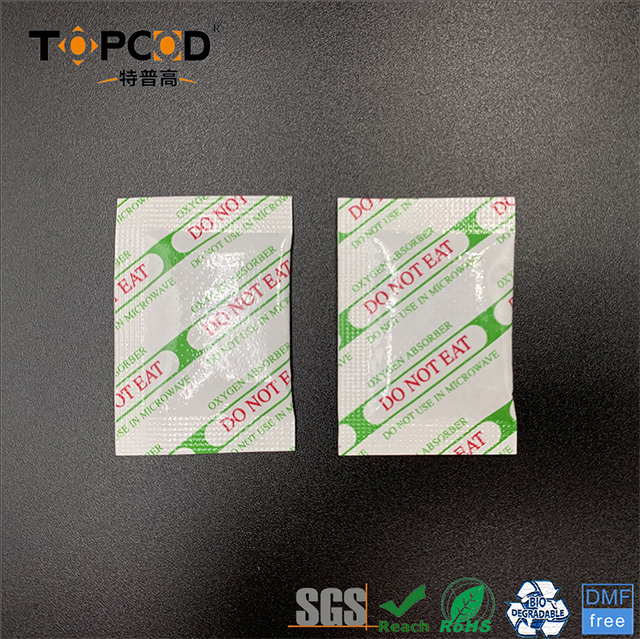
An oxygen absorber for sealed packaging is only effective when paired with high-barrier materials. Mylar/foil laminates, glass jars, and metal cans provide the necessary defense. These materials prevent new oxygen from entering the sealed environment. A high-quality Mylar bag with a thickness of 5 to 7 mils offers an excellent barrier against gas permeation. The aluminum core within the laminate blocks oxygen molecules from passing through the plastic layers.
Standard polyethylene (PE) bags or typical vacuum sealer bags are insufficient for long-term oxygen exclusion. They possess high permeability rates. Oxygen will slowly diffuse through the plastic over weeks or months. This renders the absorber useless over time. The packet will continue to absorb the incoming oxygen until it reaches its maximum capacity. Once exhausted, the oxygen levels inside the package will rise, leading to rapid product degradation. Never use standard plastic bags for long-term oxygen-free storage.
Calculating for rigid containers like Mason jars differs slightly from flexible Mylar bags. Rigid containers cannot conform to the product to reduce initial headspace. The internal volume remains static regardless of the internal pressure. You must calculate the exact volume of the empty jar and subtract the exact volume of the product. The remaining void space dictates the absorber size. There is no physical way to squeeze excess air out of a glass jar before sealing.
The vacuum effect manifests differently depending on the material. In a glass jar, you will see dimpling or a downward flex of the metal lid as the oxygen is consumed. In a flexible pouch, the material physically shrinks around the product. You can manually press excess air out of a flexible pouch before heat sealing. This manual reduction of headspace lowers the initial residual air volume. Consequently, you can often use a slightly smaller absorber in a manually compressed flexible pouch compared to a rigid jar of the exact same volume.
Oxygen Transmission Rate (OTR) measures how much oxygen passes through a material over time. Micro-leaks or film permeability introduce new oxygen over a multi-year shelf life. No flexible film is perfectly impermeable forever. Even heavy-duty foil laminates have a measurable OTR, especially along the heat seams or at flex-crack points. You must factor this slow ingress of oxygen into your capacity calculations for long-term storage.
You must calculate a buffer capacity for long-term storage. Add extra cc capacity to account for the specific OTR of the chosen film. If a package is designed for a 10-year shelf life, calculate the total volume of oxygen that will permeate the film over those 120 months. Add this volume to your initial residual oxygen calculation. This ensures the package remains protected over a target lifespan of 5, 10, or 20+ years. Consult your film manufacturer for exact OTR specifications under your expected storage conditions.
Standard iron-powder absorbers are the industry baseline for dry goods. They offer reliable, steady oxygen removal over several days. They are cost-effective and highly stable during the packaging process. A high absorption oxygen absorber is designed for rapid depletion in commercial packaging lines. These variants utilize advanced chemical catalysts to accelerate the rusting process. They can drop internal oxygen levels to below 0.1% in a fraction of the time required by standard packets.
Evaluate the trade-offs between the speed of absorption and total capacity. Fast-acting variants require stricter handling protocols on the factory floor. Because they react so quickly, they lose capacity rapidly when exposed to ambient air during the packaging process. Standard variants offer a slightly longer working window before they lose efficacy. Choose the profile that matches your production line speed and your product's sensitivity to initial oxygen exposure.
Absorbers operate differently based on their internal chemistry. Some require ambient package moisture to activate the rusting process. If the product is exceptionally dry, these absorbers may fail to activate properly. For example, packaging heavily dehydrated powders with a moisture-dependent absorber might result in incomplete oxygen removal. The packet simply lacks the water molecules necessary to sustain the chemical reaction.
Self-activating absorbers contain built-in moisture. They are designed for exceptionally dry environments where ambient humidity is virtually zero. The moisture is locked within the packet's substrate, allowing the iron to oxidize without drawing water from the surrounding product. Select the formulation that matches your product's specific moisture profile. Using a self-activating packet ensures reliable performance regardless of how dry your packaged goods are.
Insufficient cc capacity leads to incomplete oxygen removal. This creates an environment ripe for aerobic bacterial growth and mold proliferation. If the residual oxygen remains above 1%, aerobic organisms can survive and multiply. Lipid oxidation also occurs, causing fats and oils to turn rancid. Rancidity destroys the flavor profile of the product and drastically reduces its nutritional value. Under-sizing is the most common failure point in long-term food storage.
Implement strict quality assurance protocols for testing residual oxygen levels post-sealing. Headspace gas analyzers provide accurate readings of the internal atmosphere. Pierce the sealed package with the analyzer probe through a specialized septum tape. Ensure the residual oxygen drops below 0.1% within 72 hours of sealing to guarantee product safety. If the readings consistently exceed this threshold, you must recalculate your required capacity and increase the absorber size.
Using an excessively large absorber in flexible packaging has physical consequences. It causes severe package contraction. This extreme shrinkage can crush fragile products like freeze-dried berries, potato chips, or delicate baked goods. It can also compromise seal integrity by pulling too hard on the heat seams. The physical stress on the packaging material increases the risk of flex-cracking and micro-punctures.
Remember that an oxygen absorber only removes 21% of the air. The remaining 79% is mostly nitrogen. They are not a replacement for mechanical vacuum sealing. If you want a tight, brick-like package, you must use a vacuum sealer in conjunction with the absorber. Do not rely on massively oversized absorbers to create a vacuum effect. Calculate the exact capacity needed and rely on mechanical equipment for physical air removal.
Physical indicators confirm a successful oxygen absorption process. Look for the ping and downward flex of a Mason jar lid. The consumption of oxygen creates a slight negative pressure inside the rigid container, pulling the lid inward. In a flexible Mylar bag, look for a noticeable but not fully vacuumed shrink. The bag should pull slightly tighter around the product as the 21% oxygen volume disappears.
A lack of visual shrinkage in a flexible bag does not automatically mean failure. If the math was correct and the seal is intact, the absorber likely worked. Highly dense products leave little room for visible bag contraction. If you pressed most of the headspace air out before sealing, the removal of the remaining oxygen will not cause a dramatic visual change. Rely on headspace gas analyzers rather than visual cues for definitive quality assurance.
Factory floor implementation requires strict handling protocols. Absorbers begin working the moment they are exposed to ambient air. Leaving them on a table degrades their capacity rapidly. The chemical reaction is exothermic, meaning the packets generate heat as they absorb oxygen. If you leave a master bag open, the packets insulate each other and become physically hot to the touch. This heat indicates that the inventory is actively exhausting its capacity.
Establish standard operating procedures (SOPs) for limiting exposure time. Keep exposure strictly under 30 minutes. Only open the master bag when the production line is fully ready. Take out only the number of packets you can use within the next half hour. Properly reseal master bags immediately to prevent premature exhaustion of the inventory. Use a high-quality impulse sealer to close the master bag, or store unused packets in a small glass jar with a tight-fitting lid.
Standardize your inventory by calculating capacity based on your most porous product and largest container volume.
Implement a strict 30-minute exposure limit on the packaging floor to prevent premature packet exhaustion.
Conduct pilot tests using a headspace gas analyzer to verify residual oxygen drops below 0.1% within 72 hours.
Upgrade your packaging material to a high-barrier foil laminate if your target shelf life exceeds five years.
A: A 5-gallon bucket typically requires between 2000cc and 2500cc of capacity. This baseline assumes average product density. If you are storing highly porous items like pasta or freeze-dried foods, you must increase this capacity to 3000cc or more to account for the trapped interstitial air.
A: Yes, over-sizing can cause severe package contraction in flexible films. This extreme vacuum effect can crush fragile products and stress the package seams, potentially causing leaks. Always calculate the required capacity mathematically rather than simply throwing in extra packets.
A: No. Oxygen absorbers only remove the 21% of air that is oxygen. The remaining 79% is mostly nitrogen, which stays in the package. Vacuum sealing removes all air mechanically but often leaves trace oxygen behind. For optimal preservation, use both methods together.
A: A lack of extreme shrinkage does not indicate failure. Absorbers only remove oxygen, which is 21% of the volume. If your product is dense and you manually pressed out most of the headspace air before sealing, the physical contraction of the bag will be minimal.
A: You should limit ambient air exposure to 30 minutes maximum. They begin absorbing oxygen immediately upon opening the master bag. Prolonged exposure on the packaging table will deplete their capacity before they even enter your product packaging.
A: No. Sugar and salt do not support microbial growth or oxidative rancidity. Using absorbers with these products is unnecessary and can actually cause them to clump into hard bricks due to moisture transfer from the packet.


